




Hunger at Jantar Mantar: Why Sonam Wangchuk and the Youth Are Demanding Accountability
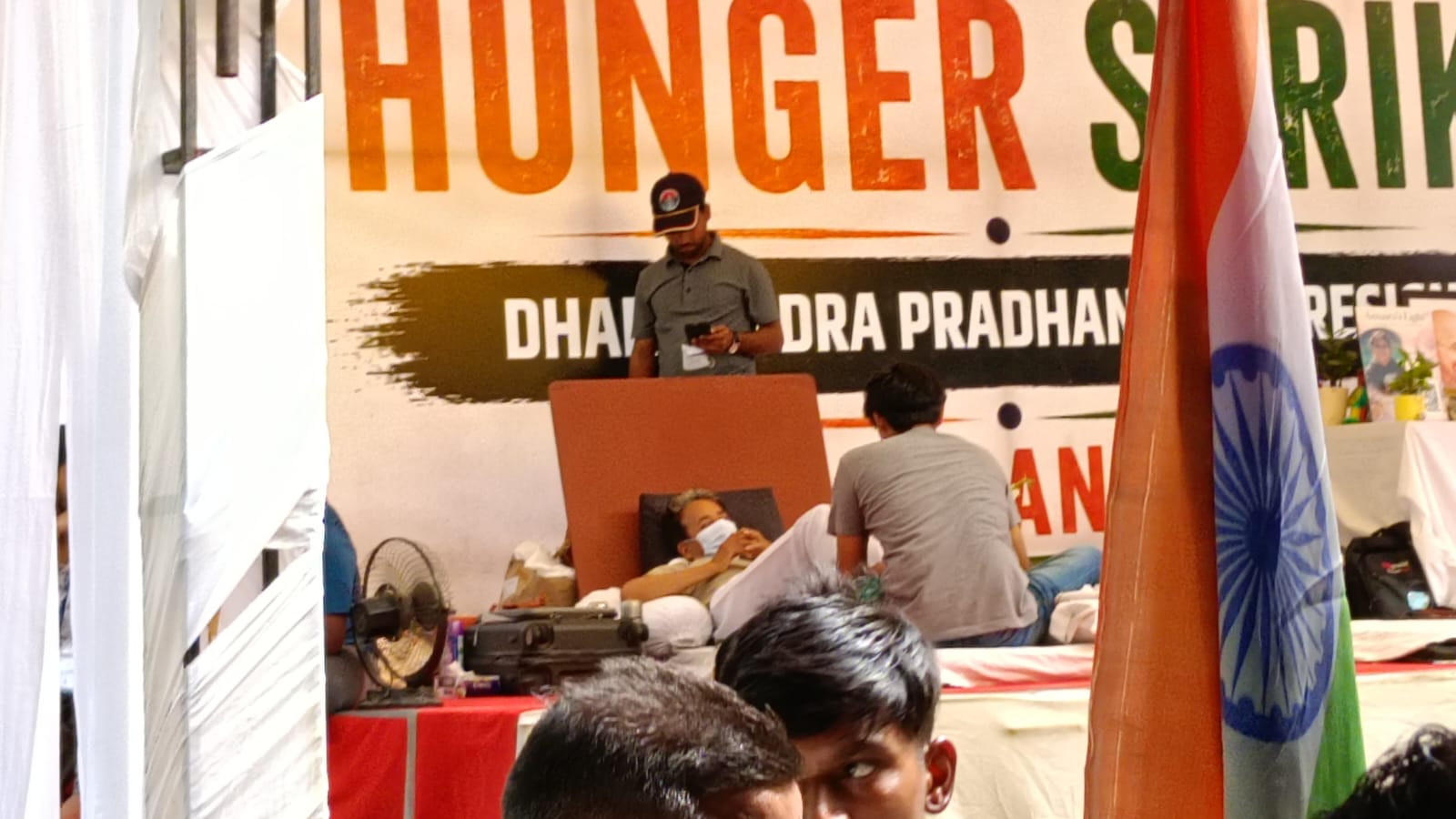
Sonam Wangchuk has been sitting on an indefinite hunger strike for the last 17 days, demanding the immediate resignation of Dharmendra Pradhan, the Minister of Education of the Government of India.
Operating on only salt water, the 59-year-old Ramon Magsaysay awardee has lost nearly nine kilograms. He is sitting on strike at Jantar Mantar in New Delhi, expressing deep solidarity with the Cockroach Janta Party (CJP), a youth-led movement that organized the ongoing protests.
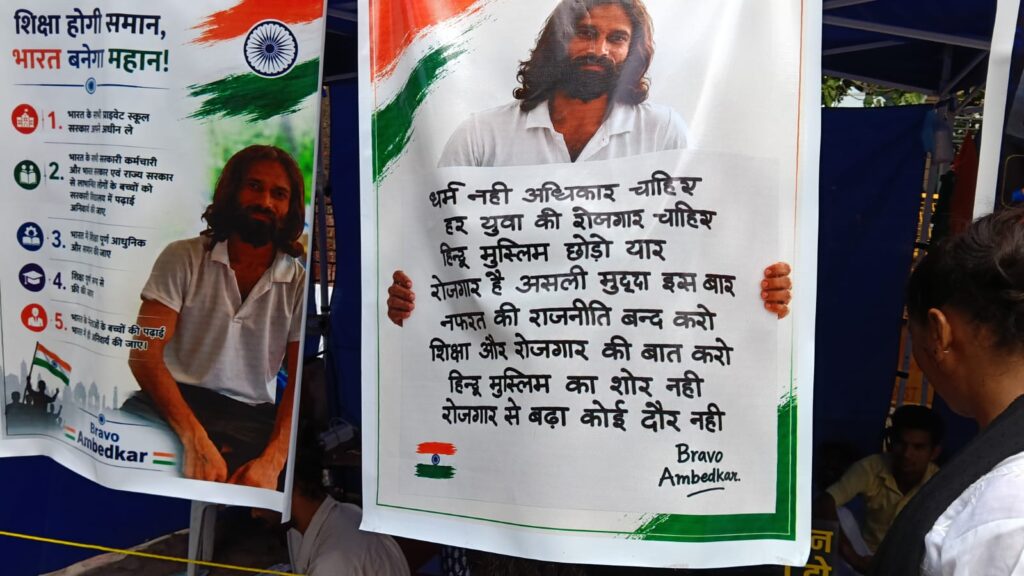
The CJP emerged as a satirical but highly active student advocacy group following controversial remarks about unemployed youth, and it has since channeled the collective fury of millions of aspirants. At the center of this firestorm is a deeply broken examination and recruitment infrastructure, epitomized by the systemic failure of the National Eligibility-cum-Entrance Test (NEET-UG) 2026, which saw rampant leaks, cancelations, and subsequent retests.
The Fragile Ladder of Merit and the Elite Safetynet
For decades, families across India have lived by a single, unspoken truth: education is the great equalizer. A fair, merit-based system is the only ladder for young people from lower and middle-income families to climb up. When that ladder is broken—when question papers are leaked to the highest bidder, examinations are canceled at the last minute, and public institutional trust is completely destroyed—the social contract is torn apart.
Importantly, the children of the rich and powerful do not suffer. They have other ladders. They possess the generational wealth, the private capital, and the international connections to bypass a broken domestic testing regime entirely. If a public university exam is compromised, the wealthy can pivot seamlessly to private institutions or elite universities abroad.
The real casualty of a corrupt examination system is the child of a farmer, a salaried clerk, or a laborer. For these families, a single competitive exam represents years of collective financial sacrifice, high-interest loans, and relentless toil. When the system fails, it is these dreams, and these families’ sacrifices—and tragically, in some homes, young lives themselves lost to despair—that are deeply betrayed.
Systemic Corruption and the Commercialization of Indian Education
The crisis at Jantar Mantar is not an isolated administrative slip-up; it is the boiling point of a highly commercialized, corrupt educational ecosystem.
To fully grasp the rot, one must look at the mechanical alignment of three distinct forces that have financialized Indian education: the oligopoly of coaching hubs, the institutional collapse of testing regulators, and the multi-state grid of professional solver mafias.
1. The Coaching-Industrial Complex
Public education underfunding has forced a vacuum filled by a predatory, multi-billion-dollar coaching industry. Hubs like Kota, Sikar, and Mukerjee Nagar function less as educational centers and more as assembly lines. By charging exorbitant annual fees that exceed the average household income of rural families, these centers have financialized preparation. They lock up intellectual capital by poaching top teachers with massive corporate-style bonuses, leaving regular schools hollowed out.
More insidiously, the desperation of these conglomerates to boast top ranks creates a direct bridge to corruption. It is an open secret that certain institutions buy top-ranking students or fund shadow entities to secure advance access to assessment patterns, ensuring their multi-crore marketing banners continue to draw desperate applicants.
2. The Institutional Collapse of Regulators
The centralization of testing under single, monolithic bodies like the National Testing Agency (NTA) was meant to standardize assessment. Instead, it created single points of failure. The rot here is structural:
- The Outsourcing Trap: To save costs, core responsibilities—ranging from setting up digital servers to monitoring physical exam centers—are consistently outsourced to private vendors, logistical tech firms, and poorly paid contractual staffs.
- Zero-Liability Safeguards: The regulatory framework operates with near-total impunity. When a leak occurs, lower-level invigilators or printers are arrested, while the top bureaucratic machinery faces no immediate structural shakeups, fostering an environment where systemic negligence carries no consequences.
3. The Professional Solver Syndicates
Paper leaks are no longer unorganized operations involving loose photocopies. They are orchestrated by sophisticated, transnational crime syndicates operating with tech-driven efficiency. The mechanics of a modern leak involve:
- Dark-Web and Encrypted Distribution: Leaked keys are sold via encrypted networks (like Telegram and Signal) where access keys are traded in closed-loop groups using cryptocurrency or untraceable cash escrows.
- Safe-House Bootcamps: Syndicates establish physical “safe houses” where paying candidates are sequestered overnight, provided with leaked keys, and forced to memorize answers under armed guard before being driven directly to testing centers.
- Institutional Compromise: These operations require deep insider access, requiring the active bribery of university registrars, treasury officials in charge of question trunks, and private tech partners handling software logistics.
By turning exams into a commercial commodity, the state has allowed a shadow market to dictate who gets to become a doctor, an engineer, or a public servant. This rot goes beyond simple cheating; it erodes the moral fabric of society by signaling to the youth that integrity is worthless compared to cash.
It is this profound betrayal of trust and systemic decay that prompted senior Congress leader and Member of Parliament Shashi Tharoor to write an emotional appeal to the students and Wangchuk at Jantar Mantar.
An Open Letter to the Jantar Mantar protestors
My dear young friends,
I address you today not as a politician or an MP, but as someone deeply troubled by what is happening to your generation of young Indians.
This is personal for me. I was born to a middle-class family: my father was a salaried newspaper employee, my mother a homemaker, with three children to educate on one income. For a family like ours, merit was not a slogan. Scholarships, fair examinations, honest results — these were the only way one salary could carry three children’s dreams.
I went to school in Mumbai and Kolkata, to college here in Delhi, topped the University and earned admission into IIM — and chose instead to follow my passion for international affairs, in America, on a scholarship. Nothing was inherited; everything was earned by hard work and yes, Exams.
So I know that a fair, merit-based system is the only ladder for young people from lower and middle-income families to climb up. When that ladder is broken — papers leaked, examinations cancelled, trust destroyed — the children of the rich and powerful do not suffer. They have other ladders. It is your dreams, and your families’ sacrifices (and tragically, in some homes, young lives themselves) that are betrayed.
To the young people gathered at Jantar Mantar, and those raising your voices peacefully across India: this country hears you. Your anger is not indiscipline — it is the anguish of a generation that did everything right and was still betrayed. You are not alone.
And to the millions of young Indians watching quietly: your generation is not a problem to be managed. You are the answer to India’s future. Do not lose hope. This ladder will be rebuilt — by you, and by every Indian who stands with you.
To Shri Sonam Wangchuk-ji, my heartfelt appeal: please end your fast. You have awakened the conscience of the nation; that is what a fast is meant to do. India needs your voice for the long road ahead.
With Parliament in session again from Monday, we will have an opportunity to raise the students’ issues in the highest forum of our democracy. That’s where the problem should be addressed, not by fasting unto death. Please heed my plea.
And finally, to the Government: I respectfully urge you to reach out and engage in the dialogue our democracy owes its young citizens. That is not weakness; that is statesmanship.
— Shashi Tharoor

Prabha Gupta is a veteran journalist and civic thinker dedicated to the constitutional ideals of dignity and institutional ethics. With over thirty years of experience in public communication, her work serves as a bridge between India’s civil society and its democratic institutions. She is a prominent voice on the evolution of Indian citizenship, advocating for a national discourse rooted in integrity and the empowerment of the common citizen