





From Jantar Mantar to the Budget: Why India’s Students Are Demanding More Than Promises
Education as an Investment: What India Can Learn from the US, China and Germany
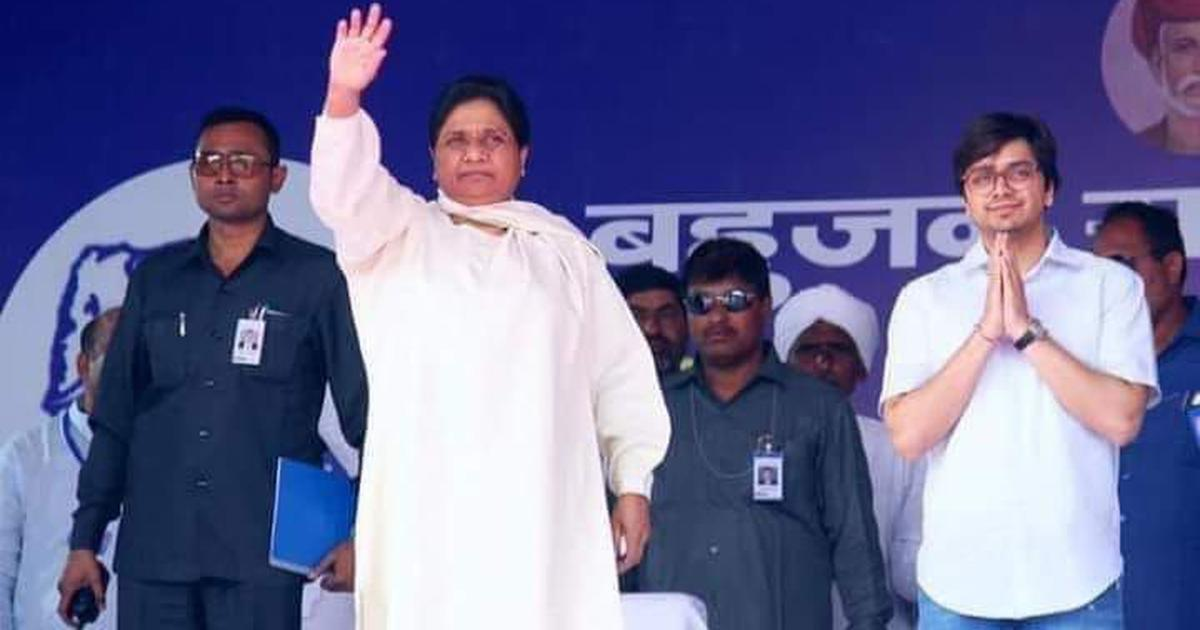
For nearly a week, Jantar Mantar became more than a protest site—it became a classroom of democracy.
Students from across the country gathered under the banner of the Congress-affiliated National Students’ Union of India (NSUI) and the Congress party’s ‘Chhatra, Yuva aur Parivar (CJP)’ campaign, demanding greater accountability in education, transparency in examinations and increased public investment in the sector. Their slogan was not merely against alleged irregularities in recruitment and entrance examinations; it was a call to rethink India’s priorities.
As speeches echoed through Jantar Mantar and young protesters braved Delhi’s heat, one question stood out: Can India aspire to become a developed nation while continuing to underinvest in education?
Every Union Budget describes education as the foundation of India’s future. Yet the country’s financial commitment tells a more complicated story.
The Union Budget 2025–26 allocated approximately ₹1.28 lakh crore to the Ministry of Education—the highest allocation ever in absolute terms. However, when measured against India’s population of over 1.4 billion and its ambition of becoming a developed nation by 2047, the figure appears less impressive.
Education economists have long argued that spending on schools and universities should not be viewed as welfare expenditure but as long-term investment. Countries leading the world in innovation, manufacturing and scientific research have consistently invested in building human capital.
India: Aspirations Meet Resource Constraints
India currently spends around 4–4.5% of GDP on education when the combined expenditure of the Centre and the states is considered. Public expenditure by governments alone remains below the 6% of GDP target recommended by the Kothari Commission nearly six decades ago and reaffirmed in the National Education Policy (NEP) 2020.
The consequences are visible across the country. Thousands of schools continue to face shortages of teachers, laboratories, libraries and digital infrastructure. Public universities struggle with limited research funding even as enrolment continues to expand. While India produces one of the world’s largest numbers of graduates every year, concerns persist regarding employability, research output and global competitiveness.
The irony is unmistakable. India possesses the world’s largest youth population, yet investment in nurturing that demographic advantage has not kept pace with national ambitions.
United States: Innovation Backed by Investment
The United States invests approximately 5–6% of GDP in education through federal, state and local governments, complemented by substantial private investment.
Its leading universities—including Harvard, MIT and Stanford—have become global centres of research because of sustained funding, industry partnerships and generous support for innovation. These institutions produce cutting-edge technologies, patents and start-ups that drive economic growth.
The American model, however, is not without criticism. Rising tuition costs and student debt illustrate that high investment must also be accompanied by equitable access.
China: Building Universities to Build a Nation
Over the past two decades, China has transformed its education system through consistent public investment. Spending remains around 4% of GDP, but the government has channelled enormous resources into world-class universities, research institutions and technical education.
Chinese universities have climbed rapidly in international rankings, while vocational education has supported the country’s manufacturing and technology sectors. Education has become a central pillar of China’s economic strategy rather than merely a social sector programme.
Germany: Skills for Industry
Germany follows yet another model. Public expenditure on education is around 5% of GDP, with higher education remaining largely tuition-free in public universities.
Equally significant is Germany’s dual education system, which combines classroom instruction with apprenticeships in industry. This partnership between educational institutions and employers has produced one of the world’s most skilled workforces and helped maintain low youth unemployment.
For many education experts, Germany demonstrates that quality education and affordability can coexist.
The Road Ahead for India
The protests at Jantar Mantar were about more than examination controversies. They reflected a growing belief among students that education deserves greater national attention—not merely in speeches but in financial commitments.
The NEP 2020 has outlined an ambitious vision of multidisciplinary education, digital learning, foundational literacy and stronger research ecosystems. Achieving these goals, however, requires sustained public investment, effective implementation and greater accountability.
Increasing allocations alone will not solve every challenge. Better teacher training, stronger public universities, modern laboratories, expanded scholarships and increased research funding are equally essential.
Beyond Budget Numbers
History shows that every major economic power has first invested in its classrooms before it transformed its industries.
The United States invested in innovation. China invested in universities and technology. Germany invested in skills and vocational education.
India’s greatest asset is neither its minerals nor its markets—it is its young population.
The voices that rose from Jantar Mantar serve as a reminder that education is not merely another Budget line. It is the foundation upon which India’s aspirations of becoming a global economic and knowledge power will either succeed or falter.
If India truly seeks to become a developed nation by 2047, the debate should no longer be whether education deserves higher investment. The real question is whether the country can afford to delay that investment any longer.

Prabha Gupta is a veteran journalist and civic thinker dedicated to the constitutional ideals of dignity and institutional ethics. With over thirty years of experience in public communication, her work serves as a bridge between India’s civil society and its democratic institutions. She is a prominent voice on the evolution of Indian citizenship, advocating for a national discourse rooted in integrity and the empowerment of the common citizen