




Why Did the Indian Stock Market Fall Today? Oil, War and Rising Yields Rattle Dalal Street
The Indian stock market remained under pressure on Tuesday, September 29, as a combination of geopolitical uncertainty, expensive crude oil, rising US bond yields, foreign investor selling and a weakening rupee kept investors firmly in risk-off mode.
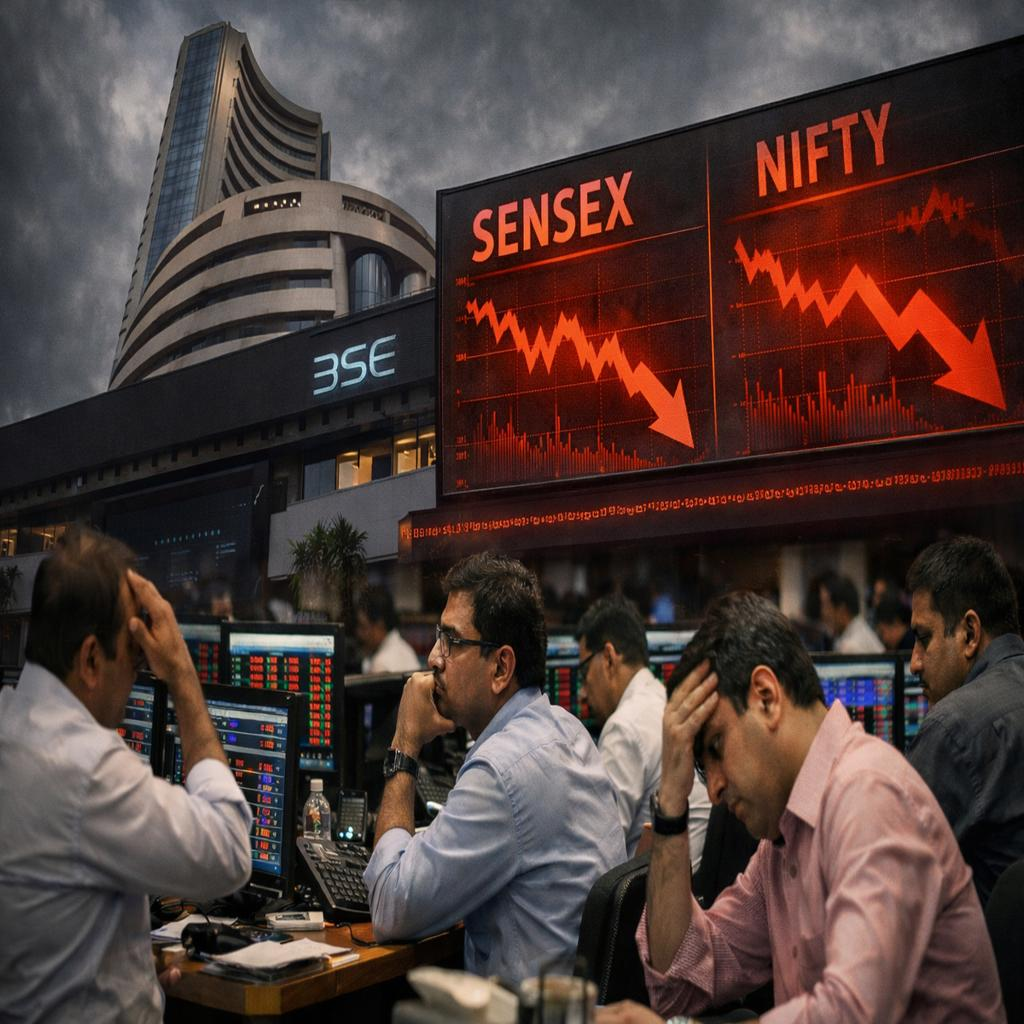
The sell-off looked particularly severe during the session. The Sensex fell as much as 708 points, while the Nifty slipped to an intraday low of 22,570. But the market recovered sharply from those lows. By the close, the Sensex was down 242.65 points, or 0.33%, at 72,529.07, while the Nifty ended 64.05 points, or 0.28%, lower at 22,716.20.
The numbers nevertheless tell a bigger story: Tuesday’s decline came immediately after Monday’s 1.5% plunge and extended an already prolonged period of weakness.
Oil Shock Returns to the Centre
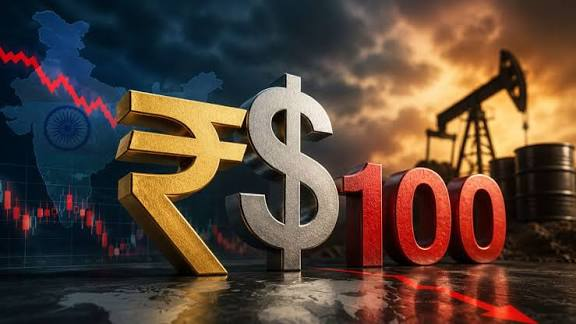
The biggest concern is crude.
Brent crude was trading around $105-$107 a barrel as uncertainty over the US-Iran conflict and the possibility of prolonged disruption to Middle Eastern energy supplies continued to unsettle markets.
For India, this is particularly significant because the country is heavily dependent on imported crude. Sustained high oil prices can increase the import bill, put pressure on the rupee and complicate the inflation-growth equation.
For companies, the consequences can be equally important. Higher fuel and input costs can squeeze margins, while persistent inflation can reduce the room available for monetary easing.
The market is therefore not reacting simply to today’s oil price. It is attempting to price in the possibility that oil could remain expensive for longer.

US Bond Yields Add Another Layer of Pressure
The second major concern is the sharp rise in US Treasury yields. The US 10-year yield moved above 5.27%, according to Reuters, reaching levels not seen in roughly 19 years.
Higher US yields change the global investment equation. When relatively safe US assets offer higher returns, emerging-market equities such as India can become less attractive at the margin.
This is particularly relevant when Indian stocks are already facing foreign selling.
Foreign Investors Are Pulling Money Out
Foreign institutional investors have emerged as another source of pressure.
They sold more than ₹5,300 crore of Indian equities on September 28, according to provisional exchange data. Reuters reported that foreign investors had withdrawn more than $2.17 billion from Indian equities during September.
That selling becomes more consequential when it coincides with geopolitical uncertainty, expensive oil and higher global interest rates.
Rupee Under Pressure
The rupee also crossed the psychologically important ₹96-per-dollar level during Tuesday’s trading, touching 96.1450 before recovering.
A weaker rupee makes imported crude more expensive in domestic currency, potentially creating a feedback loop: higher oil prices pressure the rupee, while a weaker rupee increases the domestic cost of imported oil.
That is precisely the macroeconomic combination investors dislike.
Is This a Market Crash or a Warning Signal?
Calling Tuesday’s closing move a “crash” would be misleading. The major fall occurred on Monday, while Tuesday’s market recovered substantially from its intraday lows.
But the underlying warning is difficult to ignore.
The Nifty has now been under pressure for weeks, while global markets are simultaneously dealing with geopolitical risk, elevated energy prices and high bond yields. Reuters reported that Indian benchmarks had already lost nearly 6% over the preceding seven weeks.
The market’s immediate direction will therefore depend less on one day’s trading and more on whether crude prices moderate, geopolitical tensions ease and foreign flows stabilise.
For investors, the latest fall is a reminder that markets do not move on corporate earnings alone. Oil, currencies, interest rates, geopolitics and global capital flows can all suddenly rewrite the valuation equation.
The question now is not merely how far the market has fallen, but whether the forces driving the fall are temporary shocks—or the beginning of a more persistent change in India’s macroeconomic environment.

Prerna Varshney is a journalist and social commentator with over five years of experience in health, gender, and policy reporting. Her work reflects a deep commitment to truth and empathy, simplifying complex issues for everyday readers.