






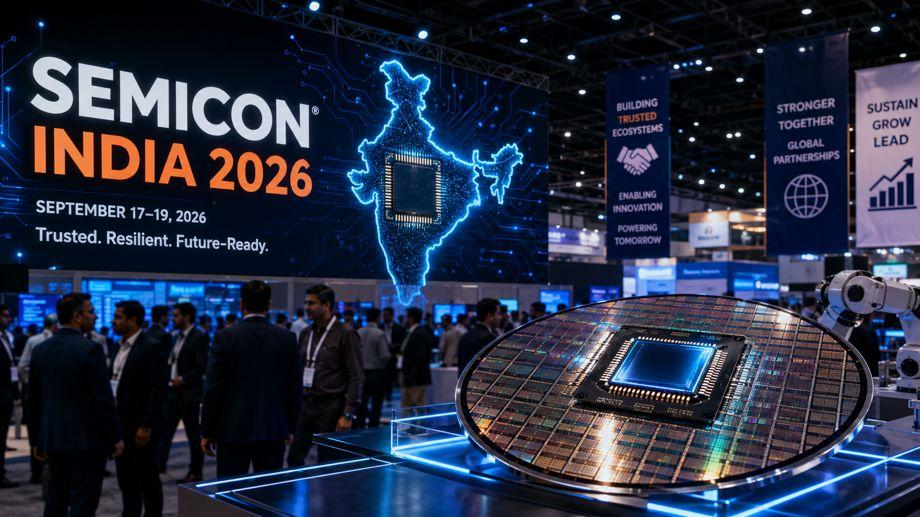
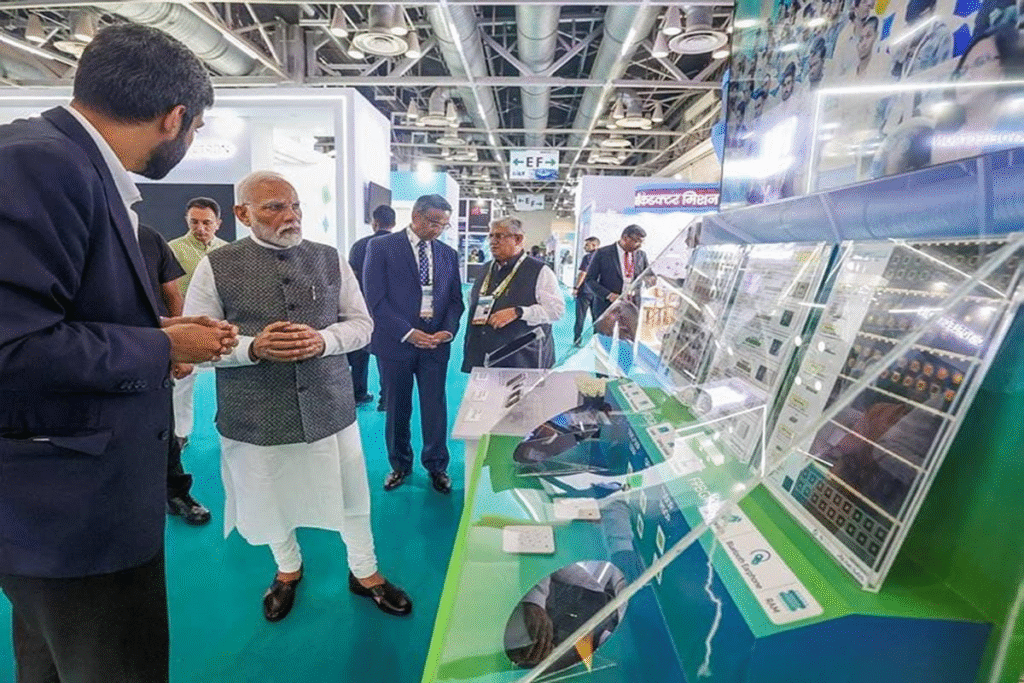
Prime Minister Narendra Modi is scheduled to inaugurate the fifth edition of SEMICON India 2026 at Yashobhoomi in New Delhi on September 17. The three-day conference and exhibition, being held from September 17 to 19, is organised around the theme “Silicon to Systems: Building the Ecosystem.” It will bring together semiconductor companies, investors, policymakers, researchers, start-ups, academic institutions and students.
The event comes at a time when semiconductors have become central to economic competitiveness, national security and technological sovereignty. Chips power smartphones, automobiles, medical equipment, telecommunications, artificial intelligence systems and defence platforms. Any disruption in their supply can affect entire industries. For India, therefore, semiconductor manufacturing is not merely an industrial project; it is part of a larger strategy to reduce supply-chain vulnerability and secure a place in the global technology economy.
Beyond assembling electronic products
India has made considerable progress in electronics manufacturing over the past decade, particularly in mobile-phone assembly and exports. However, assembling finished products is different from controlling the deeper technology chain. Semiconductor capability requires chip design, intellectual property, specialised chemicals, equipment, fabrication, testing, packaging, research and highly trained workers.
SEMICON India 2026 attempts to address this wider requirement. Its exhibition will present the journey from materials and equipment to chip design, fabrication, advanced packaging, electronics and complete systems. More than 600 companies and representatives from 52 countries are expected to participate, with country pavilions from Japan, South Korea, Malaysia, the Netherlands, Singapore and Sweden.
This broader approach is important because a chip factory alone cannot create a self-sustaining semiconductor industry. A fabrication plant depends on imported machinery, reliable power, ultra-pure water, specialty gases, logistics, research institutions and customers capable of using the chips. India’s challenge is to build these supporting layers simultaneously.
Government support and public investment
The India Semiconductor Mission has approved 12 projects under the first phase of the Semicon India Programme. The government says three of these projects have already commenced commercial production. It has also approved Semicon 2.0, with a focus on chip design, machinery and materials, fabrication units, advanced packaging, research and development, and talent development.
Public support is understandable because semiconductor projects require enormous capital, long gestation periods and technological expertise. Yet subsidies alone cannot guarantee success. The government will need to ensure that public funds produce measurable outcomes: operational plants, domestic supplier networks, skilled employment, technology transfer, research output and commercially viable products.
The critical issue is not how many investment announcements are made at conferences, but how many projects are completed on schedule and whether they become globally competitive.
The question of self-reliance
The language of self-reliance can be misleading if it is interpreted as complete independence from the world. No major semiconductor-producing country controls every stage of the value chain. The industry is deeply international, with design, equipment, materials, fabrication and packaging spread across different countries.
India’s realistic objective should therefore be strategic resilience, not technological isolation. It should develop domestic capabilities in selected areas while maintaining open trade, international partnerships and access to global technology. An overemphasis on complete self-sufficiency could raise costs and slow innovation. A carefully designed integration into global supply chains could create more durable advantages.
Talent remains a decisive factor
Semiconductor manufacturing requires engineers, technicians, material scientists, process specialists and researchers. India has a large pool of engineering graduates, but the industry needs specialised training and practical experience. The government says design tools have been provided to more than 332 academic institutions and 105 start-ups, while initiatives such as student hackathons and workforce-development programmes are being promoted through SEMICON India 2026.
The success of these efforts will depend on whether students move from training programmes into sustained research, industrial employment and entrepreneurship. Without a strong connection between universities and industry, India could remain a market for imported technology rather than becoming a significant technology creator.
What should be measured?
SEMICON India 2026 is an important platform for attracting investment and building international partnerships. But its long-term value should be judged through clear indicators:
- How many approved projects become operational?
- How much of the value chain is actually located in India?
- Are Indian companies developing their own chip designs and intellectual property?
- How many high-quality jobs are created?
- Are production costs competitive?
- Does India become a reliable supplier to global electronics and automotive companies?
The inauguration may provide visibility and political momentum, but the semiconductor industry will be built through years of patient execution. India has moved beyond expressing an interest in chips. The next test is whether it can convert policy support, private investment and international cooperation into a functioning ecosystem—from silicon to systems.

Prerna Varshney is a journalist and social commentator with over five years of experience in health, gender, and policy reporting. Her work reflects a deep commitment to truth and empathy, simplifying complex issues for everyday readers.