


“Hatred in Their Hearts”: Trump Blames Immigrants for Unrest in France, but Students Want Teachers
When US President Donald Trump declared that immigration had shattered France and accused newcomers from a “completely different world” of carrying “hatred in their hearts”, he offered a familiar explanation for a complex European crisis. But there is a fundamental problem with his argument: the protests that erupted across France began with students demanding better schools, more teachers and improved educational conditions—not tighter immigration controls.
Trump’s intervention raises a larger question: why blame immigrants for unrest when the movement’s publicly stated grievances concern education, the cost of living and deteriorating public services?
From School Shortages to Nationwide Unrest
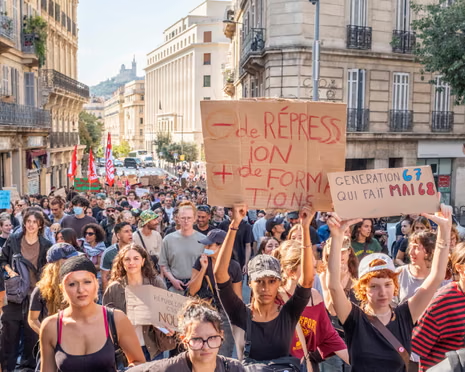
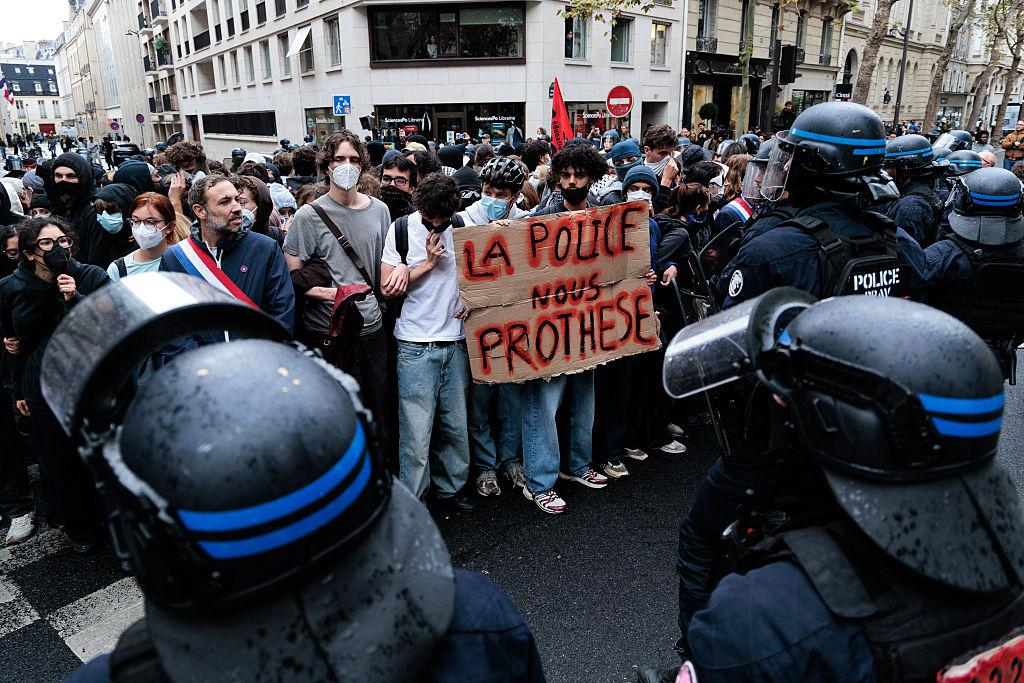
The protests began in September in the Paris region, where high-school students mobilised against teacher shortages, overcrowded classrooms, inadequate facilities and declining educational standards. School blockades and demonstrations subsequently spread to cities across France.
As the movement expanded, teachers, trade unions, students and supporters of the Yellow Vest movement joined demonstrations. Their grievances reflected a broader frustration with living costs, economic pressures and the perceived deterioration of public services.
By mid-October, the demonstrations had grown into a nationwide political challenge for President Emmanuel Macron’s administration. According to reports published on October 18, French authorities estimated that approximately 550,000 people had participated in demonstrations, while organisers put the figure higher.
Most importantly, the original demands were specific and tangible: adequate staffing, better school buildings, manageable class sizes and improved public services.
Violence has nevertheless accompanied parts of the unrest. Groups have reportedly looted shops, set fires and attacked public buildings, while clashes with police have resulted in injuries and arrests. Such acts cannot be justified simply because the underlying grievances are legitimate.
But the presence of violent groups does not erase the reasons that brought thousands of students and citizens onto the streets. Nor does it establish that immigration caused the violence.
Why Is Trump Making Immigration the Issue?
Trump used the unrest to reinforce his longstanding argument that immigration threatens national stability and cultural identity. His call for France to close its borders fits a political narrative in which immigration is presented as the central explanation for crime, disorder and declining public confidence.
The difficulty is that the evidence publicly reported so far does not substantiate this explanation for France’s current protests. The movement began with education-related demands, subsequently incorporating economic concerns. Immigration and religion have not been central to the protesters’ stated agenda.
There is also an important distinction between the nationality of protesters and the causes of a protest. The movement originated among French school students, and French citizens have played a prominent role in the demonstrations. However, without verified information on every person arrested or involved in individual incidents, it would be inaccurate to claim that every participant in the unrest is a French national.
Equally, it would be unjustified to attribute collective responsibility to immigrants without evidence identifying their involvement in specific offences.
French authorities have focused on violent groups, attacks on public buildings and opportunistic looting. Any individual responsible for violence should be held accountable on the basis of evidence, regardless of nationality or immigration status.
Trump’s rhetoric therefore risks turning a debate about public education and economic hardship into a debate about identity. It directs attention away from questions about school funding, staffing, public spending and government accountability.
France is not immune to legitimate concerns about immigration policy. But those concerns must be examined separately from the causes of this particular movement.
The Politics of Blame
Trump’s remarks illustrate how international unrest can become ammunition in domestic political debates. By presenting France’s crisis as proof of immigration’s dangers, he strengthens his own political message while offering little explanation of why French students initially took to the streets.
The French government faces two simultaneous responsibilities: address legitimate public grievances and maintain law and order without treating peaceful demonstrators as criminals. It must also investigate violence impartially and explain how it intends to improve public services.
The central question is not whether France should ignore immigration-related challenges. It is whether political leaders should assign blame before establishing the facts.
When students demand teachers and better schools, blaming immigrants does not answer their demands. It changes the subject.
A credible response to France’s unrest must begin with evidence, not stereotypes. The protesters’ grievances deserve examination, violence demands accountability, and allegations against any community require proof. Political rhetoric may mobilise supporters, but it cannot substitute for an explanation of what is actually happening on the streets of France.

Prabha Gupta is a veteran journalist and civic thinker dedicated to the constitutional ideals of dignity and institutional ethics. With over thirty years of experience in public communication, her work serves as a bridge between India’s civil society and its democratic institutions. She is a prominent voice on the evolution of Indian citizenship, advocating for a national discourse rooted in integrity and the empowerment of the common citizen