



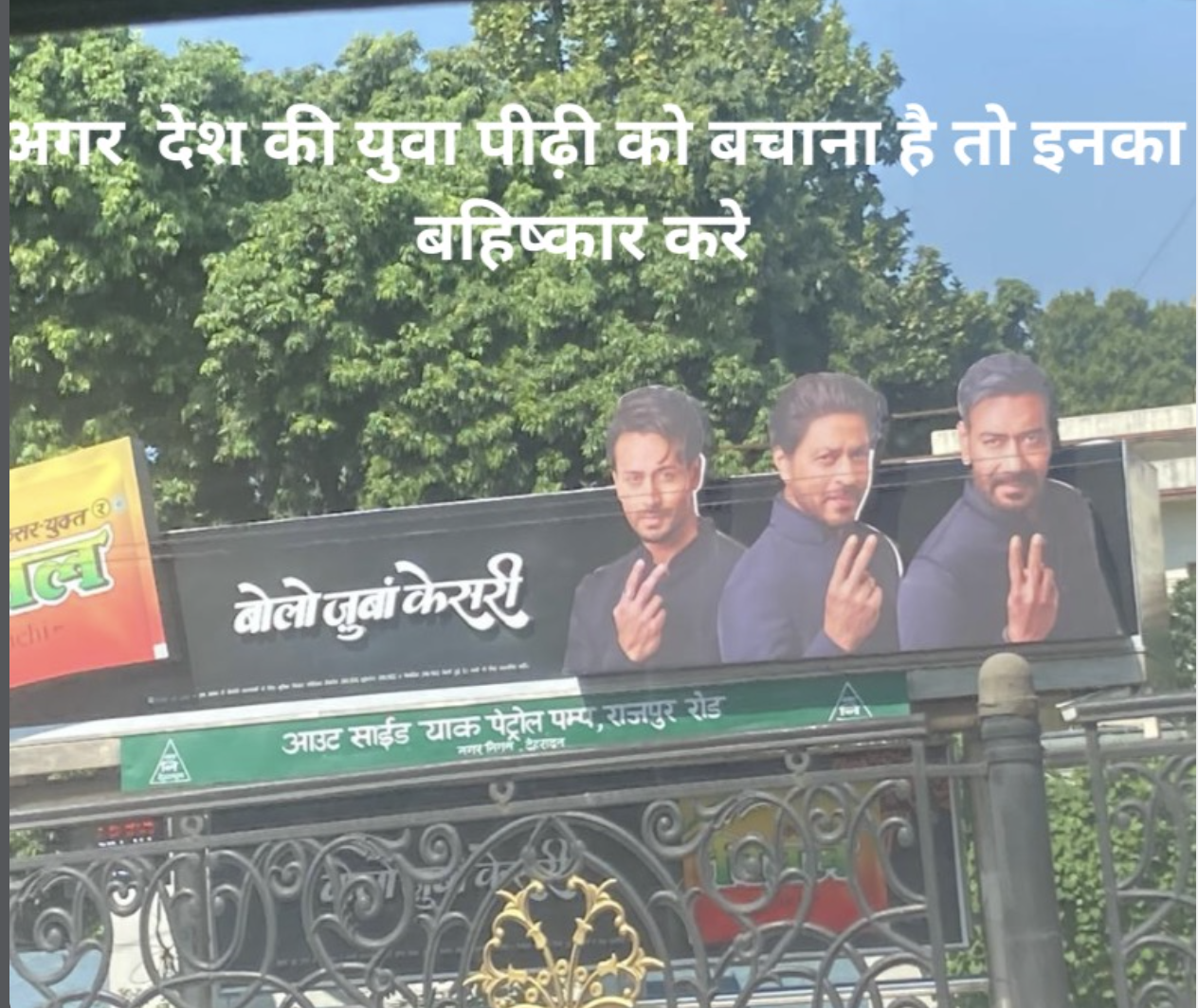
Ajay Devgn Takes Vimal Elaichi Ad Battle to Bombay High Court: Where Does Celebrity Endorsement Meet Consumer Protection?
MUMBAI: A television advertisement featuring a familiar Bollywood face has turned into a legal dispute over surrogate advertising, celebrity responsibility and the limits of brand promotion. Actor Ajay Devgn has approached the Bombay High Court challenging a show-cause notice issued by Maharashtra’s Food and Drug Administration (FDA) over his endorsement of Vimal Elaichi.
The controversy raises a larger question for India’s advertising industry: can a celebrity promote a product presented as an ordinary mouth freshener when the regulator believes the campaign indirectly advertises a prohibited pan masala brand?
Devgn’s petition challenges the FDA’s decision to issue the notice directly to him as an actor rather than to the manufacturing company. The matter is expected to come up before a division bench comprising Chief Justice Mahesh Chandra Tripathi and Justice Advait Sethna on November 4.
Why has the FDA objected to the advertisement?
The Maharashtra FDA alleges that advertisements for Vimal Elaichi amount to surrogate promotion of Vimal Pan Masala. Surrogate advertising is a marketing practice in which a brand associated with a restricted or prohibited product promotes another product under the same or a closely associated brand identity.
The regulator’s concern is that the elaichi campaign may indirectly reinforce the identity and visibility of a pan masala product whose manufacture, storage, transportation, distribution and sale have been prohibited in Maharashtra for a specified period.
The FDA’s notice reportedly referred to the prohibition order issued on July 13, 2026, and invoked provisions of the Food Safety and Standards Act, 2006, including Section 24, which deals with misleading advertisements and unfair trade practices concerning food products.
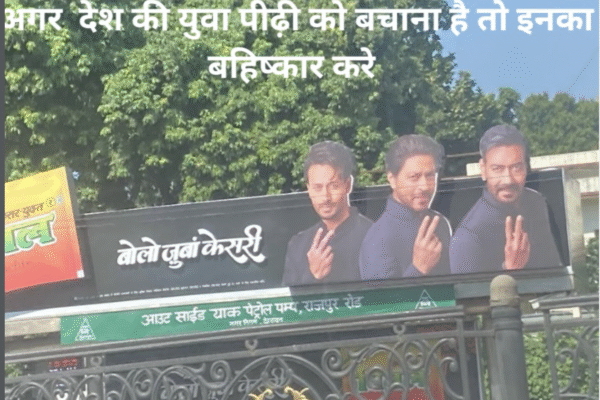
The notices were not limited to Devgn. Shah Rukh Khan and Tiger Shroff, who also appeared in advertisements associated with Vimal Elaichi, received similar notices. The development has brought celebrity endorsements under renewed regulatory scrutiny.
Devgn questions the fairness of the proceedings
Devgn’s legal challenge focuses not only on the substance of the advertisement but also on the procedure followed by the regulator.
According to reports on his petition, the actor maintains that he endorsed Vimal Elaichi and did not endorse Vimal Pan Masala. He has argued that the notice was arbitrarily directed at him rather than being addressed to the manufacturing company responsible for the product and its marketing.
His petition also questions whether he was given the material and evidence on which the FDA based its allegations. The actor contends that without access to the relevant material, he could not provide an effective response.
The petition further argues that the regulator appeared to have reached a conclusion before giving him a meaningful opportunity to defend himself. It also raises questions about the application of the Food Safety and Standards (Advertising and Claims) Regulations, 2018, and the responsibility of the brand owner. These are the actor’s legal submissions, not findings already established by the court.
FDA says proceedings are moving ahead
The regulator, however, has indicated that its investigation has progressed. FDA Commissioner Tukaram Mundhe said proceedings involving Devgn, Shah Rukh Khan and Tiger Shroff had been completed at the departmental level and that the matter would move towards adjudication before the joint commissioner.
Mundhe also indicated that Devgn’s decision to approach the High Court would not automatically halt the department’s proceedings unless the court issued appropriate directions.
The actors had reportedly been asked to provide details of their endorsement agreements, distribution channels and evidence concerning whether Vimal Elaichi was independently marketed as a product.
A bigger question for India’s advertising industry
The case extends beyond three Bollywood celebrities. India’s advertising economy relies heavily on film stars and sports personalities to build consumer trust and brand recognition. Their public visibility gives endorsements considerable commercial influence, but it also raises questions about how far their responsibility extends when a brand faces regulatory objections.
The central distinction is between endorsing a legally marketed product and participating in a campaign that regulators believe indirectly promotes a restricted product. Establishing that distinction requires examination of the advertisement, the brand’s product portfolio, the marketing strategy and the applicable law.
For consumers, the issue is equally important. Advertising should communicate clearly what is being sold rather than use one product category to maintain the visibility of another that faces restrictions.
The Bombay High Court proceedings could therefore have implications for manufacturers, advertising agencies, celebrity endorsers and regulators. The November 4 hearing will be closely watched, although the court’s eventual decision and any further departmental action remain pending.
At its heart, the dispute is about accountability in commercial communication: when a celebrity lends a face to a brand, where does the responsibility of endorsement end and the obligation to protect consumers begin?

Prabha Gupta is a veteran journalist and civic thinker dedicated to the constitutional ideals of dignity and institutional ethics. With over thirty years of experience in public communication, her work serves as a bridge between India’s civil society and its democratic institutions. She is a prominent voice on the evolution of Indian citizenship, advocating for a national discourse rooted in integrity and the empowerment of the common citizen