

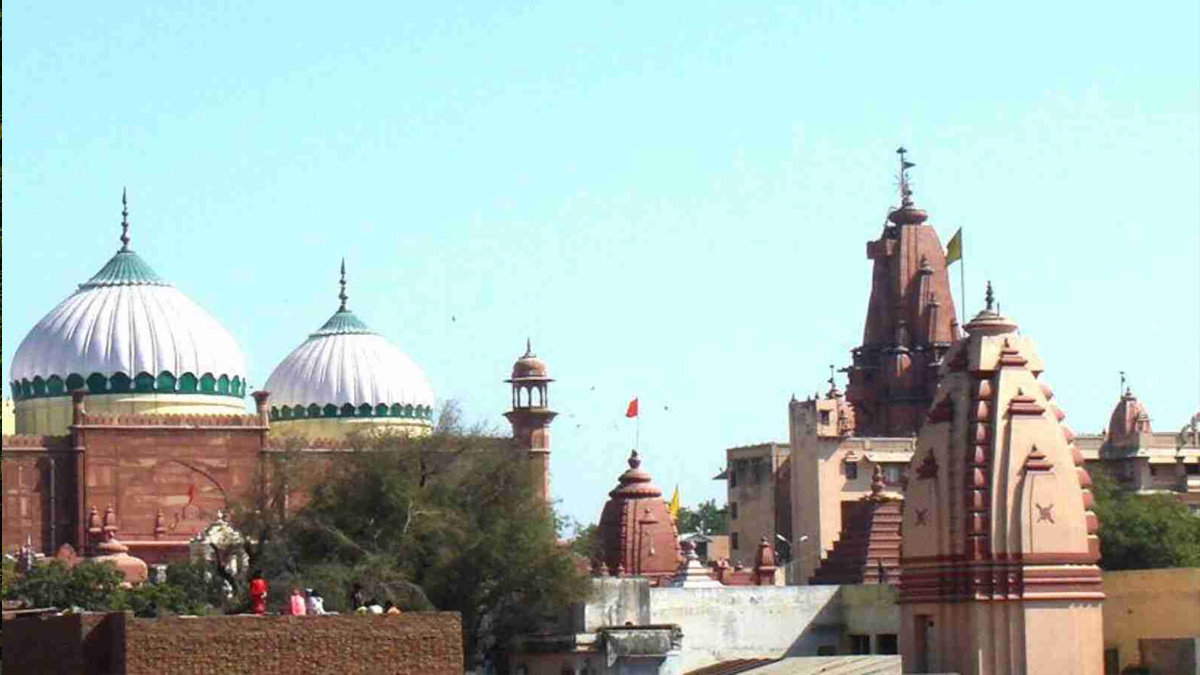
The Bharatiya Janata Party (BJP) appears to be preparing a renewed Hindutva-driven campaign for the 2027 Uttar Pradesh Assembly elections, with Mathura and the Krishna Janmabhoomi dispute emerging as central elements of its political strategy. After the Ram temple in Ayodhya became a defining symbol of the party’s political narrative, the BJP is now bringing the demand for a grand Krishna temple in Mathura into sharper focus.
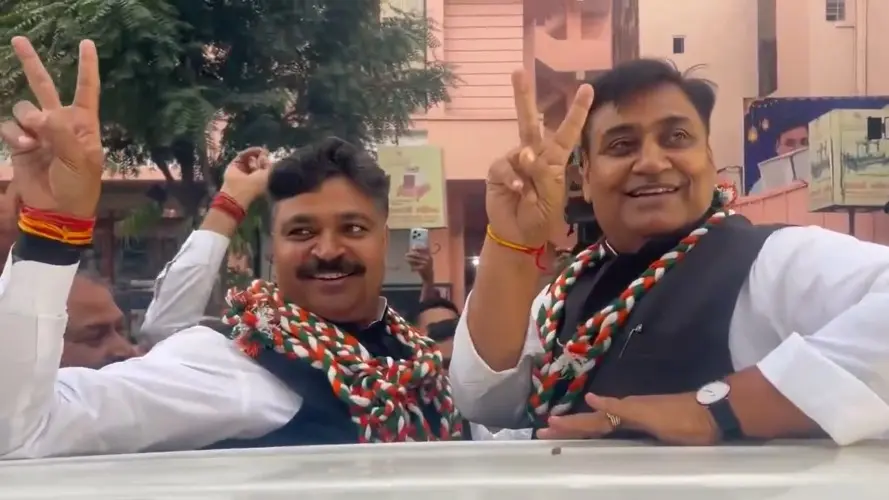
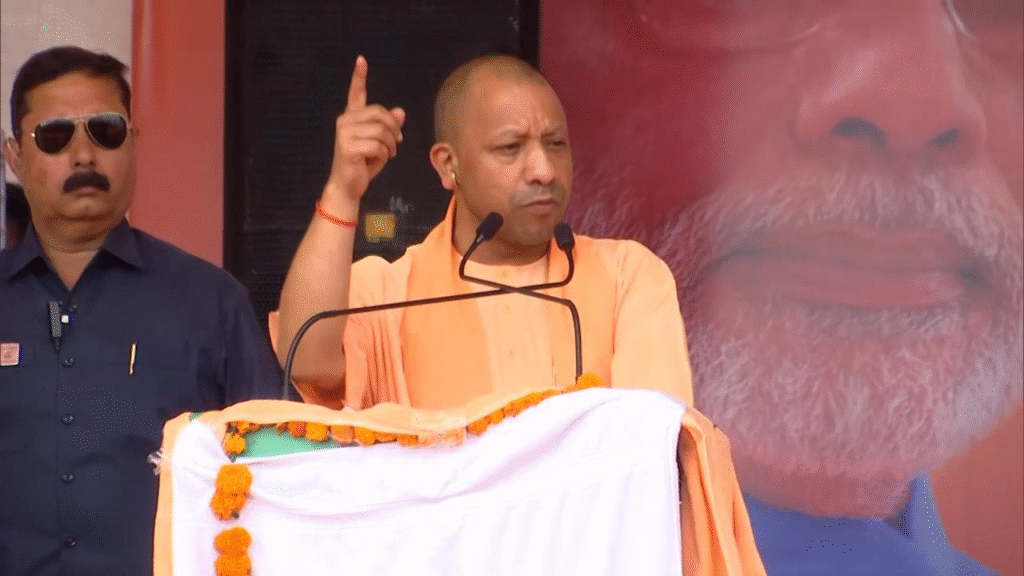
The message became particularly visible during the party’s two-day organisational brainstorming meeting in Mathura on November 16–17. Senior leaders, including Chief Minister Yogi Adityanath, BJP national president Nitin Nabin and Deputy Chief Ministers Keshav Prasad Maurya and Brajesh Pathak, discussed the party’s preparations for the next Assembly election.
The political slogan emerging from the meeting was unmistakable. Maurya declared, “Ayodhya hui hamari hai, ab Mathura ki baari hai” (Ayodhya is ours; now it is Mathura’s turn). He also invited Samajwadi Party (SP) president Akhilesh Yadav to join the proposed ‘kar seva’ for the construction of a grand Krishna temple.
The remarks have brought the long-running Krishna Janmabhoomi-Shahi Idgah dispute back to the centre of Uttar Pradesh’s political debate.
The dispute behind the political campaign
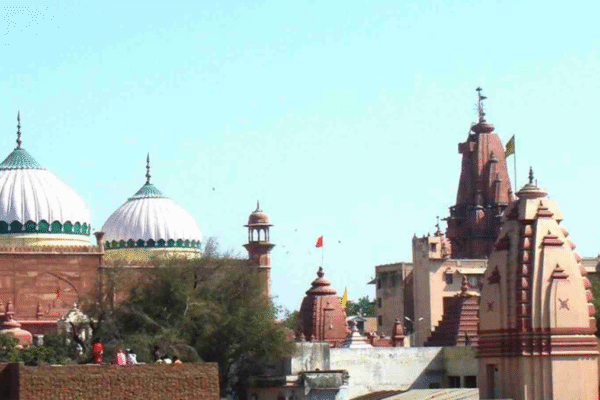
The Krishna Janmabhoomi-Shahi Idgah dispute concerns a 13.37-acre religious complex in Mathura, where the Shri Krishna Janmasthan temple stands adjacent to the Shahi Idgah mosque. Hindu petitioners claim that the mosque was built over a temple associated with Lord Krishna’s birthplace. They have challenged a 1968 agreement that allowed the two religious establishments to coexist and have sought legal relief, including the removal of the mosque.
The dispute remains before the courts, with multiple suits concerning the site. It is therefore important to distinguish between the political demand for a grand temple and a legally established outcome. The final resolution of the dispute rests with the judiciary, not political declarations.
Why has the BJP revived the Mathura issue now?
The timing is politically significant. The consecration of the Ram temple in Ayodhya in January 2024 marked the culmination of a decades-long movement that had played a major role in the BJP’s expansion across northern India. With that project now completed, Mathura offers the party another powerful religious and cultural issue around which it can mobilise supporters.
However, the renewed focus is not simply about temple construction. It also reflects the BJP’s electoral challenge in Uttar Pradesh, where the Samajwadi Party has strengthened its political narrative around PDA — Pichhda, Dalit and Alpsankhyak (backward classes, Dalits and minorities).
By emphasising a shared Hindu religious identity, the BJP may be seeking to bring different caste groups under a broader political umbrella. The Krishna Janmabhoomi issue also has particular significance for the Yadav community, which traditionally associates itself with Lord Krishna. Akhilesh Yadav’s political identity and his party’s strong Yadav support base make Maurya’s invitation strategically significant.
The BJP is effectively challenging the SP leadership to clarify its position on an issue that carries religious as well as social and political implications. If Akhilesh supports the temple demand, it could complicate the SP’s relationship with its minority supporters. If he avoids the issue, the BJP may attempt to portray him as reluctant to identify with an important Hindu religious demand.
Beyond Hindutva: BJP’s wider election strategy
The Mathura meeting also reportedly discussed development, infrastructure, law and order, women’s safety, youth mobilisation and the Uniform Civil Code (UCC). The party is expected to highlight the achievements of the state and central governments while strengthening its booth-level organisation and addressing dissatisfaction among party workers.
This suggests that the BJP does not intend to rely exclusively on religious mobilisation. Its electoral challenge is to combine its ideological agenda with a governance narrative and a stronger organisational network.
A political test for both BJP and SP
The renewed Mathura campaign could reshape the political debate ahead of 2027, but whether it translates into votes remains uncertain. The BJP must demonstrate that its governance record, employment opportunities, rural development and public services can meet voters’ expectations. The SP, meanwhile, faces the challenge of maintaining its PDA coalition while responding to the BJP’s religious and cultural messaging.
There is also a broader question about the role of religious disputes in electoral politics. Temple and mosque controversies can generate powerful political mobilisation, but they can also deepen social divisions if handled irresponsibly.
The BJP’s Mathura strategy is therefore more than a renewed temple demand. It is an attempt to shape the political narrative, challenge Akhilesh Yadav’s social coalition and consolidate Hindu voters ahead of a crucial Assembly election.
Whether Mathura becomes another defining chapter in Uttar Pradesh’s temple politics will depend not only on campaign slogans but also on judicial proceedings, public response and the competing parties’ ability to address the state’s everyday concerns.

NewsHasghag operates a 24/7 news bureau that tracks the real-time, social media-driven stories from India and around the world, keeping you ahead of the day’s key talking points. Our digital-first approach transforms storytelling through the seamless integration of data, interactive charts, video, and audio into every narrative