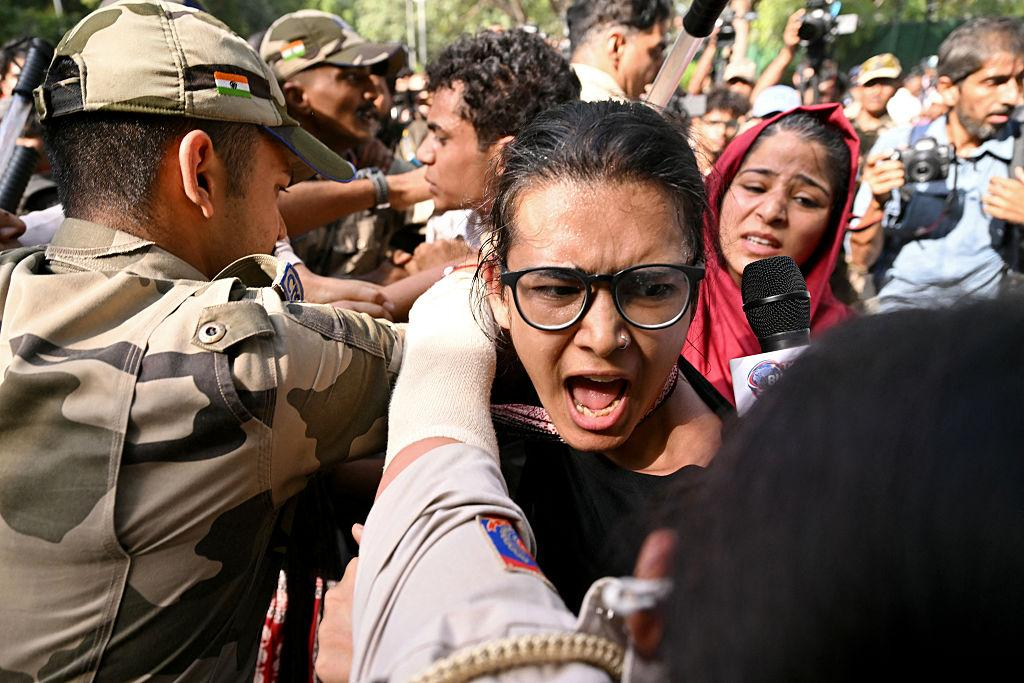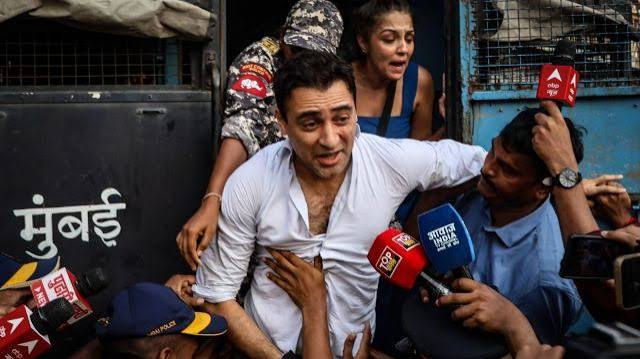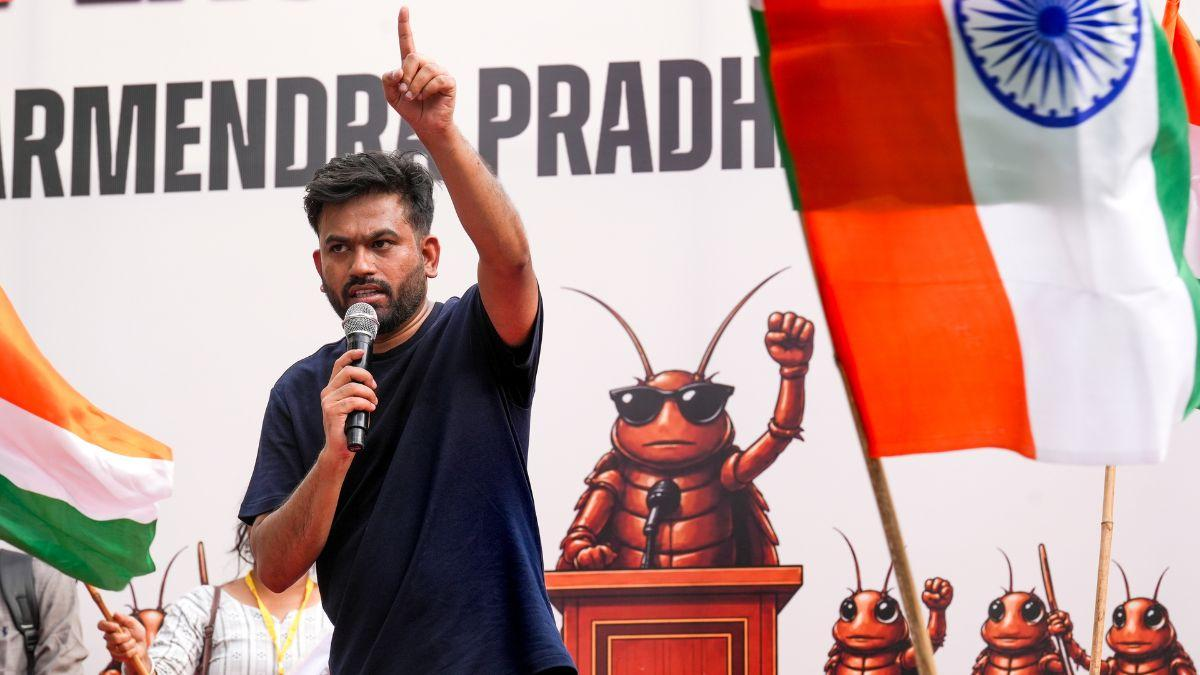


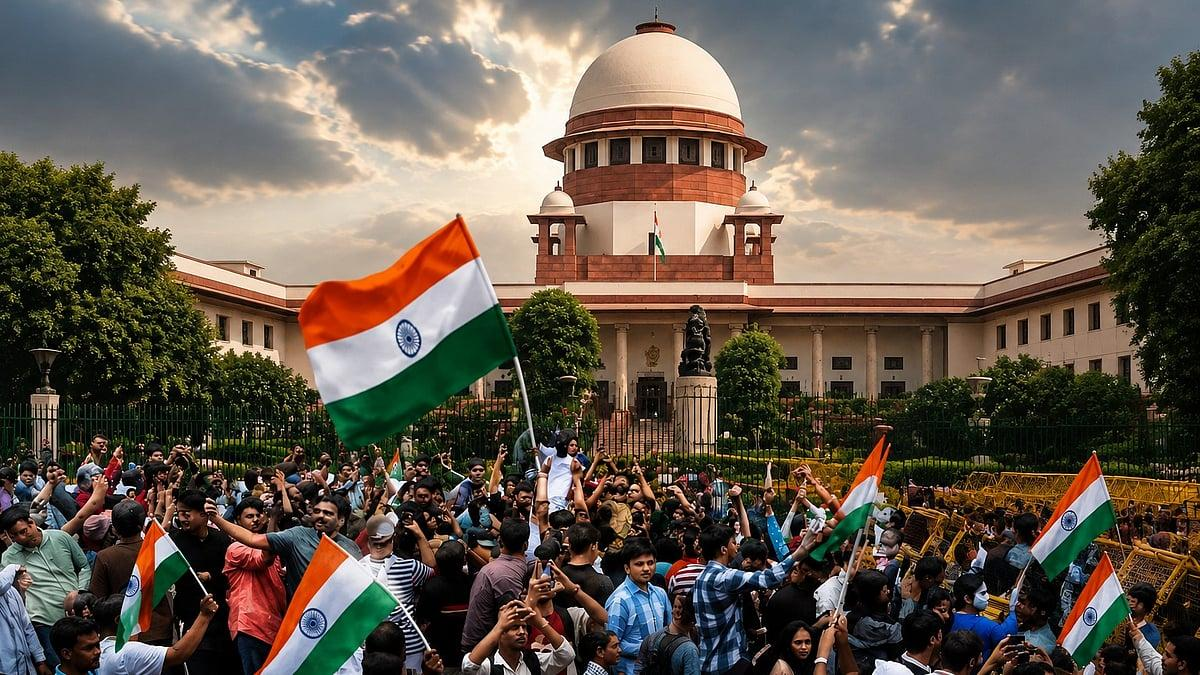
New Delhi: A student protest over the NEET examination controversy has now moved beyond the streets and into the Supreme Court, where the central question is no longer simply whether protesters or police were at fault. The more consequential question is: what exactly happened when the protesters came face-to-face with the police on July 20, and was the response lawful, necessary and proportionate? Protesters have alleged excessive use of force, while Delhi Police has maintained that the gathering became unlawful and that force was used to control an increasingly difficult situation. The police has also told the Supreme Court that more than 240 personnel were injured and alleged that the protest was infiltrated by people who resorted to violence. Now the competing narratives are to be tested against evidence. The Supreme Court has ordered a five-member High-Powered Enquiry Committee headed by former Supreme Court judge Justice R. Subhash Reddy. That changes the nature of the story. Instead of asking the public to choose between two versions of events, the inquiry will attempt to establish what happened, who did what, what orders were given and whether the force used was justified.
1. How did a student protest turn into a confrontation?
The protest emerged from concerns surrounding the NEET examination controversy and wider questions about the credibility and accountability of the examination system. But on July 20, a march towards Parliament ended in confrontation between protesters and security personnel. That transition is critical. A protest does not automatically become a law-and-order crisis, just as the presence of police does not automatically establish excessive force. The committee will have to reconstruct the sequence of events: what happened first, when the situation escalated, who initiated particular acts of violence and whether police action contributed to or prevented further escalation. This is where a minute-by-minute reconstruction could be more revealing than photographs or short social-media videos taken out of context.
2. What weapons and crowd-control methods were actually used?
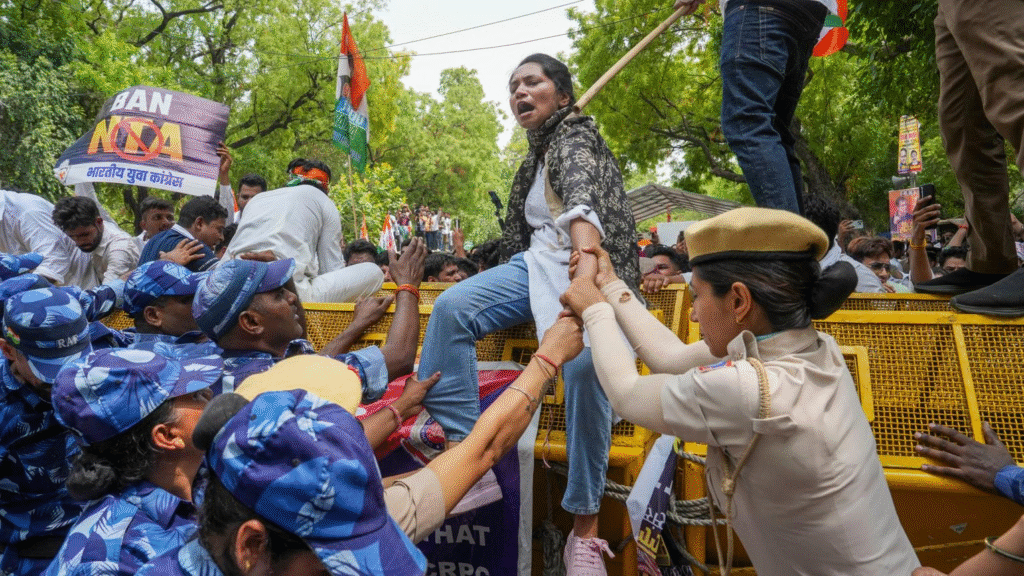
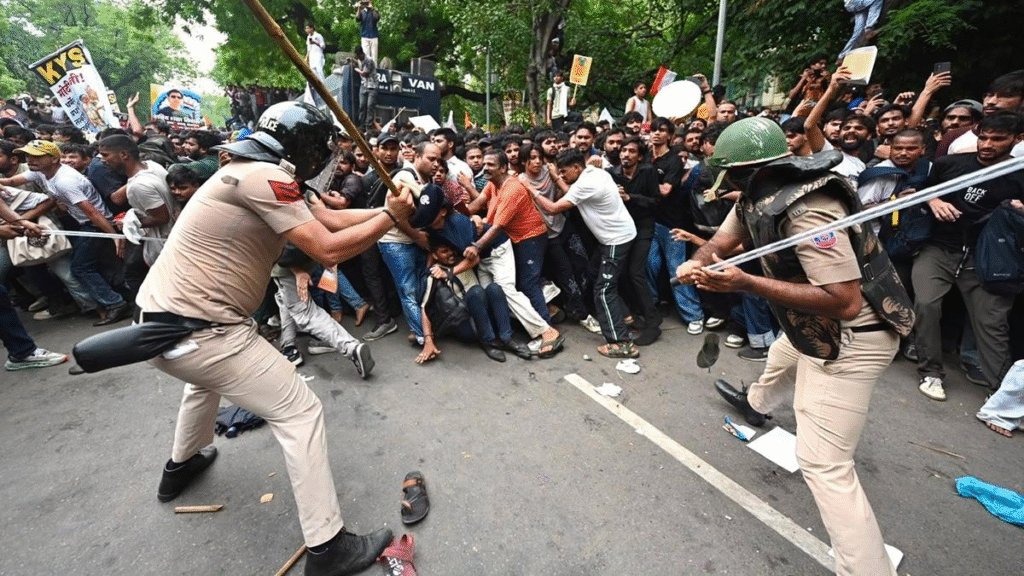
Petitioners have alleged the use of pellet guns, electric batons, lathi charges and tear gas, along with serious injuries to protesters. The committee has been asked to examine these allegations and determine whether the methods used were authorised, necessary and proportionate to the circumstances. But journalism must draw a clear line between an allegation and an established fact. The question is not whether a particular claim has gone viral; it is whether evidence supports it. What weapons were deployed? Who authorised them? Were warnings issued? Against whom were they used? Were less-forceful alternatives available? The answers could determine whether the police response was legitimate crowd control or an excessive use of state power.
3. Who gave the orders?
This may ultimately be the most important question for accountability. Police action during a large protest follows a chain of command. If the inquiry establishes that excessive force was used, identifying the individual officer who physically used force may be only the beginning. The larger question would be whether that officer was following instructions, whether those instructions were lawful and whether senior officials adequately supervised the operation. Accountability cannot stop at the person holding the baton. It must also examine the decision-making structure behind the operation. If the committee finds violations, the consequences could therefore extend beyond the immediate confrontation.
4. Were protesters themselves responsible for violence?
An impartial inquiry cannot investigate only allegations against the police. Delhi Police has alleged that the protest was infiltrated by people described as history-sheeters and anti-social elements and has cited injuries to police personnel as well as damage during the confrontation. Those claims also require evidence. Who attacked police personnel? How were the injuries caused? Was public or private property damaged? Were outsiders involved? And perhaps most importantly, were peaceful students caught in violence allegedly created by others? The Supreme Court’s decision to examine allegations of violence by protesters alongside allegations of police excesses is therefore significant. It suggests that the inquiry is intended to establish facts rather than validate one side’s narrative. A credible investigation should begin with questions, not conclusions.
5. Why does identification of police personnel matter?
The issue of whether police and security personnel were properly identifiable may appear procedural, but it goes directly to accountability. During a chaotic protest, several officers may be involved in crowd-control operations. If an officer cannot later be identified, establishing responsibility for a particular act of force becomes extremely difficult. Visible uniforms, nameplates and other forms of identification create a basic accountability mechanism. The larger question is therefore not restricted to July 20: when the state exercises coercive power over citizens, can the individual exercising that power be identified and held accountable if the law is broken?
6. Where does policing end and surveillance begin?
The case also raises a modern question that goes beyond conventional crowd control. Delhi Police has told the Supreme Court that facial-recognition technology was used during the protests to identify people with criminal backgrounds. The use of such technology introduces a second layer to the controversy: privacy. A government has a legitimate interest in preventing violence and identifying people wanted for serious offences. But citizens also have legitimate questions about how their images are collected, analysed, stored and used when they attend a protest. The constitutional questions surrounding facial recognition, surveillance and privacy could therefore prove to be as significant as the allegations of physical force. The technology may help authorities identify offenders, but it also raises a fundamental question: how much surveillance should citizens accept while exercising their democratic right to protest?
7. What will the evidence finally show?
This is perhaps the most important question because the credibility of the entire inquiry will depend on evidence rather than competing claims. The Supreme Court has directed that material including CCTV footage, drone footage, body-worn camera recordings, wireless communications and PCR call records connected with the protests be preserved and made available to the committee. Such evidence could allow investigators to reconstruct the events with considerably greater precision. It could confirm some allegations, weaken others or reveal a sequence far more complicated than the public narratives suggest. That is precisely why preserving the evidence matters. Once footage is lost, deleted or overwritten, the truth becomes dependent on memory, testimony and political claims. With contemporaneous recordings available, the committee has a much better chance of establishing what actually happened.
Beyond July 20
The significance of this case extends well beyond one student protest. India’s constitutional framework protects peaceful assembly and dissent, while the state has an equally legitimate responsibility to protect public safety, government property and police personnel. The difficult question lies between these two principles. How much force is necessary to maintain public order, and at what point does necessary force become excessive force? That distinction cannot be settled by political rhetoric, viral videos or competing press conferences. It has to be established through evidence. For the students, the police officers and the wider public, that distinction matters. A peaceful protest should not become a licence for violence, but maintaining public order should not become a licence for disproportionate force either. The Supreme Court’s intervention therefore presents an opportunity to examine both sides of the confrontation without predetermined conclusions. The real issue is not simply who won the argument after the protest. It is whether the system can establish the truth when citizens challenge the system itself—and whether accountability will follow wherever the evidence leads.
That is what the Supreme Court now has to find out.

NewsHasghag operates a 24/7 news bureau that tracks the real-time, social media-driven stories from India and around the world, keeping you ahead of the day’s key talking points. Our digital-first approach transforms storytelling through the seamless integration of data, interactive charts, video, and audio into every narrative