


The Arc of Freedom: How India Evolved from Nehru to Indira to Modi
As the national flag flies across the republic on Independence Day, the national address from the Red Fort serves as a historical mirror. Over nearly eight decades, the transformation of India—spanning agriculture, employment, caste dynamics, women’s empowerment, and international relations—has unfolded through three distinct leadership eras. Each prime minister entered the national stage with specific promises, creating a ongoing interplay between political vision and ground reality.
The Nehruvian Era: Constructing the Foundations of a Republic
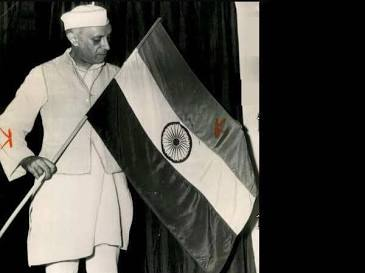
Jawaharlal Nehru took charge of an impoverished, partition-ravaged nation facing immediate crises. His rhetoric from the ramparts emphasized democratic nation-building, heavy industrialization, scientific temper, and global non-alignment.
Nehru promised economic self-reliance through state-led Five-Year Plans. In agriculture, he prioritized massive hydro-electric dams and land reforms to dismantle feudal landholding patterns. However, industrial import-substitution often came at the cost of agricultural investment, leaving the country dependent on foreign food aid. Socially, his administration introduced the Hindu Code Bills to legally empower women with rights to inheritance and divorce, while constitutionally outlawing untouchability and instituting affirmative action reservations for lower castes. Internationally, Nehru co-founded the Non-Aligned Movement (NAM), establishing India as a moral voice for newly independent post-colonial nations, though the 1962 border conflict exposed severe strategic vulnerabilities.
The Indira Gandhi Years: Populism, Self-Sufficiency, and State Power
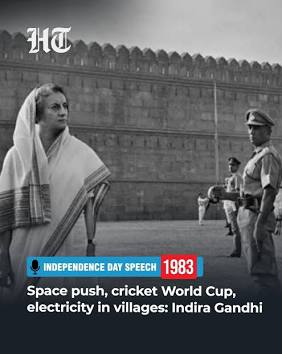
Indira Gandhi altered the national direction by shifting political language toward radical populism and state control. Her landmark campaign slogan, Garibi Hatao (Abolish Poverty), sought to bypass traditional local elites and connect directly with marginalized communities.
Under her leadership, the promise of food security became a reality through the Green Revolution, transforming India from a food-dependent state into a self-sufficient agrarian producer. Yet, employment growth was constrained by rigid license-permit policies and public sector monopolies. While lower-caste groups gained greater political visibility, deep-seated caste violence persisted. Regarding women’s empowerment, her tenure demonstrated top-tier political authority, but grassroots gender equity lagged behind. On the world stage, Gandhi moved away from passive non-alignment by signing the 1971 Indo-Soviet Treaty, decisively asserting regional dominance during the Bangladesh Liberation War. Nevertheless, her centralizing tendencies reached their peak during the 21-month Emergency, presenting a profound test for the nation’s democratic institutions.
The Modi Era: Digital Infrastructure, Nationalism, and Global Ambition
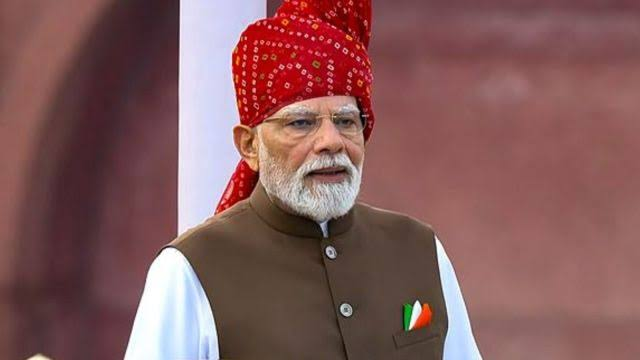
Narendra Modi redefined the discourse from the Red Fort by introducing ambitious goals framed around Aatmanirbhar Bharat (Self-Reliant India) and Viksit Bharat (Developed India). His vision prioritizes digital public infrastructure, welfare delivery, domestic manufacturing, and assertive diplomacy.
In agriculture, traditional crop-focused policies were supplemented by direct income transfers and digitized supply chains, though farm income stress remains a persistent challenge. On employment, initiatives like “Make in India” aimed to transform the country into a global manufacturing hub, yet absorbed labor slowly, leaving large numbers of young people seeking formal work. For women, programs shifted toward targeted welfare—such as domestic gas connections, sanitation access, financial inclusion, and the expansion of self-help schemes like Lakhpati Didis. Caste dynamics transitioned as backward classes and tribal communities became central to electoral strategy, even as social polarization generates active debate. Globally, non-alignment evolved into multi-alignment, with India asserting its position as a major voice for the Global South while building strategic partnerships with Western economies.
From the foundational institution-building of Nehru to the state intervention of Indira Gandhi and the technology-driven modernization of Narendra Modi, the nation has undergone vast structural changes. As the republic continues its trajectory, the true test of progress remains bridging the gap between national promises and the daily realities of its citizens.

Prabha Gupta is a veteran journalist and civic thinker dedicated to the constitutional ideals of dignity and institutional ethics. With over thirty years of experience in public communication, her work serves as a bridge between India’s civil society and its democratic institutions. She is a prominent voice on the evolution of Indian citizenship, advocating for a national discourse rooted in integrity and the empowerment of the common citizen