


RSS at 100 — Part 6: How Did the RSS Build a Nationwide Network?
Two-Line Summary
From a small gathering in Nagpur in 1925, the RSS has grown into a nationwide volunteer network. Its expansion has relied not on elections or conventional advertising, but on shakhas, full-time workers, training and a wider ecosystem of organisations.
Why This Matters
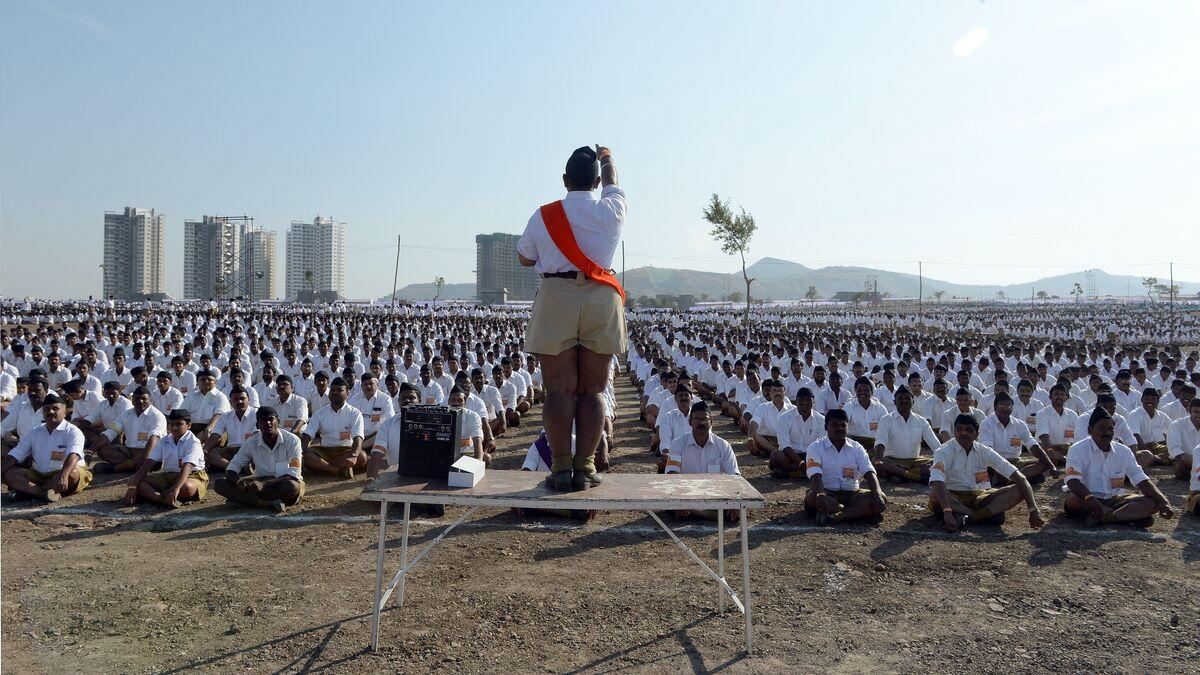
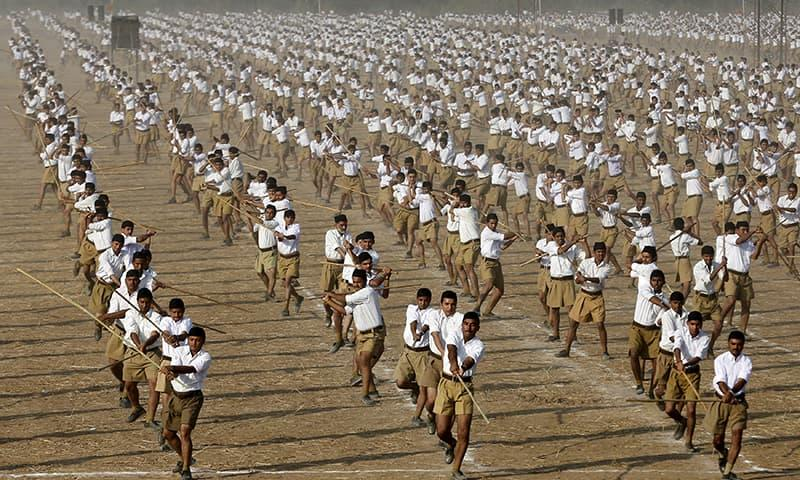
The RSS’s influence cannot be understood only through its relationship with the BJP. Its real strength lies in the organisational network it has built over a century. The basic unit of this network is the shakha, where volunteers meet regularly for physical activities, discussions, training and organisational work. The RSS says that by March 2026, it had 88,949 daily shakhas at 55,683 locations across India. The question is not simply how large this network has become, but how it has been able to sustain and reproduce itself for a century.
From Nagpur to India
The RSS began in Nagpur in 1925 with a small group of volunteers. Its expansion was gradual rather than electoral. The organisation established shakhas in new cities and regions and trained volunteers who could take responsibility for starting and running additional units. This created a model that could be replicated with relatively little infrastructure. A shakha did not require a large office or expensive equipment. Its principal resource was the volunteer. Over decades, this simple model helped the organisation move beyond Maharashtra into different parts of India.
The Pracharak System
One of the most important elements in this expansion was the pracharak—a full-time RSS worker who dedicates himself to organisational activities. Pracharaks have traditionally been sent to different regions to establish shakhas, train volunteers and strengthen the organisation. This created continuity. A trained worker could move to a new area, build a local network and train others to continue the work. The organisation therefore did not have to depend entirely on a permanent salaried workforce.
Beyond the RSS
The RSS’s expansion did not stop with shakhas. Over the decades, organisations emerged in areas such as education, labour, student activities, tribal welfare and social service. The RSS describes these organisations as having their own structures and areas of work. The broader network is commonly referred to as the Sangh Parivar. This distinction is important. The RSS does not formally constitute a single organisation controlling every body associated with the Sangh. Yet many of these organisations share an ideological background, organisational history and, in some cases, personnel connections. That creates a network whose influence is considerably wider than the RSS’s own formal structure.
A Network, Not Just a Hierarchy
This is perhaps the most distinctive feature of the RSS model. A political party generally operates through a formal political hierarchy. A corporation has shareholders, employees and defined management structures. The RSS operates differently. It combines a central organisational framework with thousands of local shakhas and a wider group of organisations that maintain their own structures. The RSS says these organisations are autonomous. Critics, however, argue that common ideology, personnel links and coordination create a wider sphere of influence. Both facts can exist simultaneously. Formal independence does not necessarily mean absence of influence. But influence does not automatically mean formal control.
Why the Volunteer Model Matters
The RSS’s organisational strength comes largely from its ability to turn participation into long-term commitment. A person may enter a shakha as a young volunteer, receive training, take on responsibilities and eventually become an organiser. Some volunteers become pracharaks. Others enter professions such as education, social work, labour organisations or politics. This creates a network of people who carry organisational experience into different areas of public life. The result is not simply a large membership base. It is a self-reproducing organisational system.
The Numbers Tell Only Part of the Story
The RSS reported 72,354 shakhas in 45,411 locations in October 2024. By March 2026, it reported 88,949 daily shakhas in 55,683 locations. The increase is significant, but numbers alone do not explain the organisation’s influence. The more important factor is continuity. A local shakha can produce trained volunteers. Those volunteers can establish new shakhas. Some can become full-time workers, while others can move into different professions and institutions. Over generations, that creates an organisational network capable of reproducing itself.
Where Does Influence End?
This is where the RSS story becomes more complicated. If organisations associated with the Sangh are formally independent, how much influence does the RSS actually exercise over them? Who coordinates their activities? How financially independent are they? When an RSS-trained individual enters politics, does organisational affiliation continue to matter? And when several organisations share ideology and personnel, where does one institution’s responsibility end and another’s begin? These are not questions that can be answered simply by counting shakhas. They require examining the relationships between the organisations themselves.
The RSS did not become a nationwide organisation through one political campaign or one electoral victory. Its growth was gradual and built around a simple formula: local shakhas, trained volunteers, full-time pracharaks and an expanding network of organisations. A century later, the RSS says it has nearly 89,000 daily shakhas across more than 55,000 locations. Its organisational achievement therefore lies not merely in its size, but in its ability to reproduce its network across generations. That is also what makes the RSS difficult to understand through conventional political categories. It does not contest elections itself, yet people associated with its wider network have entered politics. It is not a conventional NGO, yet it has developed extensive social activities. It says associated organisations are autonomous, yet they share a common organisational and ideological heritage. The central question, therefore, is no longer simply how big the RSS is. It is how an organisation that operates largely through volunteers has been able to build and sustain such extensive influence across Indian society.
What Comes Next?
The next part will examine another crucial aspect of the RSS story: its social-service network and the organisations through which it reaches education, tribal communities, villages and other sections of society.
Part 7: RSS Beyond Politics — How Deep Does Its Social Network Go?

NewsHasghag operates a 24/7 news bureau that tracks the real-time, social media-driven stories from India and around the world, keeping you ahead of the day’s key talking points. Our digital-first approach transforms storytelling through the seamless integration of data, interactive charts, video, and audio into every narrative