


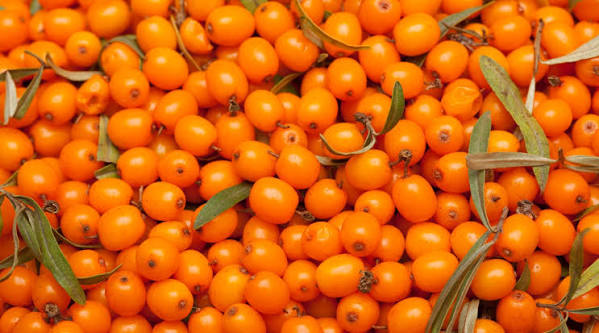



Sea Buckthorn: The Himalayan Berry Gaining New Attention for Its History, Benefits and Potential
From traditional medicine to modern nutrition, sea buckthorn is emerging as a high-value Himalayan crop with growing scientific, commercial and ecological interest.
Sea buckthorn, scientifically known as Hippophae rhamnoides, is a thorny shrub that grows naturally in some of the world’s harshest cold and arid regions. In India, it is particularly associated with Ladakh and other parts of the Trans-Himalayan region. Its small orange-yellow berries have attracted increasing attention because they combine nutritional value, traditional medicinal use, ecological benefits and commercial potential. Recent research and renewed institutional interest are bringing this relatively lesser-known plant into the mainstream.
An Ancient Plant With a Long History
Sea buckthorn has been used for centuries in traditional medical systems across parts of Central and East Asia. A review of its history notes that its medicinal use is recorded in the Tibetan medical tradition as early as the eighth century. Traditional applications included digestive problems, skin conditions, ulcers and other ailments. The plant’s berries, leaves, seeds and other parts have been used in different traditional practices.
Modern scientific interest grew significantly during the 20th century. Research into sea buckthorn expanded in countries including Russia and China, leading to the development of food, nutritional and cosmetic products. In India, the plant has received particular attention because of its abundance in the difficult terrain of Ladakh and its potential to provide both economic and ecological benefits.
Why Is Sea Buckthorn Gaining Traction Now?
The recent interest is not simply because sea buckthorn is being promoted as a traditional remedy. Researchers are studying its nutritional composition, while agricultural and scientific institutions are examining its potential as a commercial crop suited to cold, dry environments.
A significant recent development came in August 2026, when the Union Ministry of Agriculture and Farmers Welfare constituted a high-level committee to examine the establishment of a dedicated National Sanjeevani Research Centre for Sea Buckthorn in Ladakh’s Nubra Valley. The proposed centre is intended to strengthen research, cultivation and value addition around the crop.
The growing interest also reflects the search for crops that can contribute to livelihoods in difficult agricultural environments. Sea buckthorn is already naturally adapted to the cold-arid conditions of the Trans-Himalayan region. Research has described it as an economically and ecologically important species with applications in food, nutraceuticals, cosmetics, pharmaceuticals and environmental management.
What Makes Sea Buckthorn Nutritionally Interesting?
The berries contain a combination of vitamins, carotenoids, polyphenols, phytosterols and fatty acids. Research has also highlighted the presence of omega-3, omega-6, omega-9 and the less common omega-7 fatty acid. These compounds are among the reasons sea buckthorn has attracted attention in functional foods and nutritional products.
Scientific studies have investigated its antioxidant, anti-inflammatory, antimicrobial, cardiovascular and dermatological properties. Sea buckthorn oil has also attracted interest in skincare because of its fatty acids and other bioactive compounds. However, many reported health effects are based on laboratory, animal or limited human studies, and further clinical research is needed before treating sea buckthorn as a proven treatment for specific diseases.
Beyond Health: An Ecological Resource
Sea buckthorn’s importance goes beyond its nutritional value. Its extensive root system can help bind soil, making the plant useful for soil conservation and erosion control. Research has identified its potential in wind and sand control, soil and water conservation and the restoration of difficult landscapes.
For Ladakh, this ecological role is particularly significant. A plant capable of surviving in harsh terrain while also producing commercially useful berries offers the possibility of combining environmental protection with rural economic activity.
From Wild Berry to High-Value Crop
Sea buckthorn is increasingly being viewed not merely as a wild Himalayan shrub but as a potential high-value crop. Its berries can be processed into juices, beverages, jams and other food products, while extracts and oils are used in nutritional and cosmetic applications.
The challenge now is to develop the sector without damaging the fragile Himalayan ecosystem. Sustainable harvesting, scientific cultivation, quality standards, processing infrastructure and stronger research will determine whether sea buckthorn can become a significant source of income for Himalayan communities.
For consumers, sea buckthorn’s nutritional profile makes it an interesting food, but it should not be treated as a miracle cure. For Ladakh and other cold-desert regions, however, the plant represents something broader: a crop adapted to a difficult environment with potential value in nutrition, ecology, traditional knowledge and rural enterprise. The renewed scientific and institutional interest suggests that the next chapter of sea buckthorn may be less about rediscovering an old plant and more about understanding how it can be responsibly developed for the future.

Prerna Varshney is a journalist and social commentator with over five years of experience in health, gender, and policy reporting. Her work reflects a deep commitment to truth and empathy, simplifying complex issues for everyday readers.