



MCD Is Responsible for Unauthorised Construction in Delhi
The Satya Niketan tragedy has exposed serious gaps in MCD enforcement, raising questions about how unauthorised buildings, overcrowded PGs and unsafe hostels continue to operate in Delhi.
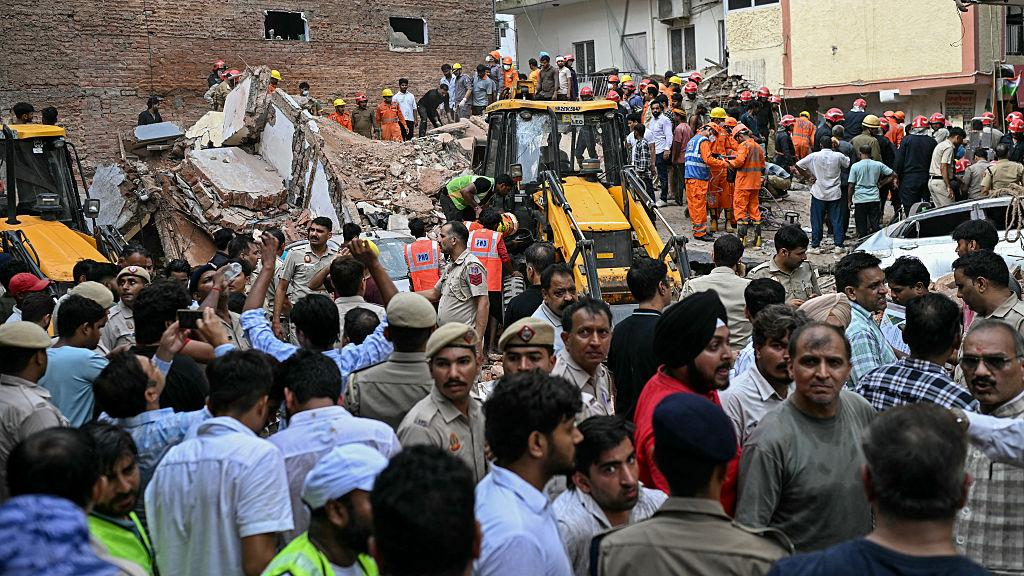
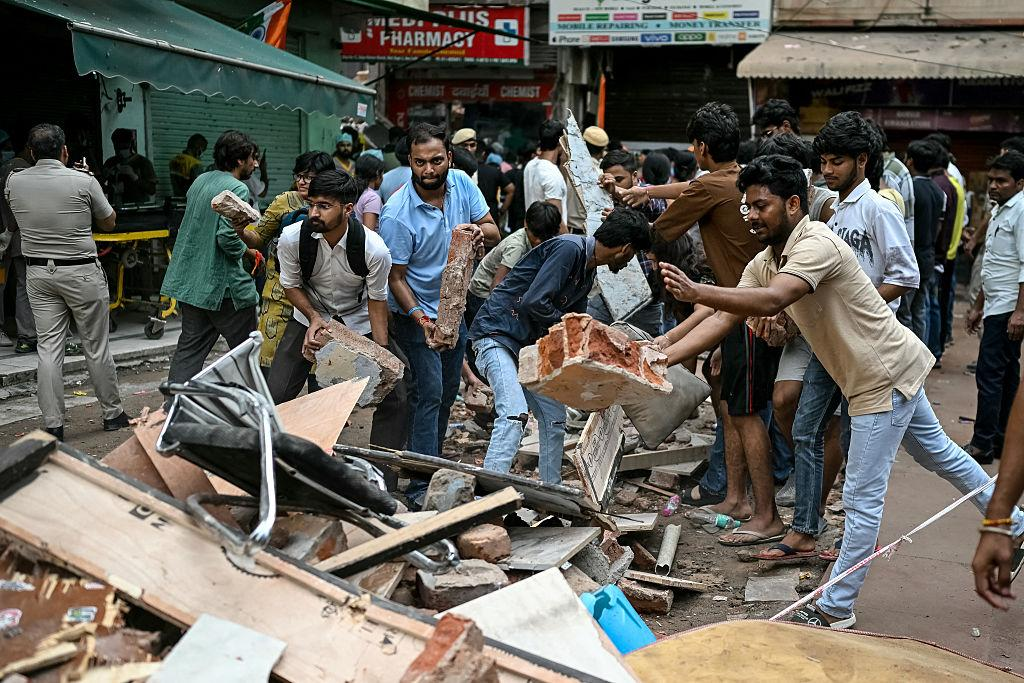
The collapse of a five-storey paying guest accommodation in Delhi’s Satya Niketan has brought a disturbing reality into focus: unauthorised construction and unsafe student housing can continue despite the existence of municipal regulations and enforcement authorities.
In the building that collapsed, police sources cited by The Times of India said around 45 students were housed in 15 rooms, with three students reportedly accommodated in each room at ₹10,000 per person. That translates into more than ₹4 lakh a month in rental receipts.
The economics become even more striking when compared with the reported lease cost. The Indian Express has reported that the hostel operator had taken the five-storey building on lease for about ₹1 lakh a month in August 2025 and was operating several facilities in the area. If the reported occupancy and rents are accurate, the difference between the lease cost and gross collections created a powerful incentive to maximise the number of paying occupants.
But the central question is not only how much money the operator made. It is also this: where was the Municipal Corporation of Delhi while an unauthorised building was being used to house dozens of students?
According to an MCD official cited by Hindustan Times, the collapsed building stood on a 55-square-yard plot and had a basement and four floors. The official said there was no sanctioned building plan and that unauthorised construction had taken place in the basement. Other reports have pointed to additional floors, structural weaknesses and ongoing construction or repair work as matters being examined in the investigation.
The precise chain of events leading to the collapse must be established through police and technical investigations. However, the MCD’s responsibility for enforcing building regulations cannot be ignored.
The tragedy exposes a fundamental problem in urban student housing: an additional floor can generate substantial additional income, but the structural cost of supporting that floor can be far higher than the revenue calculation suggests.
The same applies to additional beds. A room designed for two people can become considerably more profitable when three or more occupants are packed into it. But greater occupancy also means greater loads, greater dependence on staircases and exits, increased fire risk and greater consequences if the structure fails.
This is why the ₹4 lakh figure matters. It is not evidence by itself of wrongdoing. It is evidence of the economic scale of the business involved—and therefore of the incentive that regulators need to examine.
But the financial incentive of property owners and operators does not remove the MCD’s responsibility. The purpose of municipal enforcement is to ensure that commercial profit does not override building safety.
Why Does MCD Ignore PGs and Hostels?
The Satya Niketan collapse raises a direct question: why do PGs and hostels receive so little attention from the MCD until a tragedy occurs?

These properties are not hidden. They often operate in busy neighbourhoods, advertise rooms publicly, accommodate dozens of students and generate significant rental income. Construction activity, additional floors, basement conversions and overcrowding can be visible to residents, neighbours and local authorities.
If such properties continue operating for months or years, the MCD must explain whether inspections were conducted, whether complaints were received, whether notices were issued and whether any enforcement action was taken.
The issue is not to accuse every MCD official of corruption without evidence. The issue is institutional accountability. If unauthorised buildings are allowed to operate despite repeated violations, the system must reveal whether the failure resulted from negligence, lack of resources, administrative delay, political pressure or possible collusion.
Delhi’s PG crisis cannot be addressed simply by sealing a few buildings after a collapse. The city needs a system in which students can verify whether a PG is legally registered, whether its building plan is sanctioned, whether structural and fire-safety certificates are current, and how many occupants the property is legally permitted to house.
The Delhi government is now considering legislation that would require PGs to obtain licences, police clearance and structural and fire-safety certification, with registered properties listed on a public portal.
The real test will be enforcement.
A licence system will have little value if unauthorised buildings continue to operate without inspection. Safety certificates will not protect students if they are issued without proper verification. Public portals will not help families if the information is incomplete or outdated.
The MCD must also publish inspection records, notices, sealing orders and action taken against unauthorised PGs and hostels. Responsibility should not disappear into paperwork after a building collapses.
The Satya Niketan tragedy shows what happens when student accommodation becomes primarily a revenue calculation. When four floors become an opportunity for higher rent and every additional bed becomes another monthly payment, safety cannot be treated as an expense to be postponed.
The investigation must determine exactly who made which decisions, who benefited financially, who was responsible for checking compliance—and why the MCD did not prevent an unauthorised building from being used as a hostel before lives were lost.

Prabha Gupta is a veteran journalist and civic thinker dedicated to the constitutional ideals of dignity and institutional ethics. With over thirty years of experience in public communication, her work serves as a bridge between India’s civil society and its democratic institutions. She is a prominent voice on the evolution of Indian citizenship, advocating for a national discourse rooted in integrity and the empowerment of the common citizen