


India Collects ₹12 Lakh Crore in Direct Taxes. But Where Is the Taxpayer’s Money Going?
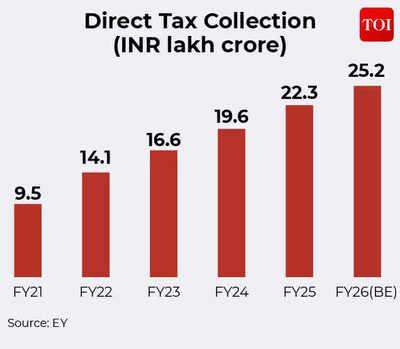
India’s direct-tax collections have crossed ₹12 lakh crore in the first half of the financial year, providing the government with a larger pool of resources to fund public services, infrastructure, welfare and development. Between April 1 and September 17, net direct-tax collections rose 12.96% year-on-year to ₹12.12 lakh crore, while gross collections increased 15.19% to ₹14.32 lakh crore.
For the taxpayer, however, the important question does not end with how much the government collects.
It begins with how that money and the public machinery supported by it are used.
The question becomes particularly relevant after the large-scale celebrations organised around Prime Minister Narendra Modi’s 76th birthday on September 17.
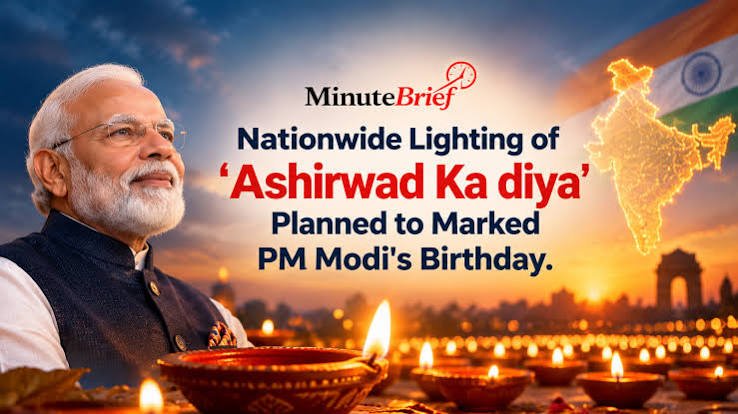
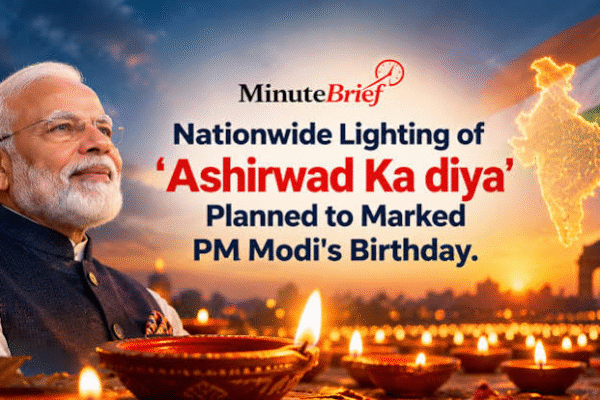
Across the country, governments, political organisations and public institutions participated in programmes linked to the Prime Minister’s birthday and his 25 years in public life. The BJP described the month-long exercise as the “Seva Sankalp Abhiyan”, while government departments in some states also became involved in associated activities.
How many diyas does a birthday need?
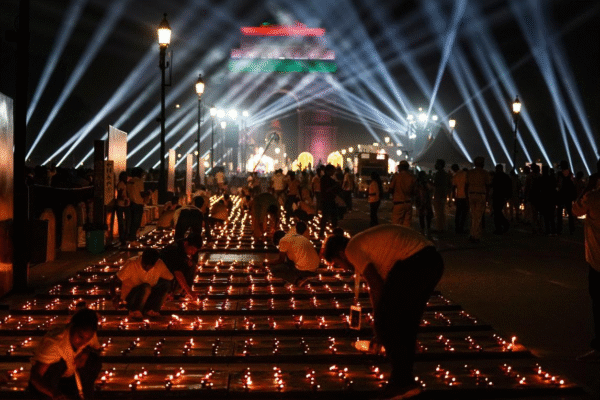
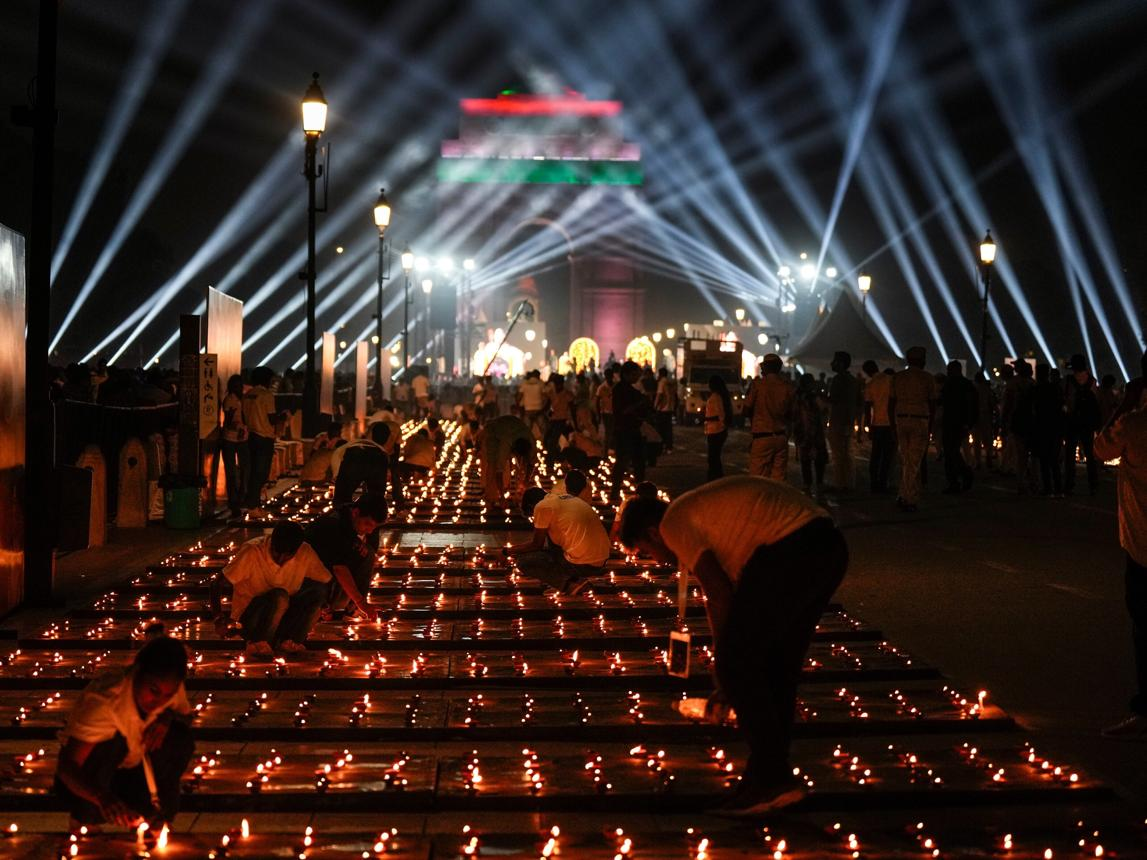
In Delhi, 1.25 lakh diyas were lit at Kartavya Path, Sewa Teerth and the New Parliament complex. The Delhi government described the celebrations as part of its public-service campaign.
Madhya Pradesh went much further. Government-linked reports put the number of diyas lit across the state at 3.55 crore, including 33.27 lakh at Ujjain.
The visual spectacle is undeniable. But spectacle inevitably raises a basic question in a democracy: who paid for it?
It would be incorrect to claim that the entire exercise was financed from taxpayers’ money without examining government procurement records and expenditure statements. Nor is there currently a verified public figure establishing the total quantity of oil used or the total cost of the Madhya Pradesh diya events. Reports themselves acknowledge that such a figure has not been established.
That is precisely why transparency matters.
If public money was used for any part of these celebrations—whether for lamps, oil, transportation, school arrangements, electricity, security, publicity or event management—citizens are entitled to know the amount.
When schools become celebration venues
The issue becomes more significant when government schools enter the picture.
In Delhi, reports based on a Directorate of Education communication said at least 75 government schools were instructed to light diyas on campus to mark Modi’s birthday. The communication also referred to diya material being supplied to certain schools, while other schools were told to arrange the material themselves.
The same reporting said teachers were asked to undertake additional activities, including competitions and recording events for uploading.
This raises a question larger than the cost of a clay lamp.
Should government schools, whose primary responsibility is education, be directed to participate in celebrations of an incumbent Prime Minister’s birthday?
There is an important distinction between a government-sponsored public-service programme and a political-party programme. The government says the “Seva Sankalp” campaign is about public service, welfare and development. The BJP, meanwhile, has separately planned a nationwide campaign highlighting Modi’s 25 years in public life.
When the two spheres overlap, transparency becomes essential.
₹2 per lamp—and the larger question
West Bengal provides an especially useful example of why expenditure should be disclosed. Reports said the state planned diya lighting across 80,000 educational institutions and set aside ₹2 per earthen lamp for procurement.
At ₹2 per lamp, even a seemingly modest amount becomes substantial when multiplied across a very large number of institutions and participants.
But the real issue is not whether ₹2 is a large amount.
It is whether public expenditure should be directed towards commemorating the birthday or political journey of a serving Prime Minister at all—and, if so, under what rules and with what disclosure.
Taxpayer money is not government money
This distinction is often forgotten.
The government collects money from citizens and businesses through income tax, corporate tax, GST and numerous other levies. Once collected, it becomes public revenue. Governments are authorised to spend it, but that authority comes with an obligation to demonstrate public purpose, financial propriety and accountability.
The fact that a government legally spends money does not end the public-interest question.
A taxpayer may reasonably ask: Could the same money have been spent on repairing a government school, buying laboratory equipment, improving a hospital, supporting teachers, providing sanitation, maintaining roads or strengthening public transport?
That does not mean every rupee spent on a cultural or ceremonial activity is automatically wasteful. Public celebrations can have cultural, religious or civic purposes. But when the occasion is the birthday of a serving political leader, the question of political neutrality and use of state resources becomes unavoidable.
The ₹12 lakh crore question
India’s rising tax collection is generally presented as a sign of stronger revenue mobilisation and economic capacity. That is important.
But a growing tax pool also increases the responsibility of those controlling public expenditure.
The taxpayer does not merely want to know how much the government collected.
The taxpayer should also be able to ask:
How much was spent? Where was it spent? Who authorised it? Was it a government programme or a political programme? Which department paid for it? What was the procurement process? And what public benefit was delivered?
The diya may burn for a few minutes. The expenditure records should remain available for years.
That is the real meaning of public accountability.
India’s ₹12.12 lakh crore direct-tax collection is therefore more than an economic statistic. It is a reminder that every rupee collected from citizens carries a responsibility.
The debate should not be about whether citizens should celebrate a Prime Minister’s birthday.
They are free to celebrate.
The question is simpler—and more important:

Prabha Gupta is a veteran journalist and civic thinker dedicated to the constitutional ideals of dignity and institutional ethics. With over thirty years of experience in public communication, her work serves as a bridge between India’s civil society and its democratic institutions. She is a prominent voice on the evolution of Indian citizenship, advocating for a national discourse rooted in integrity and the empowerment of the common citizen