

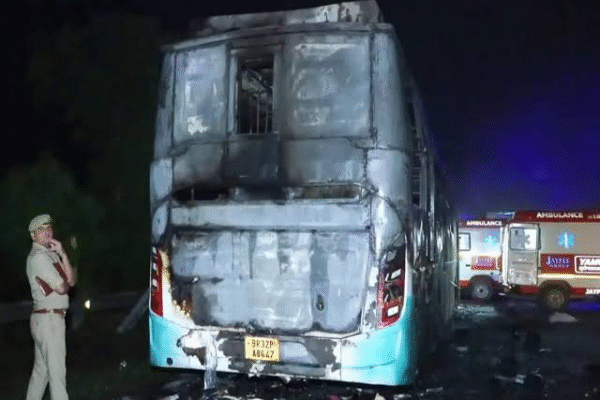


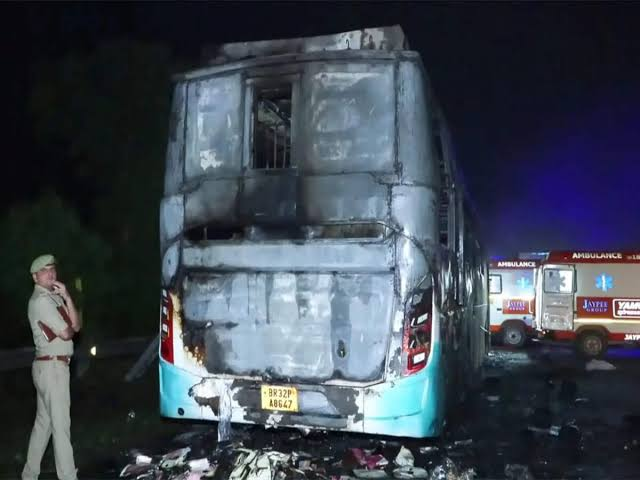
When an overnight sleeper bus erupted into flames along the Yamuna Expressway near Jewar, taking nine lives, the immediate public anger settled where it always does—on the driver and conductor. Police swiftly booked the crew for culpable homicide, filing reports on ignored burning smells and unstopped vehicles. Yet focusing solely on the crew covers up a far more insidious culprit: a systemic, deeply entrenched network of corruption across Regional Transport Offices (RTOs) and enforcement agencies, which systematically trades passenger safety for cash bribes.
The Anatomy of a Manufactured Disaster
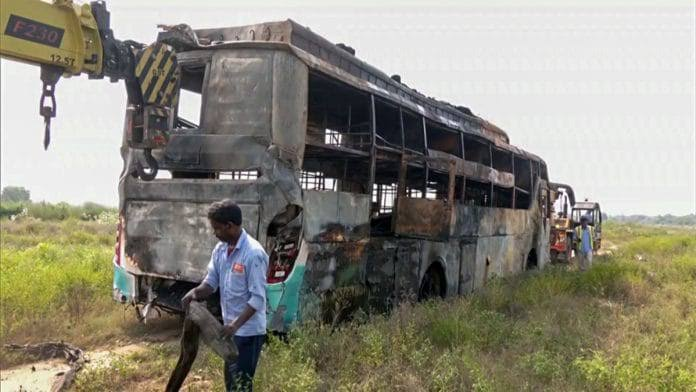
The inferno on the expressway was no unpreventable act of nature; it was an engineered disaster made possible by administrative complicity. Investigations into the charred remains revealed that the vehicle—a sleeper coach registered in Bihar but operating across Delhi, Uttar Pradesh, and Madhya Pradesh—was carrying 55 unpaid traffic challans amounting to over ₹1.5 lakh. Its documented infractions spanned overspeeding, operating with unauthorized dimensions, carrying commercial roof cargo, and clear permit breaches.
How does a heavy commercial coach with dozens of serious safety violations continue to ferry passengers across state lines? It happens because RTO border checkposts and highway patrols do not function as safety barriers; they operate as toll booths for institutionalized extortion. Unroadworthy vehicles pass through these checkpoints not because they meet Automotive Industry Standards (AIS), but because their operators pay predictable cash “entry fees.”
By turning a blind eye to illegal structural modifications—such as narrowed gangways, unapproved electrical retrofitting, and blocked emergency exits designed to cram in extra berths—RTO inspectors actively facilitate the creation of rolling death traps.
The Illusion of Regulation and Jurisdictional Arbitrage
India’s transport regulatory landscape suffers from a deliberate, profitable blind spot. Private bus operators exploit “jurisdictional arbitrage” by registering a vehicle in one state, procuring fitness certificates from a second, and running routes through a third. This multi-state distribution ensures that no single transport department takes ownership of physical inspections, creating a paper shield behind which corruption thrives.
State transport ministries routinely boast about digital initiatives like the VAHAN database and automated e-challan systems. Yet these platforms remain decoupled from actual highway enforcement. Automated Number Plate Recognition (ANPR) cameras capture permit violations on expressways daily, but RTO enforcement squads rarely impound flagged coaches. Instead, the accumulation of unpaid challans becomes leverage for inspectors to extract larger bribes, transforming safety enforcement into a extortion scheme.
Ending Impunity at the Top
Until criminal accountability moves up the administrative hierarchy, the cycle of tragedy will continue unabated. Arresting low-wage drivers while ignoring the approving authorities who signed off on invalid fitness certificates is a farce. True reform requires treating regulatory failure as criminal complicity.
When an uninspected, illegally modified sleeper bus catches fire, the spark may begin in an air-conditioning unit or overloaded wiring. But the real ignition occurs inside corrupt RTO offices, where inspectors sign fitness certificates for vehicles they know are unsafe. Until state governments start prosecuting certifying officers for manslaughter alongside negligent drivers, India’s expressways will remain dangerous corridors for unsuspecting citizens.

Prerna Varshney is a journalist and social commentator with over five years of experience in health, gender, and policy reporting. Her work reflects a deep commitment to truth and empathy, simplifying complex issues for everyday readers.