




Israel Election Results 2026: Netanyahu Alleges Foreign Interference
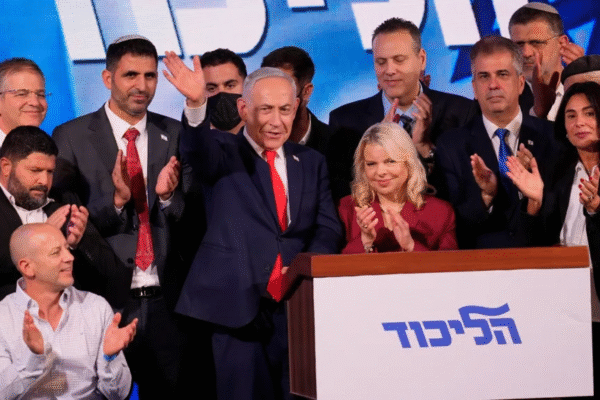
Israel’s closely contested 2026 election has triggered a political storm, with Prime Minister Benjamin Netanyahu and his Likud party alleging that the vote was “stolen” amid suspicions of foreign interference. However, the country’s election authorities have rejected claims of widespread electoral fraud, warning that allegations of systematic irregularities have not been substantiated.
The controversy comes as preliminary projections indicate that Arab-led political parties could secure a record 19 seats in the 120-member Knesset, potentially becoming decisive in determining Israel’s next government. With Netanyahu’s bloc falling short of a parliamentary majority, the outcome could reshape the country’s political leadership.
The election was held on October 27, 2026, and the counting process has left Israel facing renewed uncertainty over coalition formation, democratic representation and the credibility of political institutions.
Foreign interference allegations trigger investigation
The controversy intensified after Central Elections Committee chairman Justice Noam Sohlberg asked the Shin Bet, Israel’s domestic security agency, to investigate suspicions that foreign entities may have attempted to influence the election through funding.
Media reports have raised the possibility of Qatari and Turkish involvement in efforts to increase voter mobilisation in Arab communities. However, the allegations remain under investigation, and the identities of the suspected foreign actors, the alleged funding arrangements and their potential impact on the results have not been conclusively established.
Qatar has denied interfering in Israel’s election. Crucially, the request for an investigation does not establish that foreign interference occurred or that the election results were manipulated.
The distinction matters because encouraging people to vote is not, by itself, evidence of electoral wrongdoing. Any investigation must establish whether unlawful funding, bribery or other prohibited activities took place and whether they affected the electoral process.
Netanyahu’s ‘stolen election’ claim
Netanyahu’s Likud party has accused Arab-led parties of benefiting from alleged bribery, intimidation, ballot irregularities and prohibited voter-mobilisation activities. It has called for investigations by the police, Shin Bet and the Central Elections Committee.
Yet election officials have pushed back against the broader allegations. Acting Central Elections Committee director general Dean Livne said the election was conducted lawfully and that, to the committee’s knowledge, there was no evidence of systematic violations of electoral integrity.
Police have also reportedly found no investigative or intelligence-based evidence supporting the claim that the election was stolen. Separate allegations of suspected vote-buying involving individuals associated with the Ra’am party are being investigated, but these must not be confused with proof of widespread electoral fraud.
Arab parties emerge as potential kingmakers
The projected gains for Arab-led parties have become central to the political confrontation. Their increased representation could give them significant leverage in coalition negotiations, particularly because neither Netanyahu’s bloc nor the opposition appears to have an easy route to a parliamentary majority.
Opposition leader Gadi Eisenkot has called for allegations of electoral misconduct to be investigated while cautioning against using unverified claims to undermine the election outcome. Other opposition figures have accused Netanyahu’s camp of attempting to delegitimise Arab voters.
Arab political leaders have rejected the allegations, arguing that they risk portraying legitimate electoral participation as suspicious simply because it could weaken the incumbent government. The dispute highlights a longstanding tension in Israeli politics: Arab citizens possess voting rights, yet cooperation with their elected representatives remains controversial among several major Jewish-led parties.
Can the controversy change the election outcome?
An investigation into foreign interference does not automatically invalidate an election or delay the formation of a new government. Authorities must establish whether any unlawful activity occurred, identify those responsible and determine whether the alleged misconduct could have affected the allocation of parliamentary seats.
The Central Elections Committee has indicated that its review of complaints is part of the established process for examining suspected irregularities. Meanwhile, the investigation into possible foreign funding is expected to proceed separately from the counting and certification of votes.
The political consequences, however, may extend beyond the legal findings. Allegations of electoral manipulation can deepen divisions, weaken public confidence and complicate coalition negotiations even when the claims remain unproven.
A test for Israeli democracy
The 2026 election has become more than a contest over who will lead Israel. It is also a test of institutional credibility, political accountability and the equal legitimacy of citizens’ votes.
If evidence establishes that foreign actors or political operatives violated election laws, the authorities must investigate transparently and hold those responsible accountable. Equally, unsubstantiated allegations must not be used to discredit voters or predetermine the outcome of an investigation.
For Netanyahu, the challenge is to pursue credible concerns without undermining confidence in the democratic process. For the opposition, it is to insist on impartial scrutiny while respecting the results established through lawful procedures.

NewsHasghag operates a 24/7 news bureau that tracks the real-time, social media-driven stories from India and around the world, keeping you ahead of the day’s key talking points. Our digital-first approach transforms storytelling through the seamless integration of data, interactive charts, video, and audio into every narrative