

What Sparked the Fiery Protests in France—and How They Could Spread Across Europe
France is experiencing one of its most serious waves of street unrest in recent years. What began as a student movement demanding better schools has expanded into a wider confrontation over the cost of living, declining public services and the government’s attempts to control its finances. With demonstrations and related economic protests emerging elsewhere in Europe, the unrest raises a pressing question: is France witnessing an isolated crisis, or is it becoming a symbol of a broader European revolt against economic insecurity?
The answer lies in the connection between deteriorating public services, household financial pressure and declining confidence in political leadership.
From School Shortages to Nationwide Unrest
The movement began on September 17, 2026, in Créteil, southeast of Paris, when students protested against teacher shortages, overcrowded classrooms and deteriorating school facilities. Their demands were straightforward: more teachers, adequate school buildings, better learning conditions and greater investment in education.
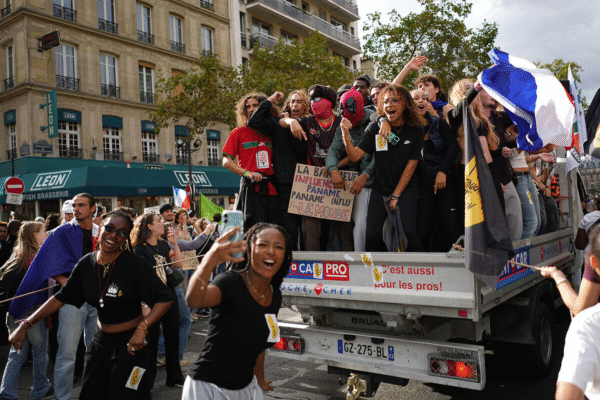
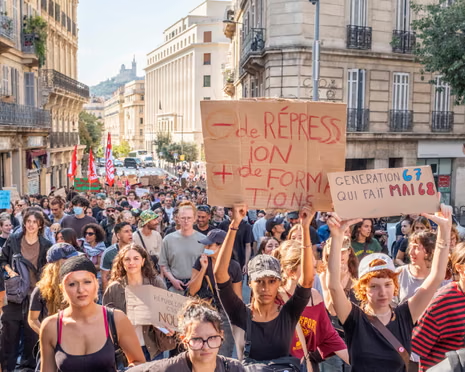
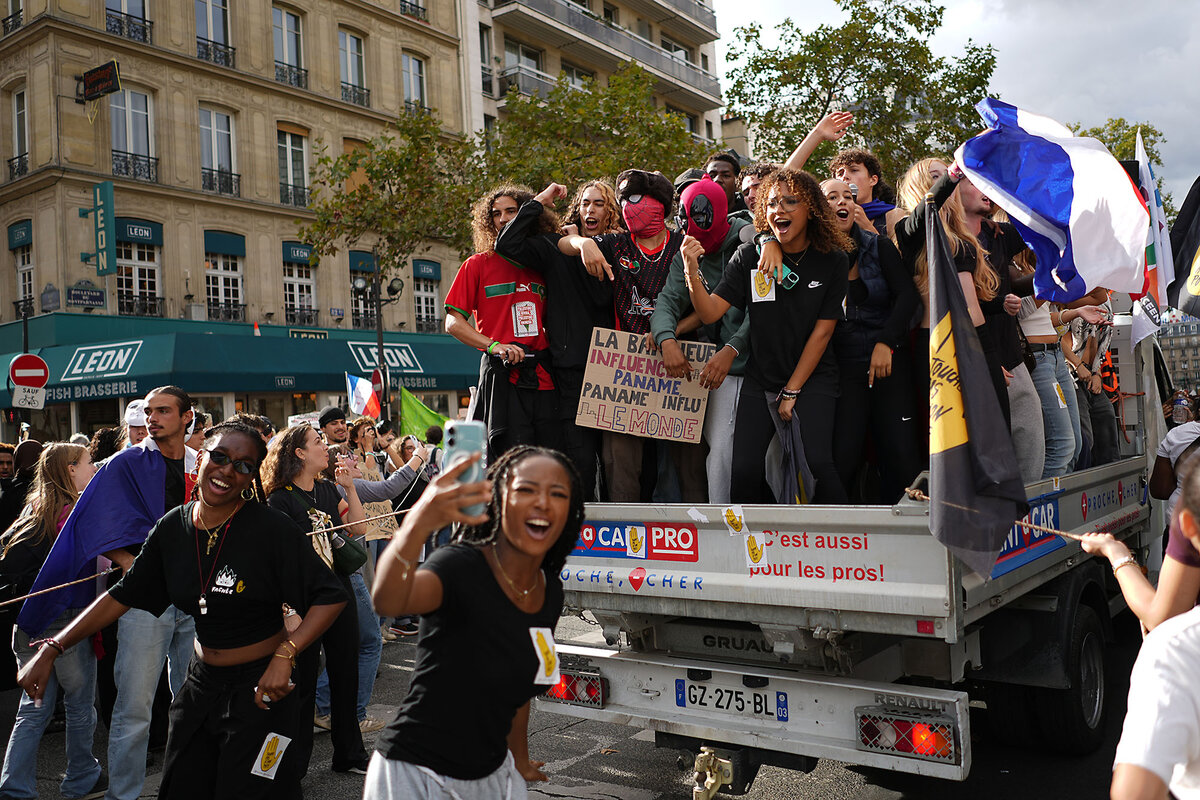
The demonstrations rapidly spread through Paris’s suburbs and into cities across France. School blockades, marches and student strikes disrupted classes, while university students and education unions joined the campaign. Reuters reported that shortages of teaching and support staff were particularly acute in disadvantaged areas, intensifying concerns about unequal educational opportunities.
The government’s financial difficulties added fuel to the protests. France is under pressure to reduce its substantial budget deficit and public debt, while citizens continue to demand functioning schools, healthcare, transport and other essential services. Students and teachers fear that spending restraint will leave already stretched institutions without the staff and resources they need.
By October, the movement had broadened beyond education. Rising living costs, concerns about public services and opposition to austerity attracted a wider cross-section of demonstrators, including supporters of the Yellow Vest movement.
Violence subsequently overshadowed parts of the demonstrations. Reports described looting, fires, vandalism and clashes with police in several cities. Authorities responded with arrests and tighter security measures. These incidents require investigation and accountability, but the actions of violent individuals should not be confused with the original demands of students and peaceful demonstrators.
Why the Anger Could Spread Across Europe
France is not alone in facing public frustration over affordability and living standards. On October 17, demonstrations over economic pressures also took place in Belgium, Italy and Portugal, while housing-related protests have highlighted similar anxieties in other European countries. However, these protests have different immediate causes and should not automatically be treated as one coordinated movement.
Across the continent, households have faced pressure from housing costs, energy prices and the rising expense of everyday necessities. Younger people confront additional difficulties, including uncertain employment prospects, expensive accommodation and concerns about whether education will provide a reliable route to economic security.
These pressures can become politically explosive when citizens believe that governments are demanding sacrifices without delivering visible improvements. A student who cannot receive regular teaching, a worker struggling with rent and a family facing higher energy bills may have different immediate concerns, but all can develop a common perception that public institutions are failing to respond.
Europe’s fiscal constraints intensify this dilemma. Governments must finance ageing populations, healthcare, pensions, defence and infrastructure while managing public debt. Raising taxes can anger households and businesses; cutting expenditure can weaken public services; and additional borrowing can increase interest costs. There is no painless solution.
Social media can accelerate mobilisation by circulating protest footage, sharing grievances and connecting campaigners across borders. Yet similar demonstrations do not prove that a single organisation is directing events across Europe. Each movement must be examined on its own evidence, leadership and demands.
A Warning for European Governments
France’s crisis also carries a political lesson. When governments treat public anger primarily as a law-and-order problem, they risk overlooking the conditions that sustain it. Policing may be necessary to prevent violence, but it cannot recruit missing teachers, repair deteriorating schools or make housing affordable.
The French government faces the difficult task of restoring order while demonstrating that peaceful grievances will receive a meaningful response. Other European governments should pay attention before comparable frustrations deepen in their own countries.
The danger is not that every protest will produce a political revolution. It is that repeated failures to address everyday economic insecurity can gradually undermine public trust, strengthen political extremes and make compromise more difficult.
France’s unrest began in the classroom, but its significance extends far beyond education. It reflects a wider European challenge: governments must balance fiscal discipline with investment in the services and opportunities on which social stability depends. Whether this becomes a lasting continental protest wave will depend on how effectively political leaders respond to the underlying grievances—not simply how firmly they contain the demonstrations.

Prabha Gupta is a veteran journalist and civic thinker dedicated to the constitutional ideals of dignity and institutional ethics. With over thirty years of experience in public communication, her work serves as a bridge between India’s civil society and its democratic institutions. She is a prominent voice on the evolution of Indian citizenship, advocating for a national discourse rooted in integrity and the empowerment of the common citizen