

UP SIR: Voter List Controversy Deepens as Election Commission Orders Probe into 3.38-Crore Gap Between Panchayat and Assembly Rolls
A major question has emerged over the accuracy of voter lists in Uttar Pradesh ahead of the 2027 Assembly elections. A discrepancy of approximately 3.38 crore voters has been reported between the electoral rolls maintained for Assembly, panchayat and urban local body elections. Following this significant mismatch, the Election Commission has directed officials to compare the three sets of electoral rolls and identify eligible voters who may have been left out.
The controversy has gained further political significance after Uttar Pradesh Chief Minister Yogi Adityanath recently alleged that the names of 1.27 crore Hindu voters had been deleted. Earlier, he had also made claims involving the deletion of three to four crore Hindu voters. His repeated criticism of the Special Intensive Revision (SIR) exercise has brought the voter-list issue into sharper political focus.
The matter has become particularly serious because the number of electors on the Assembly rolls fell considerably following the SIR exercise in Uttar Pradesh. The latest comparison with panchayat and urban local body electoral rolls has raised questions about the reasons behind this substantial difference and how many eligible voters may have been left out of the Assembly list.
How Large Is the Difference Between the Three Electoral Rolls?
According to the available figures, the number of voters registered in the different electoral rolls in Uttar Pradesh is as follows:
- Assembly electoral roll: Approximately 13.52 crore voters.
- Panchayat electoral roll: Approximately 12.58 crore voters.
- Urban local body electoral roll: Approximately 4.32 crore voters.
When the panchayat and urban local body figures are combined, the total comes to approximately 16.90 crore voters. In comparison, the Assembly electoral roll contains around 13.52 crore voters. This leaves a reported difference of approximately 3.38 crore.
However, it is important to clarify that this numerical gap does not necessarily mean that the names of 3.38 crore distinct, eligible citizens have been deleted. Differences in registration procedures, eligibility, duplicate entries and the dates on which the lists were revised may also contribute to the discrepancy. The Election Commission’s investigation is intended to establish the actual position.
The Case That Brought the Issue to Light: A Village in Rae Bareli
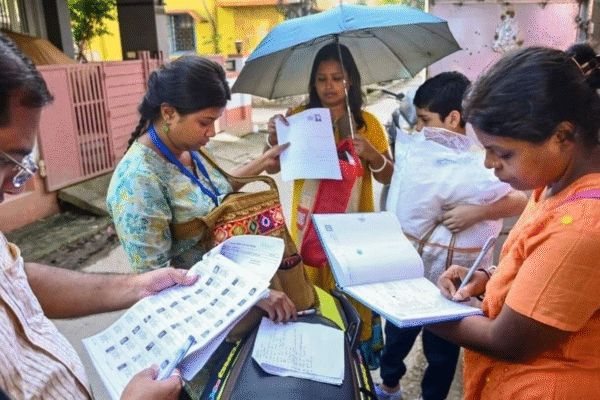
The case of Makdoompur village in Rae Bareli has emerged as an important part of the controversy. Following a complaint about discrepancies in the electoral rolls, an investigation was conducted on the directions of the Allahabad High Court.
The investigation found that the names of 114 eligible voters appearing on the panchayat electoral roll were missing from the Assembly voter list. The findings raised serious questions about coordination between different electoral databases and the procedures followed during their revision.
The case subsequently highlighted the need for a state-wide comparison of the different electoral rolls.
What Has the Election Commission Directed?
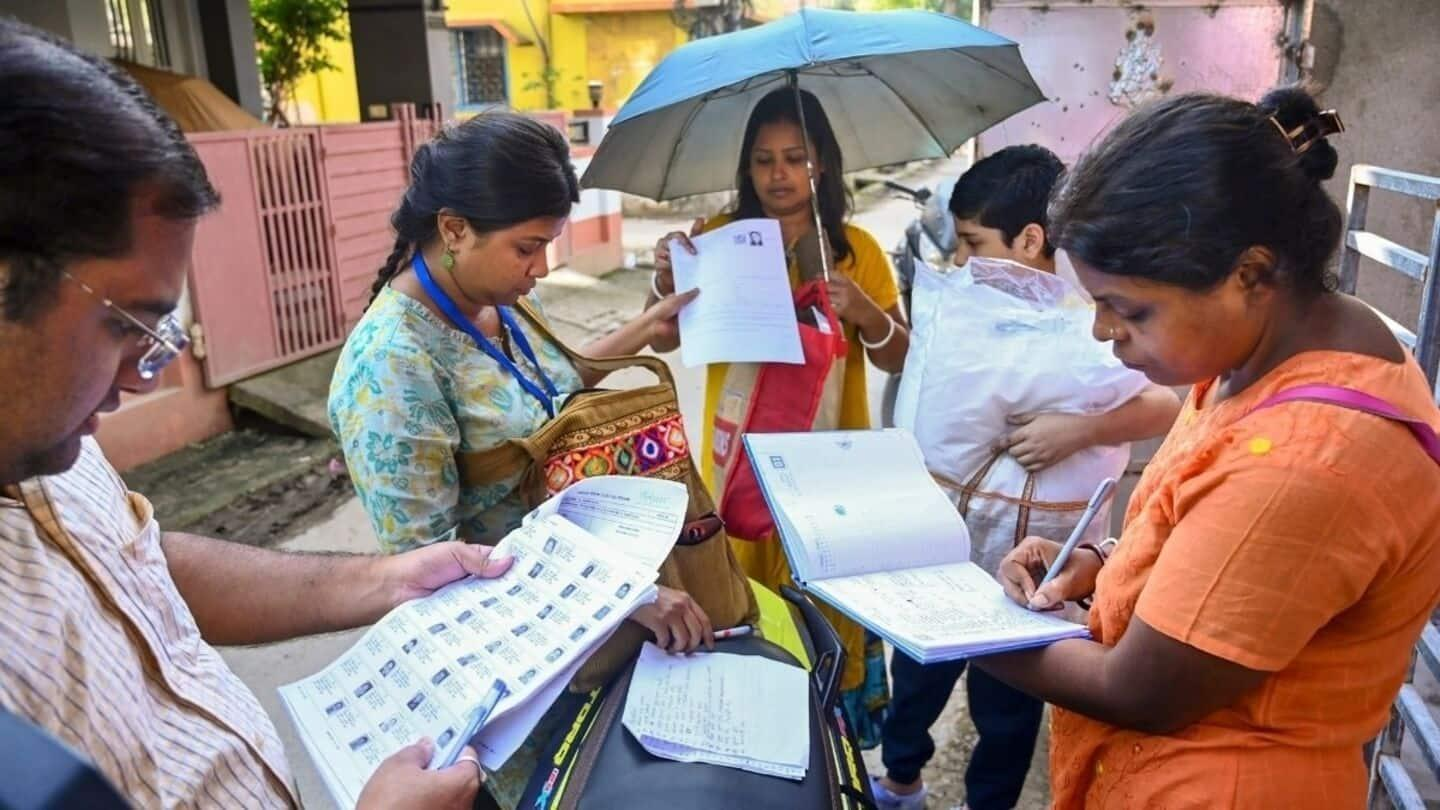
Following the discovery of the substantial discrepancy, the Election Commission has instructed officials to compare the panchayat, urban local body and Assembly electoral rolls.
The exercise will involve:
- Comparing the panchayat electoral rolls with the Assembly voter list.
- Verifying the names recorded in urban local body electoral rolls.
- Identifying eligible citizens whose names do not appear on the Assembly list.
- Helping eligible citizens submit Form 6 to register themselves as voters.
- Giving particular attention to the enrolment of women and young voters.
The objective is to ensure that no eligible citizen is left out of the electoral process.
Sharp Decline in the Proportion of Women Voters
Election officials have also expressed concern over the declining representation of women in Uttar Pradesh’s electoral rolls.
According to Chief Electoral Officer Navdeep Rinwa, the proportion of women voters has fallen to an unusually low level following the Special Intensive Revision. Available figures indicate that the number of women voters per 1,000 male voters has declined from 877 to 834.
The Election Commission has therefore decided to give special attention to women’s voter registration and involve several government departments and grassroots workers in the exercise.
ASHA workers will help identify women who need to register, while auxiliary nurse midwives (ANMs) and anganwadi workers will also participate. Representatives of women’s self-help groups will be involved in the campaign. Eligible voters will also be identified with the help of beneficiary lists available at government fair-price shops.
In urban areas, Resident Welfare Associations (RWAs) and community organisations will be asked to assist. Educational institutions and other government bodies will also play a role in identifying new voters.
How Much Did the Uttar Pradesh Voter List Shrink After SIR?
The Special Intensive Revision resulted in a substantial reduction in the number of registered voters in Uttar Pradesh.
According to the figures, the state had approximately 15.44 crore electors on October 27, 2025. However, the final electoral roll published on April 10, 2026, recorded approximately 13.39 crore voters. This represented a net decline of around 2.04 crore electors.
The initial phase of the SIR exercise had removed 2.89 crore names from the draft electoral roll. According to Election Commission figures, these included approximately 1.29 crore voters who had permanently shifted elsewhere, 46 lakh deceased voters, 25.4 lakh duplicate entries and 79.5 lakh voters whose whereabouts could not be established.
Following the completion of the claims and objections process, the final electoral roll was published. A further approximately 8.15 lakh names were removed from the final list. These included voters who had failed to respond to notices, permanently shifted, died or had duplicate entries.
Fresh Enrolment Drive Ahead of the 2027 Elections
With the 2027 Assembly elections approaching, the Election Commission is also preparing to undertake a Special Summary Revision (SSR) of the electoral rolls in Uttar Pradesh. The exercise will cover the addition and deletion of names as well as corrections to existing entries.
Under the revised schedule, the draft electoral roll will be published on November 17. The period for filing claims and objections will run from November 17 to December 16. The claims and objections are scheduled to be resolved by December 28, with the final electoral roll to be published on January 4, 2027.
The Election Commission has clarified that people whose names were removed during the SIR exercise can apply for fresh registration by submitting Form 6.
It has also stated that applicants will not face legal action merely because their names had appeared in an earlier electoral roll and were subsequently removed. This assurance is subject to the condition that they are not already registered in another Assembly constituency and that all other declarations made in the application are accurate.
The Biggest Challenge Before the Election Commission
The voter-list controversy in Uttar Pradesh is not merely a matter of statistics. It directly concerns citizens’ constitutional and democratic right to participate in elections.
The presence of a large number of names in panchayat and urban local body electoral rolls, alongside their absence from the Assembly list, raises important questions. The most pressing is whether the SIR exercise removed only the names of deceased, permanently shifted and duplicate voters, or whether a significant number of eligible citizens were also inadvertently deprived of their right to vote.
The discovery of 114 missing eligible voters in Makdoompur village has made this concern more pressing.
Ahead of the next Assembly elections, the Election Commission faces a dual challenge. It must remove fraudulent and duplicate entries while ensuring that no eligible citizen is wrongly excluded from the electoral roll.
The reported gap of 3.38 crore has therefore become a significant issue for Uttar Pradesh’s electoral politics and the credibility of the election administration. Only a thorough and transparent investigation can establish how much of this discrepancy is attributable to administrative and technical differences between the lists, and how many eligible voters are genuinely missing from the Assembly electoral roll.

NewsHasghag operates a 24/7 news bureau that tracks the real-time, social media-driven stories from India and around the world, keeping you ahead of the day’s key talking points. Our digital-first approach transforms storytelling through the seamless integration of data, interactive charts, video, and audio into every narrative