


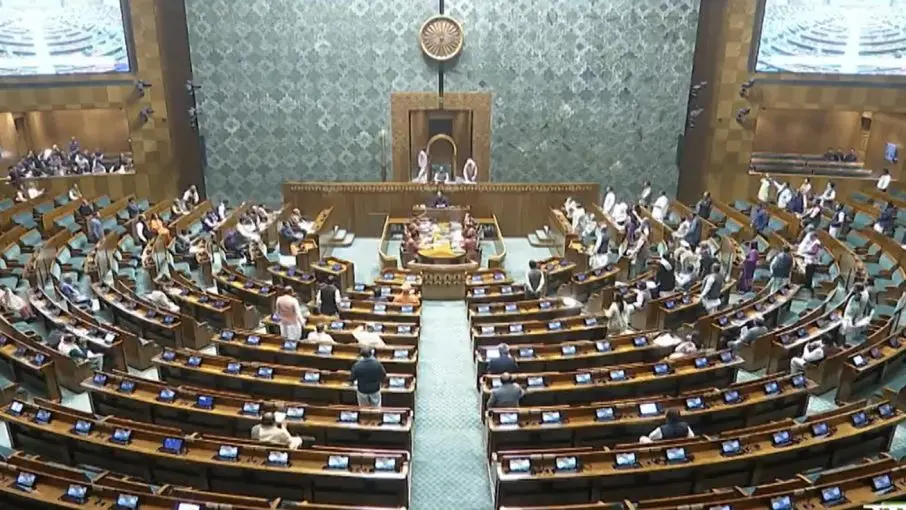
The rearrangement of 97 MPs’ seats reflects changing political equations within the Opposition, but proximity to the ruling benches does not necessarily signal a formal shift in alliance.
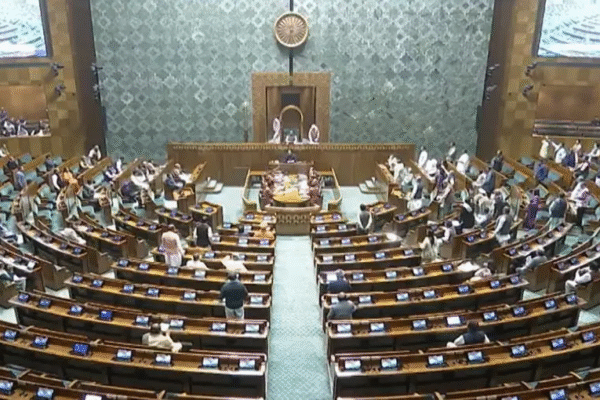
The Lok Sabha is set for a politically significant special session, and even before the debate begins, a change in seating arrangements has drawn attention to the shifting equations among opposition parties. The Lok Sabha Secretariat has reassigned seats to 97 Members of Parliament, bringing 22 DMK MPs and eight members of the Nationalist Congress Party (Sharadchandra Pawar) closer to the Treasury Benches.
The reshuffle comes at a crucial moment, just as Parliament prepares to consider the Constitution (132nd Amendment) Bill, 2026, and related legislation concerning delimitation and the implementation of 33 per cent reservation for women in Parliament and state legislatures. The special sitting is scheduled to begin on November 30.
At first glance, the seating changes may appear procedural. However, in parliamentary politics, where physical proximity often reflects political relationships, such decisions carry symbolic significance. They also offer a glimpse into the changing configuration of the Opposition and the government’s efforts to build support for a major constitutional initiative.
DMK’s break with Congress changes its parliamentary position
The DMK’s movement towards the Treasury Benches is linked partly to its changing relationship with the Congress. The two parties had been political allies, but their relationship deteriorated after the Congress joined hands with the Vijay-led Tamilaga Vettri Kazhagam (TVK) in Tamil Nadu following the state’s political developments in May.
The DMK subsequently sought a separate seating arrangement, arguing that it was no longer appropriate for its MPs to sit alongside Congress members. Party leader Kanimozhi had written to Lok Sabha Speaker Om Birla requesting the change, and the party reportedly sent reminders before the latest notification.
The immediate political context, however, is more significant. The DMK has now announced its support for the government’s revised legislative proposal on women’s reservation and delimitation. Its position followed assurances that its concerns had been addressed in the revised framework.
The party’s support is important because it demonstrates that political differences with the BJP-led government do not necessarily prevent cooperation on specific legislative questions. Nevertheless, there has been no formal announcement that the DMK intends to join the National Democratic Alliance (NDA).
Sharad Pawar’s party: Support with conditions
The seating adjustment has also brought NCP(SP) MPs closer to the ruling side. Party working president Supriya Sule has been allotted a new seat alongside DMK leader Kanimozhi.
However, the NCP(SP)’s position on the proposed legislation is not identical to that of the DMK. Its spokesperson Jitendra Awhad has indicated that the party would support the proposal if a uniform 50 per cent increase in seats is guaranteed. This conditional position should not be interpreted as an unconditional endorsement or a decision to align with the NDA.
The party has also been experiencing tensions within the INDIA bloc. Its recent decision to stay away from an opposition meeting, following controversial remarks by a Maharashtra Congress leader about Sharad Pawar, has further exposed the difficulties of maintaining cohesion among opposition partners.
The larger political battle: Delimitation and federal balance
Beyond seating arrangements, the real political contest concerns the proposed constitutional changes. The government is seeking to link the implementation of women’s reservation with a revised delimitation exercise. The revised proposal reportedly provides for a uniform 50 per cent increase in the number of seats allocated to states and Union Territories, addressing concerns that southern states could lose their relative representation in Parliament.
Delimitation is not merely an administrative exercise. It determines how constituencies are redrawn and how parliamentary representation is distributed. Southern states, which have made considerable progress in population control, have expressed concern that a population-based exercise could reduce their relative political influence compared with more populous northern states.
The revised proposal therefore attempts to address a sensitive federal question while advancing women’s representation. Whether its safeguards are sufficient will be a central issue during parliamentary deliberations.
A changing Opposition, but not necessarily a new ruling alliance
The seating reshuffle also affects MPs from the Congress, Samajwadi Party and Shiv Sena (Uddhav Balasaheb Thackeray), reflecting the broader adjustments taking place within the House. The INDIA bloc, which was projected as a united opposition platform, is increasingly facing differences over state-level alliances, leadership, strategy and legislative positions.
For the BJP-led government, support from parties outside the NDA could strengthen its position during the special session. For opposition parties, the challenge is to distinguish between cooperation on a particular bill and surrendering their independent political identity.
Ultimately, the movement of MPs from one block of seats to another may be procedural, but the political circumstances surrounding it are not. The special session will test whether the government can secure broader support for its constitutional agenda—and whether the Opposition can maintain unity despite its widening internal differences.
The most important question is therefore not simply who sits closer to the Treasury Benches, but who is willing to support the government’s proposals, on what conditions, and at what political cost.

NewsHasghag operates a 24/7 news bureau that tracks the real-time, social media-driven stories from India and around the world, keeping you ahead of the day’s key talking points. Our digital-first approach transforms storytelling through the seamless integration of data, interactive charts, video, and audio into every narrative