

‘Who Will Compensate?’ Traders Claim ₹11,000 Crore Loss Due to INDIA Bloc Rally
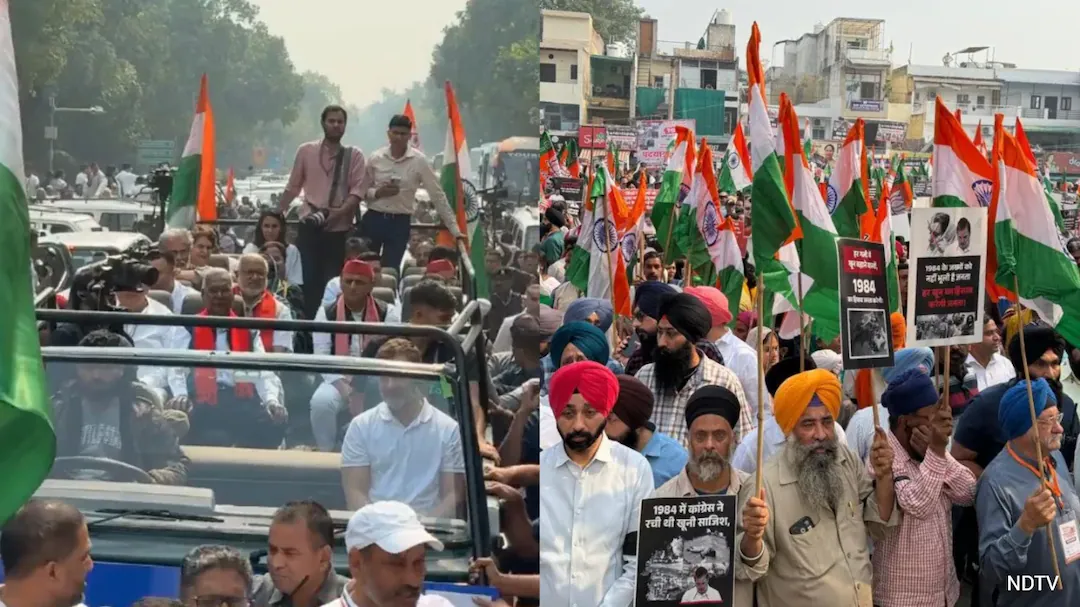
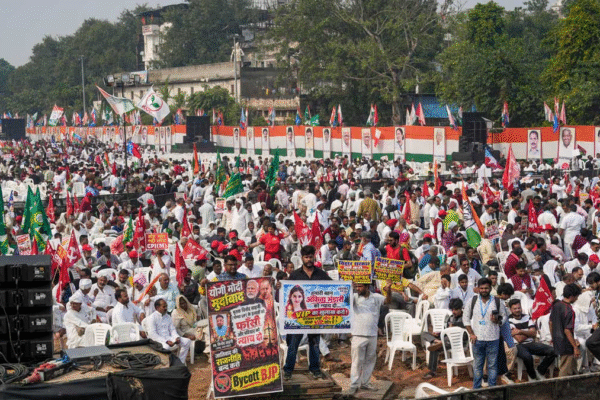
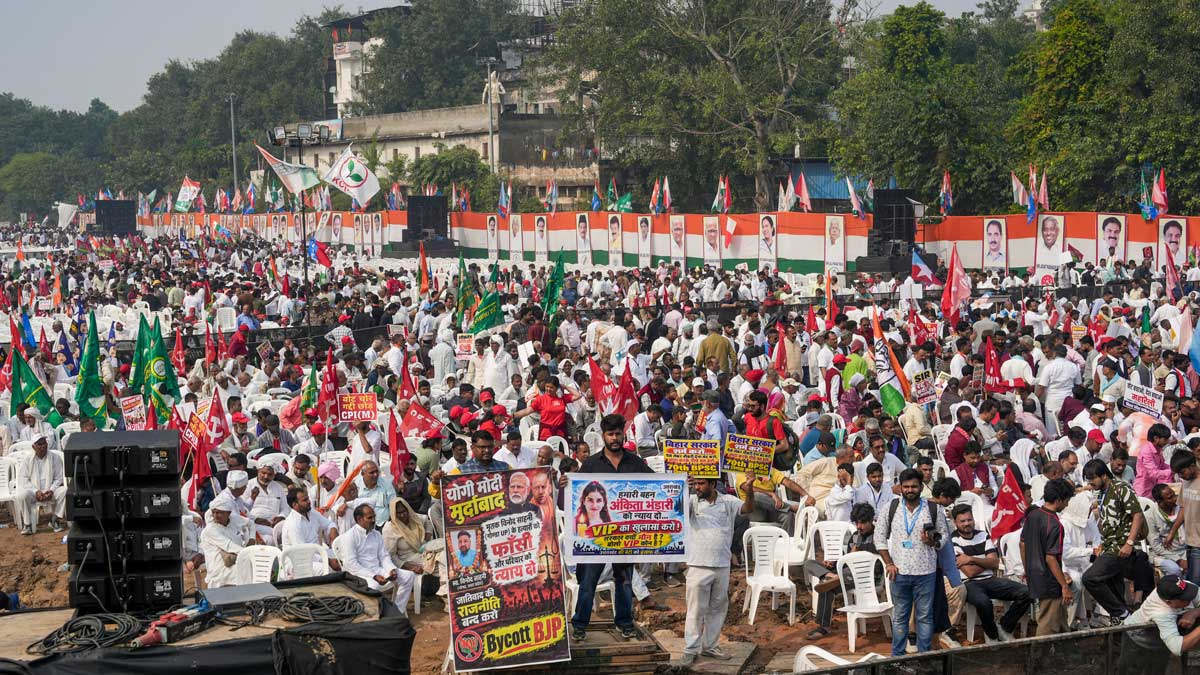
NEW DELHI, November 2, 2026: A political rally intended to raise questions about electoral integrity has triggered another controversy in the national capital, this time over the economic cost of political demonstrations. Delhi’s Chamber of Trade and Industry (CTI) has claimed that the INDIA bloc’s November 1 rally at Ramlila Maidan caused business losses estimated at ₹10,000–₹11,000 crore, with thousands of shops reportedly remaining closed during the crucial festive shopping season.
The claim has placed traders’ livelihoods at the centre of a political dispute between the Congress-led Opposition and the Bharatiya Janata Party (BJP). It has also raised a broader question: when a political gathering disrupts commercial activity, who should bear the financial consequences?
Traders allege widespread disruption
According to CTI chairman Brijesh Goyal, approximately 2.5 lakh shops across 20–25 major markets in central and Old Delhi remained closed or experienced severely reduced business activity because of concerns about congestion, traffic restrictions and the anticipated arrival of large crowds.
The affected markets reportedly included Chandni Chowk, Khari Baoli, Sadar Bazar, Chawri Bazar, Kashmiri Gate, Daryaganj, Paharganj, These commercial centres serve not only Delhi residents but also wholesalers, retailers and customers travelling from neighbouring towns and states.
The traders’ association had written repeatedly to Opposition leaders, including Rahul Gandhi, asking them to postpone the rally until after Diwali. Their concern was that a large political gathering near major wholesale markets could disrupt transport, prevent customers from reaching shops and interfere with the movement of goods during one of the busiest periods of the year.
Goyal said the disruption affected retail and wholesale trade, logistics, hospitality and daily-wage workers. However, the ₹11,000-crore figure remains an estimate presented by the traders’ body; independent verification of the total loss has not been established in the reports.
Festive season adds to traders’ concerns
The timing of the rally was particularly sensitive because Delhi’s wholesale markets experience heightened activity before Diwali. Traders depend on the movement of goods, visiting retailers and customers making purchases ahead of the festival.
According to CTI, retail and wholesale trade accounted for approximately ₹8,800 crore of the estimated loss, while transport and logistics, hospitality and informal workers also suffered disruption. The association said reduced movement of customers and goods affected businesses even where shops remained open.
For small traders, a lost business day can have consequences beyond immediate sales. Shopkeepers must meet rent, salaries, loan repayments and supplier payments regardless of whether customers arrive. Daily-wage workers, loaders, delivery personnel and street vendors may also lose earnings when commercial activity slows.
Nevertheless, a distinction must be made between lost turnover, postponed purchases and permanent financial losses. Some customers may return after the disruption, while other sales may be lost entirely. A detailed assessment would need to account for these differences before the total economic impact could be established.
Congress disputes the political narrative
The INDIA bloc held the rally to protest alleged electoral irregularities and demand accountability from Chief Election Commissioner Gyanesh Kumar. Rahul Gandhi had appealed to participants to visit nearby markets and shop after attending the demonstration.
Congress leaders rejected the suggestion that the rally was responsible for widespread commercial losses. Senior Congress leader Jairam Ramesh argued that visitors could benefit local businesses, while the party disputed the narrative that the demonstration had paralysed Delhi’s markets. The competing claims underline the absence of an agreed assessment of the rally’s economic impact.
The BJP, meanwhile, criticised the Opposition over the event’s timing and its potential consequences for traders. The dispute has consequently expanded beyond the rally’s stated political objectives into a contest over public inconvenience, economic accountability and the use of central Delhi’s commercial spaces.
Who should compensate the traders?
The demand for compensation raises difficult questions. Political rallies are a feature of democratic life, and organisers have a legitimate right to assemble peacefully, subject to applicable laws and public-safety requirements. At the same time, authorities must consider the interests of businesses, commuters and residents when granting permissions and planning traffic arrangements.
Compensation cannot automatically follow from an allegation of lost turnover. Any claim would require evidence of actual losses, a clear legal basis and consideration of responsibility among organisers, authorities and other parties.
The immediate need is for a transparent assessment of market closures, transport disruption and business activity. Better advance coordination, designated routes, clear public advisories and arrangements to preserve access to commercial areas could reduce the economic costs of future demonstrations.
Delhi’s traders have posed a direct question: who will compensate them? The answer will depend on evidence and applicable law, not political accusations alone. The episode serves as a reminder that democratic expression and economic activity must coexist—and that planning for large public gatherings should take both seriously.

NewsHasghag operates a 24/7 news bureau that tracks the real-time, social media-driven stories from India and around the world, keeping you ahead of the day’s key talking points. Our digital-first approach transforms storytelling through the seamless integration of data, interactive charts, video, and audio into every narrative