




Afghanistan-Pakistan Border Clashes Escalate: Deadly Fighting
The Afghanistan-Pakistan border clashes highlights show a rise in deadly violence. More than 50 people died during recent fighting near Kandahar’s Spin Boldak area. Pakistan responded with airstrikes in Kabul. Both sides accuse each other of aggression. The fragile ceasefire announced may not hold.
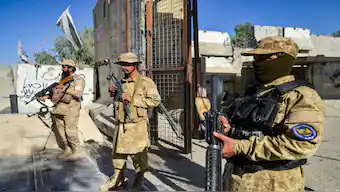
Afghanistan-Pakistan border clashes have once again brought violence and instability to the region. More than 50 people have died, including soldiers, Taliban fighters, and civilians. Fighting broke out near the Spin Boldak border area in Kandahar and quickly spread. Pakistan responded with what it called “precision airstrikes” on Afghan soil, including in the capital Kabul. Explosions were reported across central Kabul, causing fires and panic among residents.
Amid the chaos, both countries announced a 48-hour ceasefire on Wednesday. However, confusion soon followed. Pakistan claimed the ceasefire was requested by Afghanistan. The Afghan Taliban disputed this, saying Pakistan had insisted on the truce. Taliban spokesman Zabihullah Mujahid stated that Afghan forces would honor the ceasefire only if the other side did not break it. The conflicting accounts reflect the deep mistrust that continues to define relations between the two governments.
The main reason behind the rAfghanistan-Pakistan border clashes renewed violence is Pakistan’s long-standing allegation that the Taliban government allows Tehreek-i-Taliban Pakistan (TTP) militants to operate from Afghan territory. The TTP, a banned militant group, has carried out several deadly attacks inside Pakistan in recent months. Islamabad blames the Taliban for failing to control these fighters. In response, it has increased security operations along the border and carried out targeted strikes inside Afghanistan.
Tensions also stem from the unresolved dispute over the Durand Line, a 2,611-kilometre border between the two countries. Afghanistan has never formally recognized this boundary, while Pakistan continues to enforce it with fencing and military patrols. The issue remains a core source of hostility and has led to repeated clashes over the years.
Although the conflict appears to involve only Afghanistan and Pakistan, other countries are watching closely. China, a key ally of Pakistan, wants stability in the region to protect its massive infrastructure investments. The China-Pakistan Economic Corridor (CPEC) runs through areas close to the conflict zone. Pakistan has also reached out to Qatar and Saudi Arabia for help in mediating the crisis. Qatar has direct links with the Taliban leadership and has played a diplomatic role in past negotiations. Iran, which shares borders with both countries, remains concerned about militant activity near its territory and the rise of Sunni extremism. The United States, though no longer directly involved in Afghanistan, continues to monitor the Taliban’s actions and supports Pakistan’s fight against cross-border terrorism.
Despite the ceasefire announcement, the situation remains tense. Both sides claim they will honor the agreement only if the other side shows restraint. With no lasting peace deal in sight, the risk of further violence remains high. The Afghanistan-Pakistan border clashes highlight how fragile the current security environment is and how quickly tensions can spiral out of control.
Until the two governments engage in serious dialogue—and international players push for a political solution—this border will likely remain a flashpoint. The people caught in the crossfire will continue to pay the price.

Prabha Gupta is a veteran journalist and civic thinker dedicated to the constitutional ideals of dignity and institutional ethics. With over thirty years of experience in public communication, her work serves as a bridge between India’s civil society and its democratic institutions. She is a prominent voice on the evolution of Indian citizenship, advocating for a national discourse rooted in integrity and the empowerment of the common citizen