



Historic Rebel Surrender Shakes Chhattisgarh’s Politics
Historic Maoist Surrender Shakes Chhattisgarh’s Red Corridor
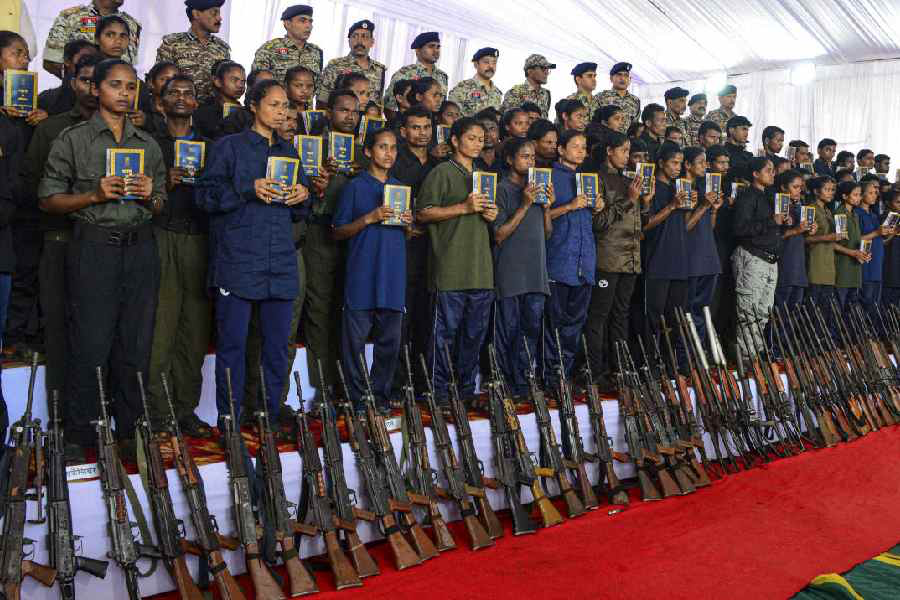
In a significant development from Chhattisgarh’s insurgency-affected Bastar region, 210 Maoist rebels surrendered to police, handing over 153 weapons in the state’s biggest-ever surrender drive. Among them were members of the dreaded Dandakaranya Special Zonal Committee, one of the strongest Maoist formations in central India. The state police, along with central paramilitary forces, hailed it as a turning point in the decades-long conflict that has claimed thousands of lives.
This large-scale surrender took place in Sukma district, one of the most volatile Maoist strongholds. According to officials, many of the surrendered rebels cited disillusionment with Maoist ideology, harsh living conditions, and the influence of the government’s “Lon Varratu” (Return to the Mainstream) campaign as reasons for their decision. Initiated in 2020, this campaign encourages Maoists to shun violence and reintegrate into society by offering rehabilitation, financial aid, and protection.
The BJP-led state government in Chhattisgarh has presented this surrender as a direct outcome of its firm approach to security and strategic welfare programs. Union Home Minister Amit Shah also praised the move, calling it a “sign of declining Maoist morale.”
BJP vs Congress: Who Handled the Maoist Threat Better?
This development inevitably raises a political question: Is the BJP handling the Maoist insurgency better than Congress?
During its rule, the Congress government focused on dialogue, tribal rights, and inclusive development. While these policies won support in some areas, they also drew criticism for being too soft and lacking a clear security roadmap.
In contrast, the BJP has backed a dual-pronged approach: aggressive counter-insurgency and targeted surrender policies. Programs like Lon Varratu were actively promoted under BJP governance and gained momentum again after the 2023 assembly elections, when BJP returned to power in the state.
Critics argue that both parties have failed to address the core grievances of tribal populations, including displacement, land rights, and poor infrastructure. However, the record-breaking surrender in 2025 may give BJP the upper hand in public perception—at least for now.
With Lok Sabha elections approaching, the surrender offers the BJP a narrative of “security and stability,” especially in central India, where insurgency has long challenged state authority.
Gyaneshwar brings more than three decades of distinguished journalistic experience to the team. He has contributed significantly to both print and electronic media and directed several documentary films. For over 35 years, he has held key editorial roles in newspapers and TV channels, including The Pioneer and JAIN TV. Known for his balanced perspective and in-depth analysis, he brings leadership and expertise, and ensures accuracy, relevance, and clarity in every story.