




Massive Digital Exercise Raises Serious Questions
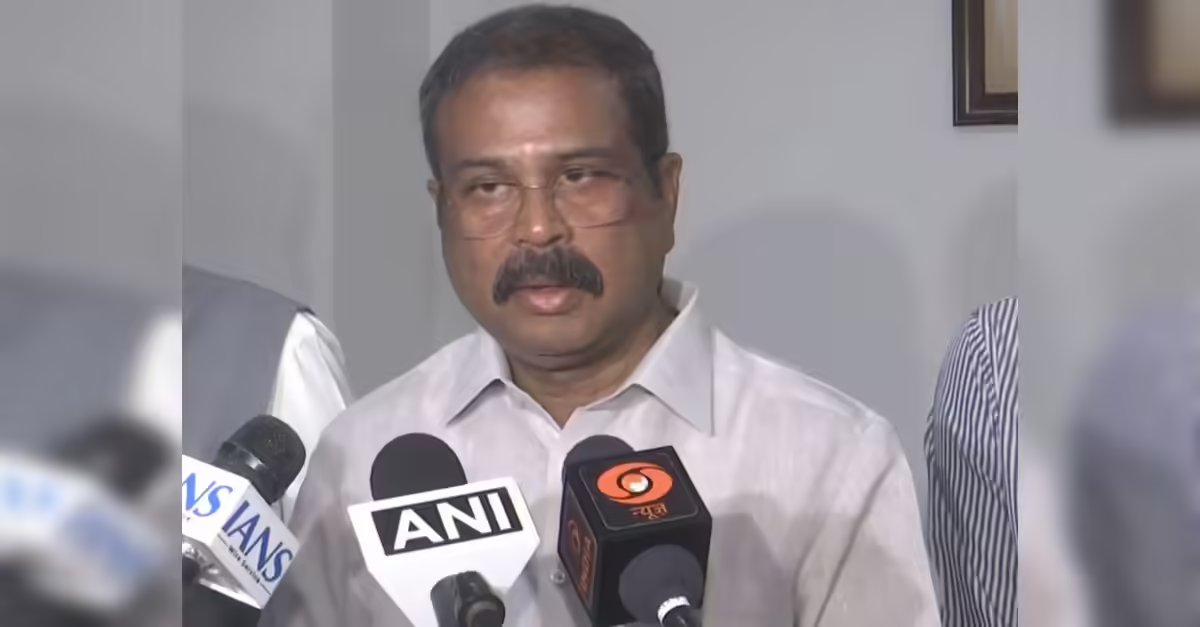
The controversy surrounding discrepancies in the Central Board of Secondary Education (CBSE) evaluation process has once again raised serious concerns about India’s examination infrastructure and its preparedness for large-scale digital reforms. Union Education Minister Dharmendra Pradhan recently acknowledged concerns regarding errors linked to the Online Scanning and Marking (OSM) system and assured that the government and CBSE are working toward a solution.
Education Minister Dharmendra Pradhan Takes Responsibility for CBSE Discrepancies
The Minister’s statement comes amid growing complaints from students and parents regarding mismatched marks, alleged evaluation irregularities, and confusion in scanned answer sheets. According to officials, nearly 40 crore answer sheet pages were scanned under the new system this year — an exercise unprecedented in scale for the Indian education system.
Chairing a high-level review meeting on evaluation and post-examination procedures, the Minister reportedly stressed accountability and transparency. His willingness to publicly take responsibility is politically significant, especially at a time when competitive exams and board evaluations are under intense scrutiny across the country.
The OSM system was introduced to reduce logistical burdens, speed up evaluation, and improve monitoring. Under the system, handwritten answer sheets are scanned and uploaded digitally for evaluators. In theory, this reduces transportation delays and allows examiners from different locations to assess papers more efficiently. However, the process also creates enormous dependence on high-quality scanning, accurate page sequencing, stable digital infrastructure, and human coordination.
When the system is handling nearly 40 crore pages, even a minor percentage of errors can impact thousands of students. Missing pages, blurred scans, upload mismatches, or incorrect indexing can directly affect marks and student futures. For students awaiting college admissions, scholarships, or entrance opportunities, such discrepancies are not merely technical glitches — they become emotional and career-defining crises.
Did CBSE Underestimate the Risks?
What has surprised many education observers is that CBSE authorities appeared to underestimate the scale of operational risks involved in introducing the scanning-based evaluation system. While digitisation was intended to improve efficiency and transparency, experts argue that such a massive reform required far more extensive pilot testing, stress assessment, and contingency planning before nationwide implementation.
Handling nearly 40 crore scanned answer sheet pages was not merely a technological exercise but a highly sensitive academic operation affecting the future of millions of students. Critics say the board should have anticipated possible issues such as blurred scans, page mismatches, upload failures, indexing errors, and human oversight during digital processing.
The controversy has exposed a gap between policy ambition and ground-level preparedness, raising concerns about whether the system was scaled up faster than its reliability could be assured. Many believe the board focused heavily on technological transition without adequately preparing safeguards for unexpected failures.
The CBSE controversy also highlights another issue often ignored in policy discussions — the emotional cost of examination uncertainty. Students spend years preparing for board examinations that significantly shape academic and career opportunities. When discrepancies emerge after results are declared, trust in the system weakens rapidly.
Minister Dharmendra Pradhan’s acceptance of responsibility may help calm immediate concerns, but the real test lies in structural reform. Experts believe the solution requires stronger scanning protocols, AI-assisted verification systems, random audit mechanisms, and better examiner training to ensure such discrepancies are not repeated.
India’s education system stands at a crossroads. The pressure of handling millions of students cannot be managed indefinitely through outdated processes patched with temporary technological fixes. The CBSE answer sheet controversy may ultimately become a warning that examination reform is no longer optional — it is inevitable.

NewsHasghag operates a 24/7 news bureau that tracks the real-time, social media-driven stories from India and around the world, keeping you ahead of the day’s key talking points. Our digital-first approach transforms storytelling through the seamless integration of data, interactive charts, video, and audio into every narrative