


A History of Paper Leaks in India’s Premier Medical Entrance Exams
From AIPMT to NEET: A Promise of Transparency
For millions of Indian students, qualifying the National Eligibility cum Entrance Test (NEET) is the gateway to a medical career. Introduced in 2016 as the country’s single medical entrance examination, NEET was intended to create a transparent, merit-based admission system by replacing multiple state and institutional entrance tests. The reform, implemented during Prime Minister Narendra Modi’s tenure, was presented as a way to standardize admissions and reduce irregularities.
However, the years since have seen repeated allegations of question paper leaks, organized cheating, and examination malpractice. These controversies have repeatedly tested public confidence in the integrity of India’s most competitive examination.
The first major scandal predates NEET itself. In 2015, the All India Pre-Medical Test (AIPMT), NEET’s predecessor, was cancelled after investigators uncovered a nationwide cheating racket. Candidates allegedly received answers through Bluetooth-enabled electronic devices connected to organized criminal networks. The Supreme Court ruled that the examination’s sanctity had been compromised and ordered a complete re-test for more than six lakh candidates. The episode exposed serious vulnerabilities in India’s examination system and highlighted the growing sophistication of cheating networks.
Recurring Leaks and Mounting Questions
When NEET replaced AIPMT in 2016, it centralized medical admissions into a single national examination. While the move simplified admissions, it also concentrated enormous pressure on one test taken annually by millions of aspirants. The high stakes made NEET an attractive target for organized fraud.
Over the following years, reports of localized paper leaks and cheating rackets surfaced in several states. Police investigations uncovered alleged “solver gangs” that charged candidates substantial sums to secure admissions through unfair means. In some cases, invigilators, middlemen and coaching-linked networks were accused of facilitating malpractice. Although these incidents resulted in arrests and criminal investigations, they did not lead to nationwide cancellation of the examination.
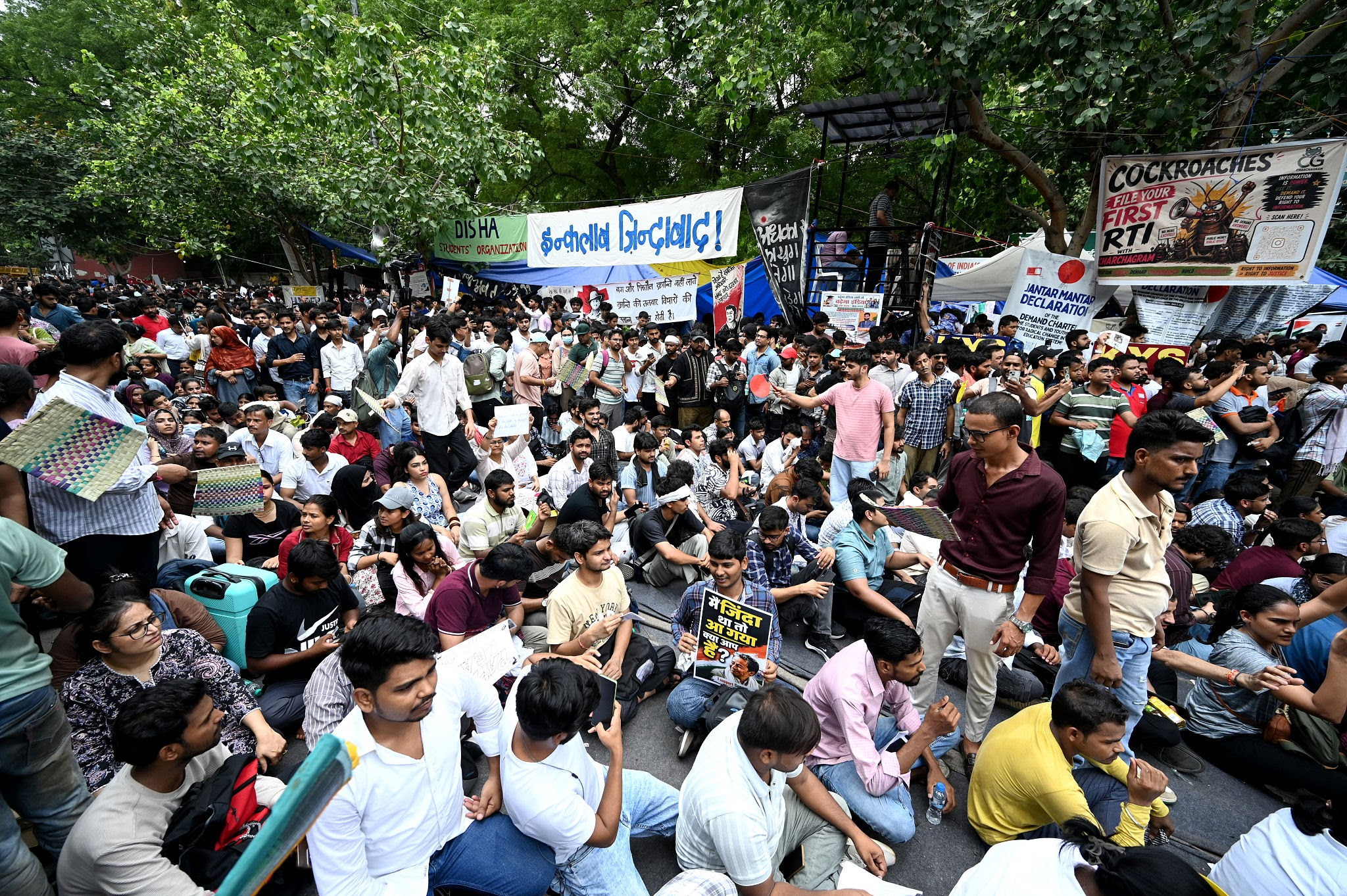
The biggest controversy emerged in 2024, when allegations of paper leaks, grace marks and unusually high scores sparked nationwide outrage. Investigations in Bihar and Gujarat led to multiple arrests, while the Central Bureau of Investigation (CBI) took over the probe. Students staged protests across the country, demanding a fresh examination and greater accountability from the National Testing Agency (NTA).
The controversy quickly became a political issue. Opposition parties accused the Modi government of failing to safeguard the integrity of competitive examinations, pointing to a series of recruitment and entrance exam controversies across the country. The government maintained that irregularities were limited in scope and initiated investigations while announcing measures to strengthen examination security.
The Supreme Court ultimately ruled that the available evidence did not establish a systemic nationwide paper leak sufficient to justify cancelling the entire examination, although criminal investigations into localized malpractice continued.
A Continuing Challenge for India’s Examination System
The crisis resurfaced in 2026, when investigators concluded that the confidentiality of the NEET question paper had been compromised after evidence suggested that questions had circulated before the examination. Authorities cancelled the examination and ordered a fresh test, marking one of the most significant setbacks for India’s national medical entrance system since the 2015 AIPMT cancellation.
Taken together, these controversies have occurred during Narendra Modi’s tenure as Prime Minister, spanning both the transition from AIPMT to NEET and the subsequent administration of the examination by the National Testing Agency. While the government has responded by ordering investigations, involving central agencies, tightening security protocols and introducing stricter anti-cheating legislation, repeated incidents have continued to raise questions about institutional oversight and implementation.
For India’s aspiring doctors, the consequences extend far beyond administrative failures. Every paper leak or cheating scandal delays admissions, fuels anxiety among honest candidates and weakens public trust in merit-based selection. With more than two million students competing annually for a limited number of medical seats, ensuring the credibility of NEET remains one of the country’s most important educational challenges.
As India continues to refine its examination system, the recurring scandals underscore a broader lesson: reforms must be matched by robust implementation, transparent investigations and strong institutional accountability. Without sustained improvements in exam security and governance, restoring public confidence in India’s premier medical entrance examination will remain an uphill task.

NewsHasghag operates a 24/7 news bureau that tracks the real-time, social media-driven stories from India and around the world, keeping you ahead of the day’s key talking points. Our digital-first approach transforms storytelling through the seamless integration of data, interactive charts, video, and audio into every narrative