





US Midterm Elections 2026: Democrats Sweep House and Senate in Major Rebuke to Trump
Washington | November 4, 2026
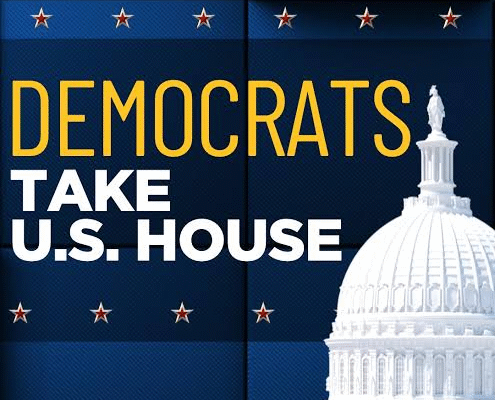
The 2026 US midterm elections have delivered a dramatic political setback for President Donald Trump, with Democrats capturing control of both the House of Representatives and the Senate in a sweeping victory that will reshape the balance of power in Washington for the final two years of his presidency.
The Associated Press called the House for Democrats early Wednesday, confirming a historic congressional turnaround after the party had already regained control of the Senate. The results represent a significant rejection of the Republican administration’s political agenda and indicate growing voter dissatisfaction over economic pressures, foreign policy and the direction of the country.
According to results reported by The Guardian on Wednesday, Democrats had secured 228 House seats against 139 for Republicans, with 367 of the chamber’s 435 contests called at that point. In the Senate, Democrats and their two independent allies held 54 seats against 44 Republicans, with two races still too close to call. The figures remain subject to updates as counting continues.
A political wave across Republican strongholds
The scale of the Democratic victory is particularly striking because the party made substantial gains in states and congressional districts that had previously been considered reliable Republican territory.
Democrats flipped at least seven Republican-held Senate seats, including victories in Kansas, Iowa, Texas, Ohio, Maine, North Carolina and South Carolina, according to the Associated Press. The outcome in Kansas was especially significant: the state had not elected a Democratic senator in nearly a century.
In Texas, Democrats achieved a major breakthrough, winning a Senate seat and defeating three-term Republican Governor Greg Abbott. In South Carolina, voters rejected a Trump-backed Senate candidate, demonstrating that the Republican president’s endorsement was not enough to secure victory in several closely watched contests.
The results suggest that the Democratic surge extended beyond traditional urban strongholds and into communities that had supported Trump in the 2024 presidential election. Reuters reported that Republican support declined across a broad range of counties, including affluent suburbs, rural areas and heavily Latino communities.
Cost of living and Iran war dominate voter concerns
Economic dissatisfaction appears to have played a central role in the Republican defeat. Democrats focused their campaign on rising living costs, the impact of tariffs and concerns about the economic consequences of the US war with Iran.
Voters also expressed frustration over the administration’s handling of national and international affairs. According to the Associated Press Voter Poll, concerns about household costs and the desire for stronger congressional checks on presidential power were prominent factors shaping the election.
Republicans had attempted to shift the campaign towards cultural and ideological issues, but the results indicate that pocketbook concerns proved more influential for many voters.
Vice President JD Vance attributed the Republican losses to the Iran war, arguing that the conflict had exacted a political cost. Trump, meanwhile, sought to distance himself from the outcome, saying he did not view it as a personal rejection, although his frequent campaign appearances had made the election a referendum on his leadership.
What the Democratic victory means for Trump
The new congressional balance will significantly restrict the president’s ability to advance his legislative agenda. Democrats will have the power to block or reshape legislation, scrutinise administration policies, conduct congressional investigations and use Senate confirmation authority to challenge presidential nominees.
The Senate’s role could become particularly important if vacancies arise in senior federal positions or the judiciary. Democratic control will also give the party greater influence over government oversight and budget negotiations.
House Democratic Leader Hakeem Jeffries is now positioned to become the first Black Speaker of the House, although he must secure the votes of the incoming chamber when the new Congress convenes in January 2027.
A warning for Republicans ahead of 2028
The election also raises questions about the future direction of the Republican Party. Trump’s influence remains substantial, but the scale of the losses is likely to intensify internal debate over candidate selection, campaign strategy and the administration’s policy priorities.
For Democrats, however, the victory brings its own test. Winning control of Congress is only the first step. Voters will expect the party to translate its campaign promises on affordability, healthcare and government accountability into tangible results.
The 2026 midterms have changed Washington’s political equation. With Democrats preparing to take control of both chambers, Trump’s final two years in office are likely to be marked by sharper congressional scrutiny, legislative confrontation and a more assertive opposition.
The immediate message from voters is unmistakable: control of the White House does not guarantee control of Congress, and midterm elections can dramatically alter a president’s political power.

NewsHasghag operates a 24/7 news bureau that tracks the real-time, social media-driven stories from India and around the world, keeping you ahead of the day’s key talking points. Our digital-first approach transforms storytelling through the seamless integration of data, interactive charts, video, and audio into every narrative