




Trump Threatens to Strike Iran’s Civilian Infrastructure: Strategic Pressure, Political Signaling, or Dangerous Escalation?
Summary
- Donald Trump warned that the United States could “hit them hard tonight,” raising fears of a wider conflict with Iran.
- The reported threat against Iran’s civilian infrastructure marks a sharp escalation in rhetoric beyond conventional military targets.
- Analysts believe the warning serves military, diplomatic and domestic political objectives simultaneously.
- Any deliberate attack on civilian infrastructure would face serious legal and humanitarian scrutiny under international law.
- The confrontation reflects Trump’s broader doctrine of “peace through overwhelming strength.”
WASHINGTON/BRUSSELS: U.S. President Donald Trump has once again intensified tensions with Iran by warning that the United States could launch devastating strikes, including against Iranian civilian infrastructure if Tehran continues its confrontational posture.
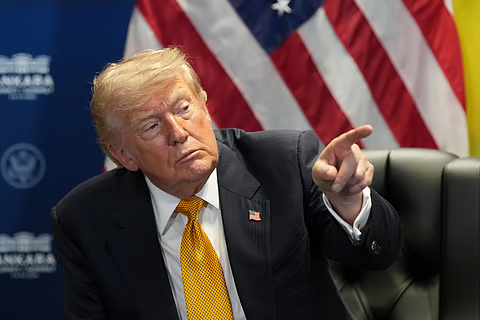
“I’ll give a little warning. We’re going to hit them hard tonight,” Trump told reporters on the sidelines of the NATO summit, signaling that military options remain firmly on the table amid the rapidly deteriorating security environment in the Middle East.
The remarks represent one of the strongest public warnings issued by Trump during the current confrontation and have reignited concerns about whether Washington is shifting from targeting military assets to threatening critical civilian facilities that sustain Iran’s economy and governance.
Beyond Military Targets
Military analysts note that threatening civilian infrastructure—such as electricity grids, communication networks, ports or transportation systems—is significantly different from targeting missile sites, command centers or military bases.
International humanitarian law generally prohibits attacks intentionally directed against civilian objects unless they become military objectives. Consequently, Trump’s rhetoric has attracted considerable attention among legal experts and diplomatic observers.
Whether the comments were intended literally or as psychological pressure remains unclear.
Trump’s Strategy: Maximum Pressure 2.0
The warning appears consistent with Trump’s long-standing negotiating philosophy.
Throughout both his presidencies, Trump has relied on a strategy of creating uncertainty and maintaining credible military threats while leaving room for negotiations. His administration has frequently argued that unpredictability enhances American deterrence.
Rather than announcing detailed military plans, Trump often seeks to convince adversaries that the United States is willing to go much further than previous administrations.
This approach echoes his earlier “maximum pressure” campaign against Iran, which combined crippling economic sanctions, diplomatic isolation and the targeted killing of senior Iranian military commander Qassem Soleimani in 2020.
The latest warning suggests that Trump believes raising the potential costs for Tehran could force Iranian leaders to reconsider further escalation.
Sending Multiple Messages
Experts say Trump’s remarks were aimed at several audiences simultaneously.
First, they serve as a warning to Iran that continued attacks or support for regional proxy groups could invite overwhelming retaliation.
Second, the message reassures U.S. allies—including Israel and Gulf Arab states—that Washington remains prepared to employ military force if necessary.
Third, the statement reinforces Trump’s image among his domestic political supporters as a leader willing to project American power decisively.
This combination of foreign policy signaling and domestic political messaging has become a hallmark of Trump’s communication style.
Psychological Warfare
Military deterrence depends not only on actual military capability but also on convincing opponents that force will be used if red lines are crossed.
By publicly discussing possible strikes before any military action, Trump increases uncertainty within Iran’s political and military leadership.
Iranian planners must now consider whether critical national infrastructure could become vulnerable during any future confrontation.
Such uncertainty may complicate Tehran’s military calculations without requiring immediate military action.
Risks of Escalation
However, analysts warn that threatening civilian infrastructure carries substantial risks.
Iran has repeatedly demonstrated its ability to retaliate through ballistic missiles, drones and allied militia groups operating across Iraq, Syria, Lebanon and Yemen.
Any attack affecting civilian infrastructure could provoke broader regional retaliation against U.S. military bases, commercial shipping in the Gulf, or allied interests.
Energy markets would also react sharply, particularly if Iranian oil production or Gulf shipping routes were disrupted.
Legal and Diplomatic Questions
International law distinguishes between military objectives and civilian infrastructure.
While dual-use facilities that directly support military operations may become lawful targets under specific circumstances, indiscriminate attacks on civilian infrastructure could generate significant international criticism and legal challenges.
European allies, already concerned about regional instability, may urge restraint while continuing diplomatic engagement.
Calculated Brinkmanship
Trump’s latest warning reflects his broader foreign policy philosophy: establish overwhelming military credibility while using aggressive rhetoric to strengthen negotiating leverage.
Whether this strategy compels Iran toward de-escalation or instead increases the risk of miscalculation remains uncertain.
History suggests that Trump’s negotiating style often combines sharp public threats with behind-the-scenes opportunities for diplomacy. Yet when rhetoric involves possible strikes on civilian infrastructure, the margin for misunderstanding narrows considerably.
The coming days will determine whether the warning was primarily psychological warfare designed to deter Tehran—or the prelude to a far more dangerous phase in one of the world’s most volatile geopolitical confrontations.

NewsHasghag operates a 24/7 news bureau that tracks the real-time, social media-driven stories from India and around the world, keeping you ahead of the day’s key talking points. Our digital-first approach transforms storytelling through the seamless integration of data, interactive charts, video, and audio into every narrative