





Voter Rolls, Election Commission and the New Battle Over Electoral Trust
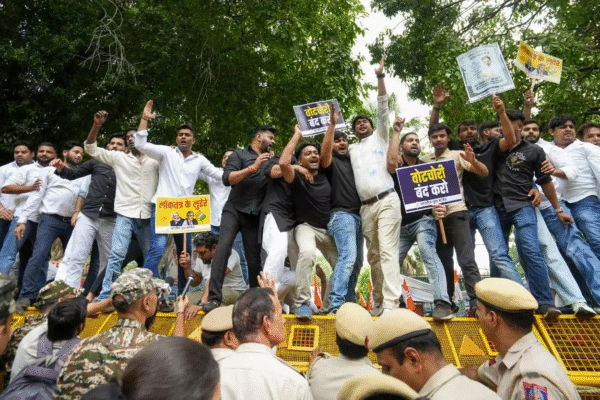
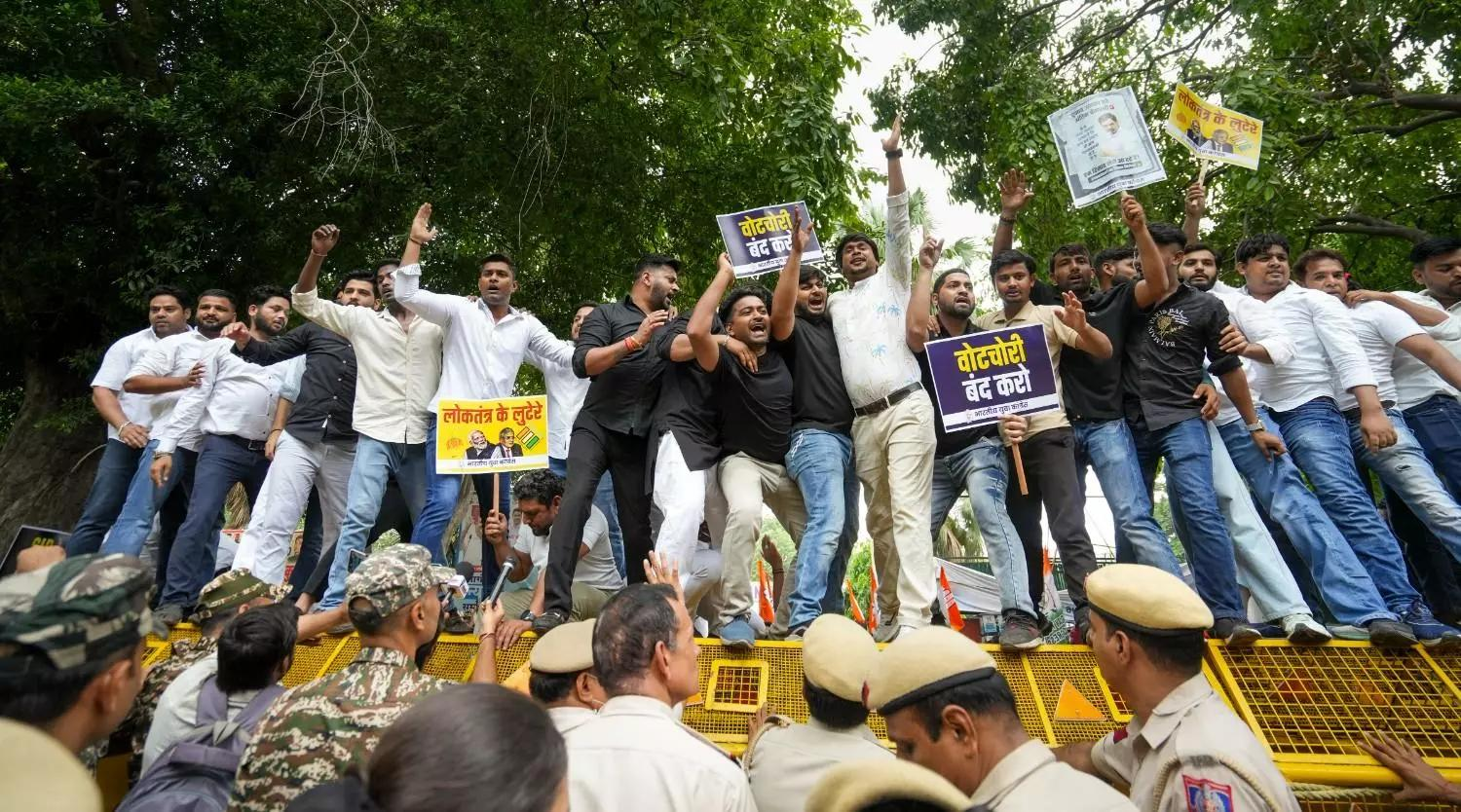
India’s electoral debate has moved from the polling booth to the voter list. Thousands of protesters gathered in Delhi and Mumbai on October 4, demanding the resignation of Chief Election Commissioner Gyanesh Kumar and questioning the Election Commission’s ongoing revision of electoral rolls. The demonstrations, which have continued for three days, have brought an administrative exercise normally buried in electoral paperwork into the centre of a much larger debate about voting rights and institutional trust.
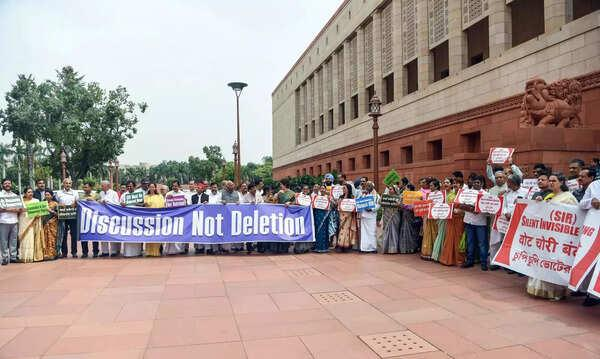
At the heart of the controversy is the Special Intensive Revision (SIR) of electoral rolls. Protesters and opposition parties allege that the exercise has resulted in the removal of large numbers of eligible voters and could disproportionately affect citizens who face difficulties proving their eligibility. They argue that deletion from a voter list is not simply an administrative correction: it can directly affect a citizen’s ability to participate in an election.
The Election Commission, however, rejects the allegation that the exercise is politically motivated. Its stated objective is to clean electoral rolls by identifying duplicate, deceased and otherwise ineligible entries and to improve the accuracy and integrity of the voter database. Importantly, the Commission has also directed officials to register eligible voters who may have been inadvertently omitted.
That distinction matters. Electoral rolls inevitably require periodic updating. People die, move to other constituencies, change addresses or appear more than once in databases. Removing such entries is necessary for maintaining accurate rolls. The difficult question is what safeguards exist when a genuine voter is mistakenly removed.
This is where the present controversy becomes more than a political confrontation. The credibility of an electoral system depends not only on preventing bogus entries but also on ensuring that legitimate voters are not lost in the process.
The scale of the exercise has intensified these concerns. Reuters reported that approximately 130 million people were left out of initial draft lists during the wider verification drive, although being absent from a draft list does not automatically mean that every person has permanently lost voting rights. The Election Commission has introduced additional procedures, including home visits by Booth Level Officers in cases involving discrepancies, allowing documents to be collected from voters rather than requiring everyone to appear personally before election officials.
The protests have also raised questions about the manner in which dissent is being handled. In Delhi, police detained hundreds of demonstrators during earlier attempts to gather at Jantar Mantar, while fresh demonstrations continued on Sunday. Police have cited restrictions on public assemblies. Meanwhile, allegations concerning police conduct during one protest are being investigated by the Delhi Police Crime Branch.
The political dimension cannot be ignored. Opposition parties contend that the voter-roll changes could benefit the ruling BJP, an allegation denied by both the Election Commission and the BJP. The competing claims underline why transparency is particularly important when electoral administration becomes politically contested.
The larger issue is therefore not whether voter lists should be revised. They must be. The real issue is whether the process is transparent, verifiable and accessible enough to ensure that an eligible citizen can challenge an incorrect deletion without excessive procedural difficulty.
Technology can make voter verification faster, but it cannot substitute for accountability. A database may identify a discrepancy; it cannot by itself resolve the circumstances behind that discrepancy. Human verification, clear notices, accessible appeals and publicly understandable procedures remain essential.
India’s democracy ultimately depends on a simple principle: every eligible citizen should have a fair opportunity to remain on the electoral roll and exercise the right to vote. The Election Commission has a constitutional responsibility to protect the integrity of the voter list, while political parties and civil society have a legitimate role in scrutinising the process.
The protests have demonstrated that electoral administration is no longer merely a technical issue. It has become a question of public confidence. The way the Election Commission addresses complaints, publishes evidence and demonstrates that genuine voters can be restored will therefore matter as much as the deletions themselves.
The immediate political confrontation may eventually subside. The larger question will remain: can India clean its voter rolls without weakening voters’ confidence in the ballot itself?

Prabha Gupta is a veteran journalist and civic thinker dedicated to the constitutional ideals of dignity and institutional ethics. With over thirty years of experience in public communication, her work serves as a bridge between India’s civil society and its democratic institutions. She is a prominent voice on the evolution of Indian citizenship, advocating for a national discourse rooted in integrity and the empowerment of the common citizen