




Youth Protests Have Changed Indian Politics: Why Parties Are Suddenly Reaching Out to the Young
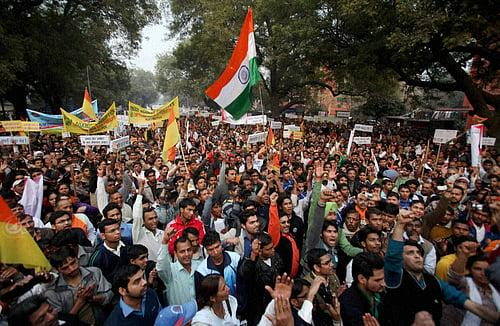
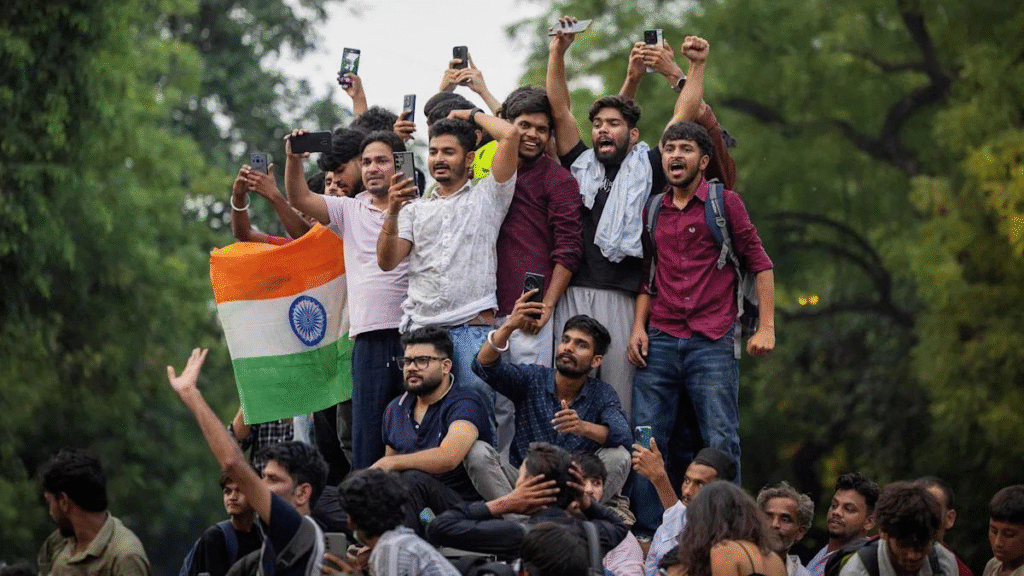
New Delhi: The youth protests may have started with anger over examinations, but their political impact is now reaching far beyond the education system. What began as a student-led mobilisation has forced political parties to confront a constituency they can no longer treat simply as a voting bloc to be approached during elections. The question now is not whether young Indians are politically aware. The question is why mainstream politics appears to have noticed their political power only after they took to the streets.
The shift is already visible. The recent Jantar Mantar movement has prompted renewed youth outreach by political parties, with the Congress intensifying its engagement with student movements and the BJP stepping up efforts to connect with young people. The BJP’s Delhi unit has acknowledged that the Gen Z mobilisation took the organisation somewhat by surprise and has said it intends to accelerate its outreach to younger citizens.
That admission is significant. Political parties traditionally understand youth politics through student wings, campus elections and youth organisations. But the recent movement demonstrated something different: young people can mobilise outside established party structures, build their own political language and attract national attention without waiting for a political party to give them a platform.
The protest was bigger than one minister
The resignation of Union Education Minister Dharmendra Pradhan became an important symbol of the movement’s impact. But reducing the protests to a demand for one minister’s resignation would miss the larger political story. The grievances that brought young people together included examination integrity, alleged irregularities, employment anxiety and a broader sense that institutions responsible for determining their futures were not listening to them.
That is precisely why the movement has become politically important. A government can respond to an individual demand. It is much harder to respond to an entire generation questioning whether the systems governing education, examinations and employment are working for them.
The RSS has now publicly described the Jantar Mantar protests as reflecting wider systemic failures rather than merely corruption, and called for a constructive approach to understanding Gen Z concerns. That is a revealing development because it suggests the political establishment is beginning to recognise that the protests cannot simply be dismissed as temporary student anger.
Why are parties suddenly interested?
The answer is straightforward: young people are becoming politically consequential long before they enter traditional party structures. They are also unusually powerful communicators. Social media allows a grievance that might once have remained confined to a university campus to become a national political issue within hours.
The recent protests demonstrated this new political grammar. Memes, videos, livestreams and informal networks helped create a movement that did not look like a conventional political campaign. That makes it harder for established parties to control the message—and harder for them to ignore it.
The BJP’s decision to strengthen youth engagement after acknowledging that the movement caught the party by surprise illustrates the challenge. Congress, meanwhile, is attempting to position itself closer to youth-led movements and issues.
But there is a danger for both sides.
Young voters are not a captive constituency
Political parties may assume that reaching out to young people means offering more campus programmes, appointing younger leaders or increasing social-media activity. That may not be enough.
The protests suggest that the concerns are more fundamental: Can a student trust an examination system? Can a young graduate find meaningful employment? Can merit and hard work reliably translate into opportunity? Will institutions listen when something goes wrong?
These are not questions that can be answered with hashtags.
The biggest political mistake would be to interpret youth mobilisation merely as an opportunity for electoral branding. Young people who organise independently are unlikely to remain loyal simply because a political party supports their protest today. Their expectations are likely to be measured against actual outcomes.
From streets to the ballot box
The real test of the movement will come after the demonstrations disappear from television screens and social-media feeds. Can youth activism translate into sustained political participation? Can student groups influence policy rather than merely protest against it? And can political parties convert outreach into measurable reforms?
That is where the current political recalibration becomes significant. The youth protests have demonstrated that India’s younger generation can force institutions to respond. Political parties are now discovering that ignoring this generation carries its own political cost.
But there is another possibility. If parties simply imitate the language of youth activism without addressing its underlying grievances, the next mobilisation could be even more independent of them.
India’s political class may therefore be facing a new reality: young people do not necessarily want a political party to speak for them. They increasingly want institutions to listen to them directly.
The protests may have begun as a fight over examinations. Their larger legacy could be a change in the relationship between India’s youth and its political establishment.
And that is why the most important political question today is not which party will win the youth vote.
It is whether India’s political parties have understood what young Indians are actually asking for.

NewsHasghag operates a 24/7 news bureau that tracks the real-time, social media-driven stories from India and around the world, keeping you ahead of the day’s key talking points. Our digital-first approach transforms storytelling through the seamless integration of data, interactive charts, video, and audio into every narrative