



Police Attack ‘Cockroach’ Activists as 10,000 Youth March on Indian Parliament
Mass Uprising Fueled by Exam Leaks and the Forced Removal of Sonam Wangchuk
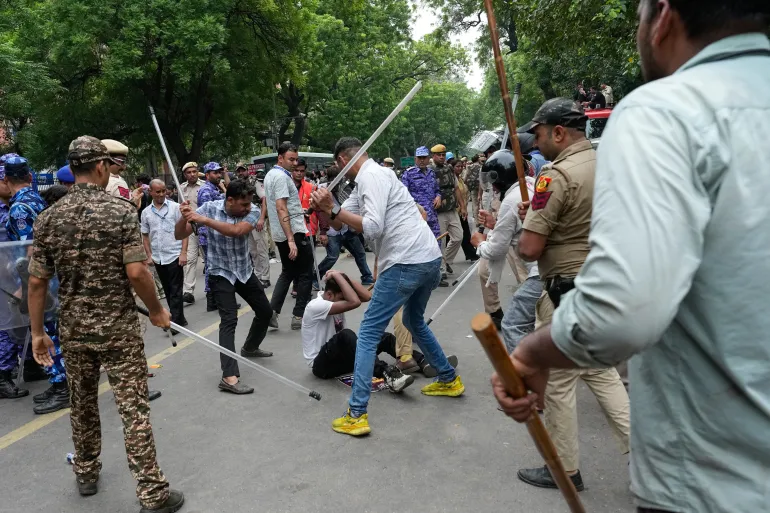
New Delhi-Jantar Mantar, In a dramatic escalation of youth-led resistance, over 10,000 protesters braved heavy baton charges and tear gas in New Delhi as they attempted to march toward the Indian Parliament on the opening day of the Monsoon Session. The massive demonstration stands as the largest direct challenge to Prime Minister Narendra Modi’s government in its third term, driven by furious demands for the resignation of Union Education Minister Dharmendra Pradhan and a complete overhaul of the nation’s compromised examination system.
The march was organized by the “Cockroach Janta Party” (CJP)—a movement ironically named by activists to subvert a controversial remark made earlier by the Chief Justice of India, who likened unemployed youth to “cockroaches.” What began in May 2026 as an online satirical campaign quickly transformed into a formidable physical movement, uniting students, young professionals, and families carrying backpacks loaded with food and water for a long siege.
Public anger reached a boiling point over the weekend following the forcible hospitalisation of 59-year-old climate activist and education reformer Sonam Wangchuk. Wangchuk had been on an indefinite hunger strike for three weeks in solidarity with the youth before being removed from Jantar Mantar by police.
As the crowd surged forward through a steady monsoon drizzle, chants demanding the resignations of Modi and Pradhan echoed across central Delhi. “This rotten system refuses to take action,” said 23-year-old protester Neelam. “The government is blind in ego. Its inflated ego is more important cannot see the pain of students, and that’s why so many people have joined this movement.”
Systemic Exam Rot Sparks Historic Clash at Jantar Mantar
Despite authorities deploying heavy riot police and sealing key metro stations around Jantar Mantar, thousands bypassed the security cordon by getting off at distant stops and walking. The Delhi Police, while claiming no scuffles occurred, faced widespread public skepticism as viral videos showed riot forces aggressively using canes to push back the crowd. Deputy Commissioner of Police Sachin Sharma urged protesters to disperse, warning that the site had exceeded capacity.
At the core of the uprising is deep-seated anger over systemic corruption in high-stakes competitive examinations. Just last month, 2.2 million medical aspirants were forced to retake the national entrance exam (NEET-UG) after widespread paper leaks forced the annulment of the initial May test. The scandal sparked a wave of student distress, with over a dozen young applicants tragically taking their own lives under the immense stress.
While Education Minister Pradhan accused the movement of working against national interests, the government showed subtle signs of strain. In a minor concession, officials invited CJP representatives to meet Health Minister JP Nadda. Confirming the outreach on X, CJP spokesperson Saurav Das stated, “Our demands are clear. The youth has gathered in huge numbers.”
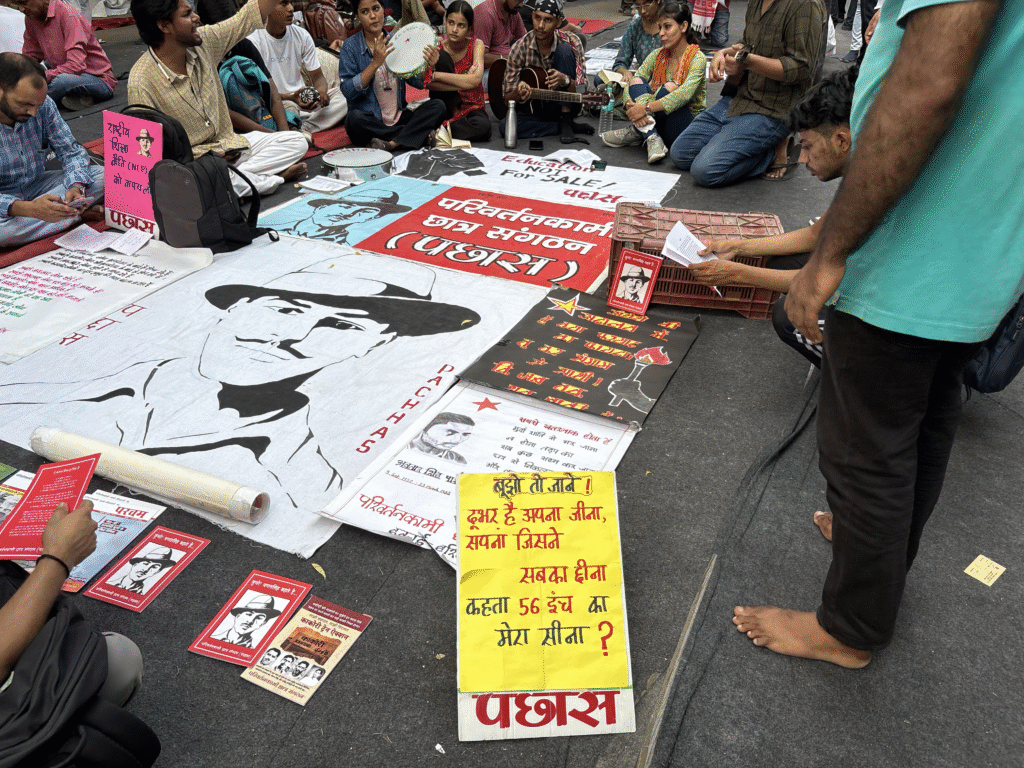
As the standoff continues on the streets of the capital, the youth-led movement has drawn significant backing from opposition parties and prominent public figures, signaling a historic shift in India’s democratic culture of dissent.

Prerna Varshney is a journalist and social commentator with over five years of experience in health, gender, and policy reporting. Her work reflects a deep commitment to truth and empathy, simplifying complex issues for everyday readers.