



A visa that suddenly became a $100,000 question
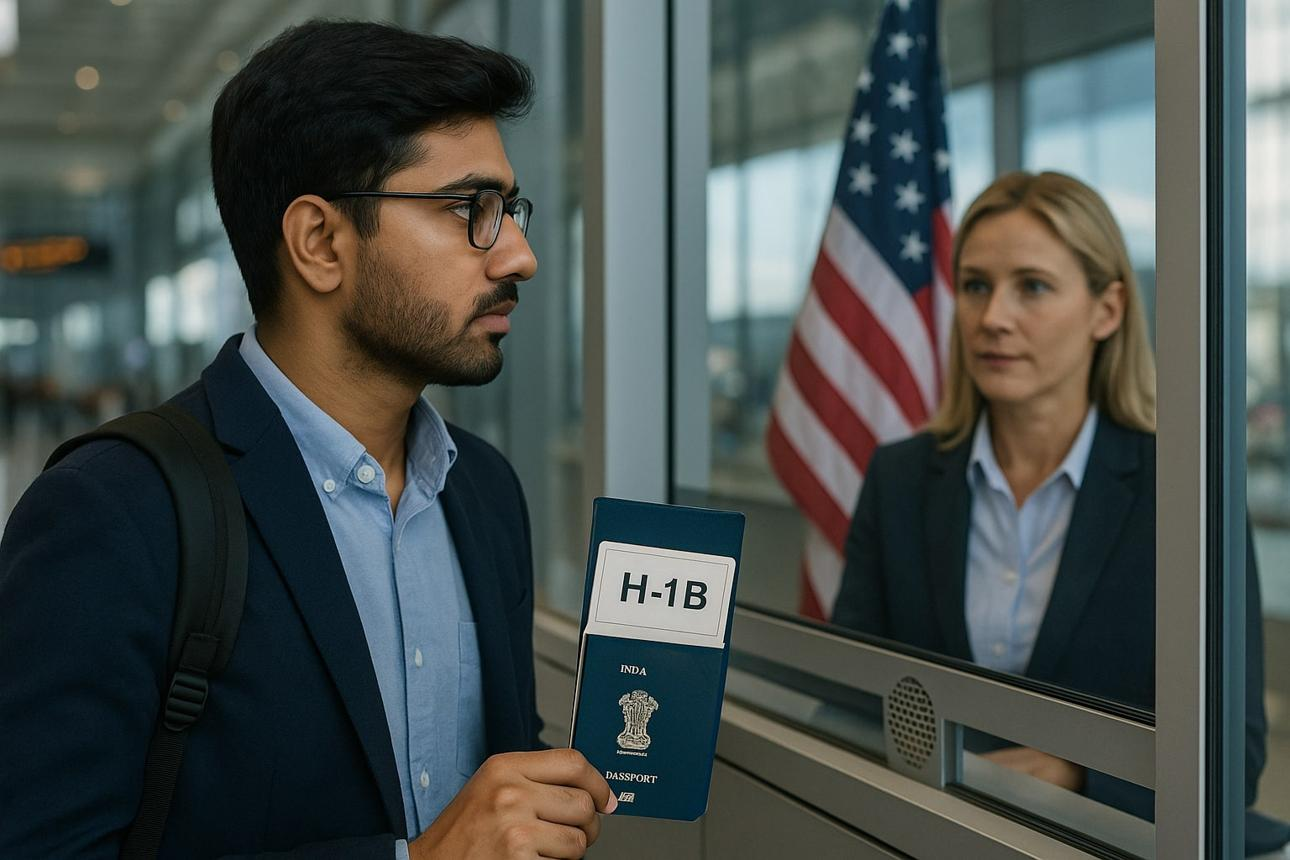
The H-1B programme was created to allow US employers to hire foreign workers in specialised occupations where their skills are required. Technology became one of its biggest areas of use.
The Trump administration argues that the programme has gradually moved away from that purpose. Its September 18 proclamation says some employers and outsourcing firms have used H-1B workers to reduce labour costs, displace American workers and eventually move work offshore. The administration has also linked alleged abuses to wage suppression and fraudulent applications.
The administration therefore sees the $100,000 payment not merely as a fee, but as a deterrent.
That distinction matters.
A $100,000 additional cost can fundamentally change the economics of hiring a foreign worker. Companies may decide to recruit locally, move the job elsewhere, hire remotely or invest in automation instead.
The White House argues that precisely this is the point.
The Trump administration says the H-1B system has been abused to replace American workers. But a $100,000 price tag raises another question: is immigration reform becoming a barrier to global talent?
The American technology industry has long depended on a global workforce. Indian engineers, software developers, data scientists and other skilled professionals have been among the largest groups using the H-1B programme to work in the United States. Now that route has become substantially more expensive and more closely scrutinised.
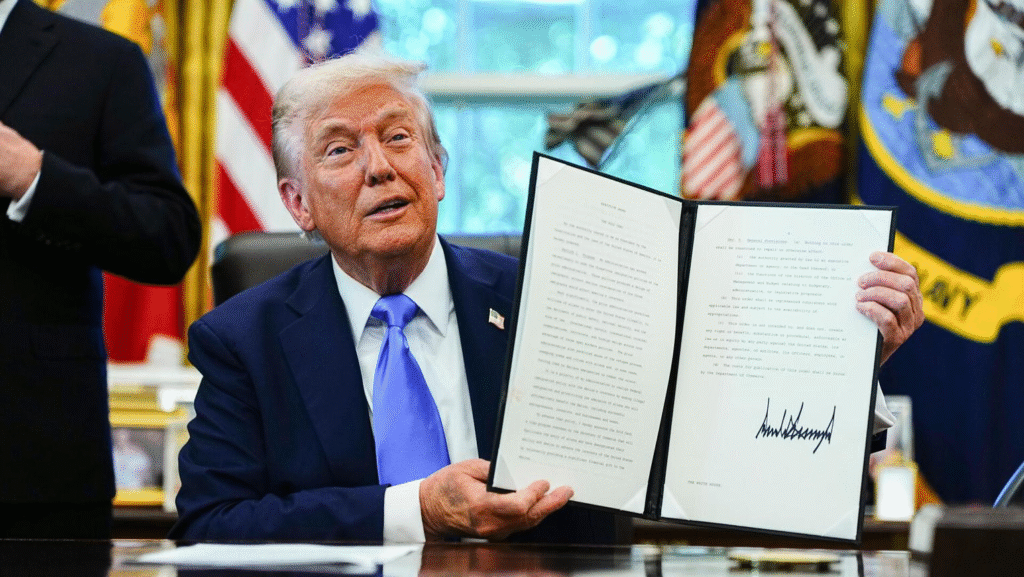
US President Donald Trump has extended the $100,000 payment requirement attached to certain H-1B petitions for another year, keeping the restriction in place until September 21, 2027. The administration says the measure is necessary to address what it describes as abuse of the programme, particularly by IT staffing and outsourcing companies.
The White House says the policy has already produced a dramatic change. According to the administration, the largest IT staffing and outsourcing firms reduced their combined H-1B registrations from 24,946 to 2,055—a 92% decline. It also says consular-processing requests fell by nearly 97% between the FY2025 and FY2027 cap seasons.
Those numbers are striking. But what exactly do they mean?
But who pays the price?
The immediate question for Indian professionals is whether the policy makes the American market less accessible.
The $100,000 requirement applies to certain new H-1B workers entering the United States from abroad; it is not simply a $100,000 annual charge imposed on every existing H-1B worker. The proclamation contains exceptions, including cases where the US government determines that hiring particular workers is in the national interest.
That distinction is important because headlines suggesting that every H-1B worker must suddenly pay $100,000 can create a misleading impression.
Nevertheless, the broader effect could be substantial.
For an Indian technology professional planning to build a career in America, the question is no longer only whether they possess the required qualifications. It may increasingly be whether an American employer is willing to absorb a dramatically higher immigration-related cost.
From outsourcing to artificial intelligence
There is another dimension to this debate.
The traditional argument surrounding H-1B visas was about access to specialised human talent. But the technology industry is simultaneously undergoing a massive transformation through artificial intelligence, automation and remote work.
If hiring foreign workers becomes substantially more expensive, companies have several alternatives: hire American workers, move operations to countries such as India, automate certain functions or employ people remotely without bringing them into the United States.
That means a policy designed to protect American jobs could also influence where technology jobs are physically located.
The White House argues that some outsourcing companies were already shifting work overseas after bringing workers into the US. The new policy seeks to prevent the H-1B programme from being used as a route to lower-cost labour.
But the longer-term question is whether making US-based international hiring more expensive could accelerate the very offshore model the policy is intended to discourage.
The scrutiny is getting tougher
The $100,000 payment is only one part of the new approach.
A separate presidential order directs US agencies to examine whether sponsoring employers have laid off American workers in similar positions within the previous year or plan future layoffs affecting comparable US employees. The administration says such information should be considered when labour-condition applications, petitions and visas are processed.
This effectively places greater scrutiny on companies that simultaneously reduce their American workforce and seek foreign H-1B workers.
That could make employers more cautious about using H-1B visas during restructuring.
But the policy is also facing a legal battle
There is an important complication: the $100,000 fee is not legally settled.
A federal judge in Boston ruled in June that the fee was unlawful, and the Trump administration is appealing that decision. The extension announced this week therefore comes while the underlying legal dispute remains active.
That means companies, universities and prospective workers are dealing not only with a restrictive policy but also with uncertainty about whether the payment requirement will ultimately survive judicial review.
What does it mean for India?
For India, the H-1B debate is larger than immigration.
The US has been one of the most important destinations for Indian technology professionals, while Indian IT companies have built enormous businesses around the US market.
If fewer foreign professionals are brought into America, some work could increasingly be performed from India rather than by relocating employees to the US.
That could create opportunities for India’s technology sector even as individual professionals find it harder to move abroad.
It could also accelerate a broader shift that has already been underway: the job does not necessarily have to travel with the worker.
The bigger question
Trump’s policy is built around a clear argument: American companies should hire foreign workers when they genuinely need specialised skills, not use immigration to obtain cheaper labour.
Whether the $100,000 payment and tighter scrutiny achieve that objective is a question that will ultimately be judged by employment data, wages, hiring patterns and the courts.
But one fact is already clear: the economics of the H-1B programme have changed dramatically.
The question for America is whether this will strengthen the domestic workforce.
The question for India is whether fewer Indians will go to America—or whether more American technology work will simply come to India.
And the question for the global technology industry may be even bigger:
In an era of AI, remote work and global talent, does the future of technology really depend on bringing the worker to America—or can the work increasingly go wherever the talent is?

Prabha Gupta is a veteran journalist and civic thinker dedicated to the constitutional ideals of dignity and institutional ethics. With over thirty years of experience in public communication, her work serves as a bridge between India’s civil society and its democratic institutions. She is a prominent voice on the evolution of Indian citizenship, advocating for a national discourse rooted in integrity and the empowerment of the common citizen