





Lucknow: Uttar Pradesh, India’s largest producer of food grains and sugarcane, is now setting its sights on an unconventional sector that could redefine rural livelihoods—pearl farming. In a significant policy push, the Yogi Adityanath government has announced subsidies ranging from 40% to 60% for pearl farming, prawn cultivation and hatchery development, aiming to diversify agriculture and create new income streams for farmers.
The initiative has sparked an important question: Can pearl farming become Uttar Pradesh’s next White Revolution, transforming the rural economy as dairy did decades ago?
While experts believe the sector holds considerable promise, they caution that its success will depend on scientific training, market access and sustained policy support.
A Shift Beyond Traditional Agriculture
For decades, Uttar Pradesh’s rural economy has relied heavily on wheat, paddy and sugarcane cultivation. However, shrinking landholdings, rising input costs, erratic monsoons and fluctuating crop prices have made farming increasingly less profitable for many small and marginal farmers.
Recognising these challenges, the state government is encouraging farmers to explore high-value aquaculture, including pearl cultivation, freshwater prawn farming and fish hatcheries.
Applications for subsidies are open until July 31 under various fisheries and aquaculture development schemes. Officials believe these initiatives can generate significantly higher returns than conventional farming while creating employment opportunities in rural areas.
Why Pearl Farming?
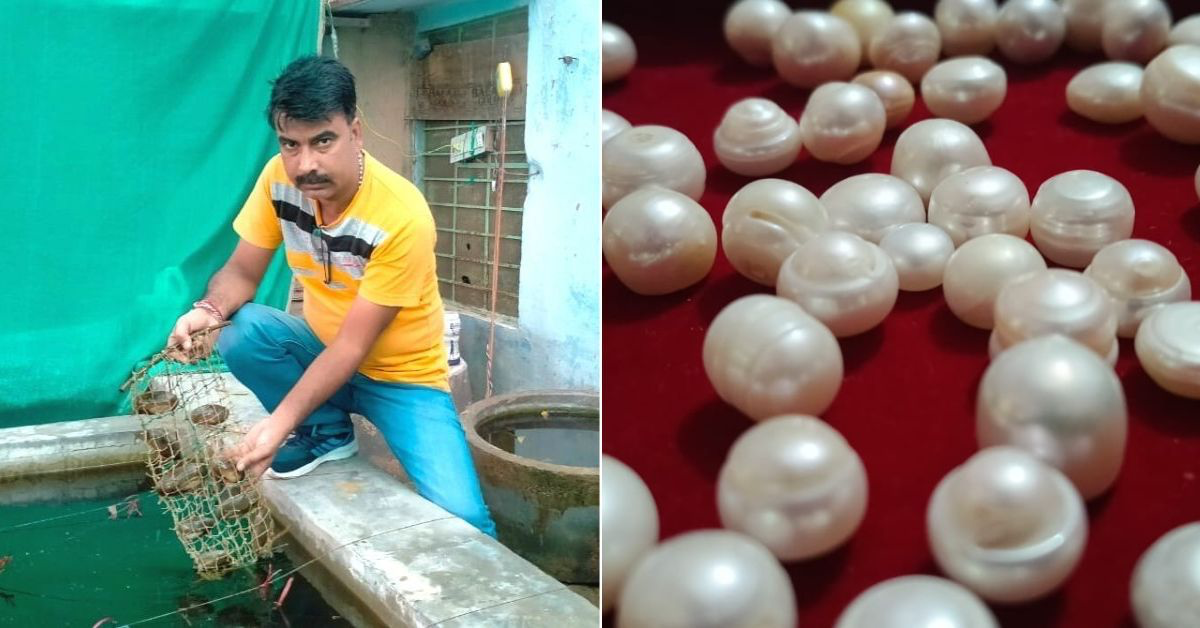
Unlike traditional crops, pearl farming does not require large landholdings. Farmers can cultivate pearls in ponds using freshwater mussels through scientific techniques.
The process involves surgically implanting a nucleus into a mussel, which then secretes layers of nacre over several months to form a pearl. Depending on quality, design and market demand, pearls can fetch premium prices in domestic and international markets.
Besides jewellery, pearls are increasingly used in cosmetics, pharmaceuticals and decorative products, creating multiple avenues for value addition.
Industry experts say that compared to conventional agriculture, pearl farming offers the possibility of substantially higher income per unit area, provided farmers receive proper technical guidance.
Government’s Strategy
The subsidy programme forms part of Uttar Pradesh’s broader strategy to modernise agriculture and double farmers’ income through diversification.
Under the scheme, eligible beneficiaries can receive financial assistance for establishing pearl farming units, freshwater prawn cultivation and hatchery infrastructure.
Officials argue that the initiative aligns with Prime Minister Narendra Modi’s vision of promoting the “Blue Economy”, which seeks to harness aquatic resources for sustainable economic development.
If implemented effectively, the programme could complement existing initiatives in fisheries, food processing and rural entrepreneurship.
Employment Beyond Farming
The significance of pearl farming extends beyond agricultural income.
The sector has the potential to create employment across the value chain, including:
- hatchery management;
- mussel cultivation;
- jewellery manufacturing;
- pearl grading;
- packaging;
- marketing;
- exports;
- training and extension services.
For rural youth, especially those with limited land, pearl farming could emerge as a viable enterprise rather than merely a supplementary occupation.
Women’s self-help groups could also play an important role in pearl processing, jewellery making and cooperative marketing, adding another dimension to rural employment generation.
Lessons from Other States
Pearl farming has already demonstrated encouraging results in states such as Telangana, Rajasthan and parts of Maharashtra, where trained farmers have successfully developed niche markets.
Countries including China and Japan dominate global pearl production through advanced cultivation techniques and integrated supply chains.
India currently imports a substantial share of high-quality pearls, indicating significant scope for domestic production if quality standards can be maintained.
Uttar Pradesh, with its extensive network of ponds, reservoirs and water bodies, possesses natural advantages that could support large-scale freshwater pearl cultivation.
Challenges Ahead
Despite its promise, pearl farming is not without risks.
Unlike conventional crops, it requires specialised technical knowledge, scientific handling of mussels and continuous monitoring of water quality.
Mortality of mussels, disease outbreaks and inadequate training can significantly reduce yields.
Marketing also remains a challenge. Farmers require reliable buyers, certification systems and access to organised markets to obtain premium prices.
Experts therefore stress that subsidies alone will not guarantee success.
Regular training, research support, extension services and farmer-producer organisations will be essential to build a sustainable pearl industry.
Can It Become the Next White Revolution?
The comparison with India’s White Revolution is ambitious.
The dairy revolution succeeded because it combined scientific innovation, cooperative institutions, assured procurement and strong market linkages.
Pearl farming will require a similarly integrated ecosystem.
If the government succeeds in building technical capacity, strengthening supply chains and connecting farmers with domestic and export markets, pearl cultivation could become a profitable niche sector capable of supplementing rural incomes.
However, it is unlikely to replace traditional agriculture. Instead, its greatest strength lies in diversification—providing farmers with an additional, high-value source of income that reduces dependence on seasonal crops.
The Road Ahead
As Uttar Pradesh seeks to become a trillion-dollar economy, diversification of rural livelihoods will be critical. Pearl farming represents an innovative attempt to move agriculture beyond conventional crop cultivation towards high-value enterprises driven by technology and entrepreneurship.
Whether it evolves into Uttar Pradesh’s next White Revolution will depend not merely on subsidies but on the state’s ability to create a complete ecosystem encompassing research, skill development, finance, processing and marketing.
For now, the government’s policy marks an important beginning. If farmers embrace the opportunity and institutions provide sustained support, pearls may one day become as valuable to Uttar Pradesh’s rural economy as milk once became to India’s dairy revolution.

NewsHasghag operates a 24/7 news bureau that tracks the real-time, social media-driven stories from India and around the world, keeping you ahead of the day’s key talking points. Our digital-first approach transforms storytelling through the seamless integration of data, interactive charts, video, and audio into every narrative