



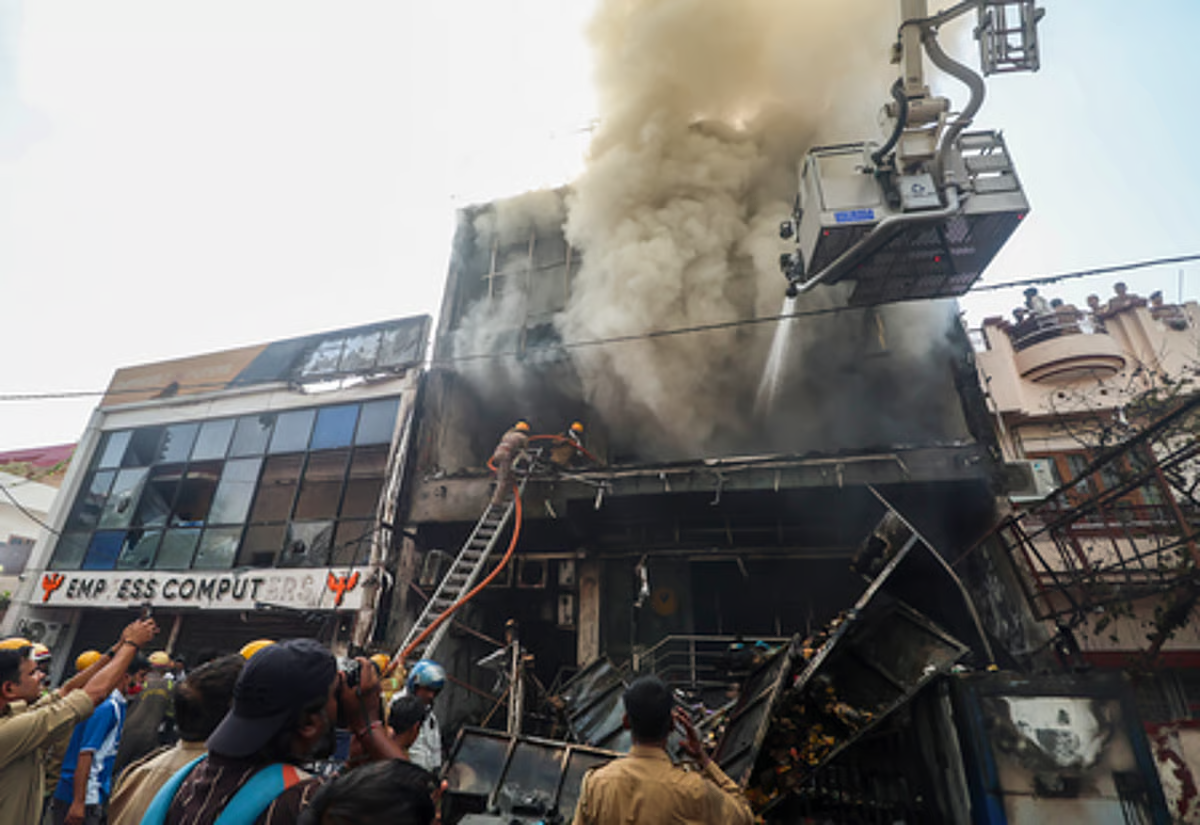
As the dust settles on the devastating fire in Lucknow that claimed 15 lives, the government’s response has been swift and visible. Four officials have been arrested, four others suspended, an SIT has been constituted to investigate the tragedy, and Uttar Pradesh Chief Minister Yogi Adityanath has announced ex-gratia compensation for the victims’ families.
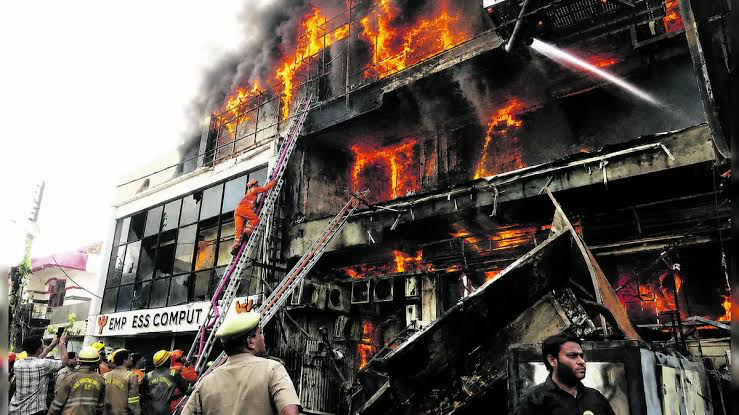
Yet amid the arrests, suspensions, official statements, and political reactions, one fundamental question remains unanswered: What caused the fire in the first place?
Until that question is answered conclusively, accountability risks becoming incomplete and the possibility of preventing similar tragedies remains uncertain.
Swift Administrative Action, But Questions Persist
The state’s response has followed a familiar pattern often seen after major disasters. Administrative action is taken, officials are suspended, investigations are ordered, and compensation packages are announced for grieving families.
Such measures are important. They signal that the government is taking the tragedy seriously and that lapses, if any, will not go unpunished. The arrests and suspensions also reflect growing public pressure for accountability whenever lives are lost due to alleged negligence.
However, punitive action alone does not explain how a fire capable of killing 15 people was able to occur and spread with such devastating consequences.
Was the blaze caused by an electrical short circuit? Did faulty wiring play a role? Were safety protocols ignored? Was there a violation of fire safety norms? Were emergency exits functional? Did the building possess the required clearances and certifications?
These are not merely technical questions. They are central to understanding whether the tragedy was an unavoidable accident or a preventable disaster.
History shows that in many major fire incidents across India, the immediate focus often shifts toward identifying individuals to blame. While accountability is necessary, experts argue that systemic failures are frequently overlooked. Weak enforcement, outdated infrastructure, poor maintenance, inadequate inspections, and lax compliance can all contribute to disasters long before the first spark appears.
The Real Test Is Prevention, Not Punishment
The constitution of a Special Investigation Team (SIT) is expected to uncover the sequence of events that led to the tragedy. For the victims’ families, the investigation represents hope that the truth will emerge. For the wider public, it is an opportunity to learn whether similar risks exist elsewhere.
The challenge for authorities is to ensure that the inquiry does not become limited to assigning blame after the fact. The real value of such investigations lies in identifying structural weaknesses and recommending reforms.
India has witnessed numerous fatal fires over the years in hospitals, commercial establishments, residential buildings, coaching centres, and industrial units. In many cases, inquiry reports have highlighted recurring issues: blocked exits, malfunctioning firefighting equipment, overcrowding, poor electrical maintenance, and inadequate inspections.
The concern is that public attention often fades once compensation is distributed and disciplinary action is announced. The deeper lessons risk being forgotten until another tragedy occurs.
Chief Minister Yogi Adityanath’s compensation announcement may provide some financial relief to affected families, but no amount of money can compensate for the loss of life. The true tribute to the victims would be ensuring that the circumstances leading to the disaster are fully understood and that corrective measures are implemented across the state.
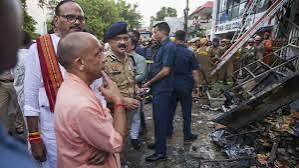
As investigators begin their work, the public deserves more than a list of those punished. It deserves a clear and transparent explanation of how the fire began, why it spread, whether it could have been prevented, and what steps will be taken to ensure it does not happen again.
Until those answers emerge, the most important question surrounding the Lucknow tragedy remains unresolved. Amid arrests, suspensions, compensation, and announcements, the search for accountability cannot be complete without discovering the origin of the fire itself.

NewsHasghag operates a 24/7 news bureau that tracks the real-time, social media-driven stories from India and around the world, keeping you ahead of the day’s key talking points. Our digital-first approach transforms storytelling through the seamless integration of data, interactive charts, video, and audio into every narrative