





Cut Off a Rapist’s Penis, if it proves: Public Fury Erupts After Delhi 10 year old Child Rape-Murder
There should be a slap on the face of police as the report says that the cab and its driver remained parked near the footpath for nearly an hour where the girl and her family were sleeping, yet the patrolling police failed to notice anything suspicious. The question that is haunting the public is simple: why does the police machinery so often appear to wake up only after a crime has taken place? The primary duty of policing is not merely to investigate crimes, but to prevent them.
I recall a dialogue from the Jolly LLB when Arshad Warsy pleading the case, of a footpath incident,’ Kahn hai ye log, Kahn se aate hai?” There is no record of them so no safety either. While police know everything but it wakes up when the such crime takes place whether it was hit and run or Rape.
The incident took place in a posh area of South Delhi. It was too late to save her,” Papa muzhe Bacha lo” Those were the last words of a 10-year-old girl before she was kidnapped, raped, and murdered in south Delhi. A child sleeping on a footpath, already among the most vulnerable members of society, was allegedly dragged into a nightmare from which she never returned.
The brutality of the crime has shocked the nation. Yet beyond the horror lies an uncomfortable question that demands an answer from the government, the police, and society itself: Who is responsible for protecting children who sleep on India’s streets?
Every time such a tragedy occurs, authorities promise swift justice. Police announce arrests, politicians express condolences, compensation may be offered, and public outrage dominates headlines for a few days. Then attention shifts elsewhere. The cycle repeats. The victims change, but the questions remain the same.
For the thousands of children who sleep on pavements, under flyovers, near railway stations, and in makeshift shelters across Indian cities, safety is not guaranteed by law, policy, or policing. It depends largely on luck.
The Invisible Children of India’s Cities
India’s urban landscape is filled with children who exist on the margins of official attention. Many belong to migrant families, daily-wage labourers, homeless communities, or households struggling to survive. They grow up without secure housing, proper sanitation, quality education, or access to basic protection.
For these children, the street is not merely a place of transit—it is home.
Yet despite being among the most vulnerable citizens, they often remain invisible in policy discussions. Cities spend billions on infrastructure projects, beautification drives, smart-city initiatives, and commercial development. But how much attention is devoted to identifying and protecting children who sleep in open public spaces every night?
The Delhi tragedy exposes this gap brutally.
A child sleeping on a footpath should never become an easy target for predators. If a city knows that families and children are forced to spend nights on pavements, then their protection should be a matter of urgent public policy, not an afterthought following a tragedy.
The issue extends beyond one crime. It reflects systemic neglect. Homeless children face higher risks of trafficking, sexual violence, exploitation, forced labour, substance abuse, and disappearance. Yet preventive measures remain inadequate and fragmented.
Accountability Must Go Beyond Arrests
The police have a duty to investigate crimes before it takes place. If an accused is arrested and prosecuted, that is essential. But accountability cannot end there.
The larger question is whether enough was done to prevent such a crime from occurring in the first place.
How many vulnerable children sleep on Delhi’s streets? How frequently are high-risk areas patrolled? What shelter options are available for homeless families? Are child protection agencies actively identifying children exposed to danger? Are there sufficient night shelters, outreach programmes, and rehabilitation mechanisms?
These questions deserve answers as urgently as the criminal investigation itself.
Governments often highlight economic growth, urban development, and law-and-order achievements. Yet the true measure of a society is not how it treats its most powerful citizens, but how it protects its most vulnerable ones.
A ten-year-old child should not have to rely on a desperate cry for help as her final defence against violence.
The tragedy is not merely the failure of one individual who allegedly committed a horrific crime. It is also a reminder of institutional shortcomings that leave vulnerable children exposed to dangers that should have been anticipated and addressed.
Justice for the victim is necessary. But justice alone will not protect the next child sleeping on a pavement tonight. A sever punishment for the victim is a Must to prevent such crime further.
Until governments, law-enforcement agencies, and society confront the reality of children living without adequate protection, similar tragedies will continue to occur. And every time they do, the same haunting question will return:
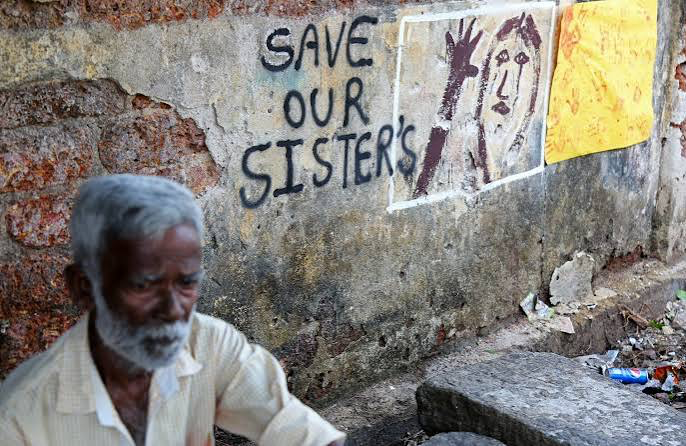
Who will take responsibility for the girls who sleep on footpaths?

Prabha Gupta is a veteran journalist and civic thinker dedicated to the constitutional ideals of dignity and institutional ethics. With over thirty years of experience in public communication, her work serves as a bridge between India’s civil society and its democratic institutions. She is a prominent voice on the evolution of Indian citizenship, advocating for a national discourse rooted in integrity and the empowerment of the common citizen