





Passport in Hand, Citizenship in Question? Why the Government’s Statement Is Stirring Debate
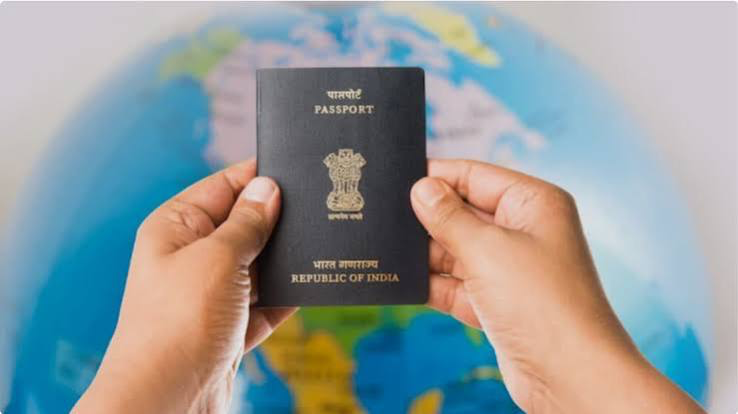
For most Indians, a passport represents one of the highest forms of official recognition by the state. It allows international travel, serves as a trusted identity document, and is often accepted as proof for a wide range of official purposes.
That is why the government’s recent assertion that a passport is not conclusive proof of citizenship has generated widespread discussion. Many citizens are asking a simple question: if a passport is issued only after verification by government authorities, why is it not considered definitive proof of citizenship?
The answer lies in a legal distinction that has existed for years but is often misunderstood by the public.
Citizenship and Documentation Are Not the Same Thing
A passport is an important government-issued document, but it is fundamentally a travel document. Citizenship, on the other hand, is a legal status governed by the Citizenship Act and related laws.
Legally, a passport does not create citizenship. Instead, it is issued based on documents and information provided by an applicant. If those underlying documents are later found to be incorrect, fraudulent, or incomplete, questions can arise regarding the holder’s citizenship status.
This principle is not unique to India. Many countries distinguish between documents issued by the government and the legal status those documents are meant to reflect.
There have been cases worldwide where passports were obtained through forged birth certificates, false declarations, fraudulent identities, or administrative errors. For this reason, governments generally do not treat possession of a passport as absolute proof that citizenship can never be questioned.
The government’s position therefore reflects an established legal principle rather than a new rule. However, because passports are widely viewed as authoritative documents, the clarification has surprised many citizens.
The debate also highlights a larger issue: many people assume that all government-issued documents carry the same legal weight. In reality, different documents serve different purposes, and not all are considered conclusive proof of citizenship.
Why the Issue Matters Beyond Legal Technicalities
The controversy extends beyond legal definitions. It touches upon public trust in institutions and the relationship between citizens and the state.
For ordinary people, obtaining a passport often involves extensive verification processes, including document checks and police verification. As a result, many naturally assume that once a passport is issued, their citizenship status has been conclusively established.
When governments later state that a passport alone is insufficient proof, it can create confusion and anxiety, particularly among individuals whose records may be decades old or whose families have faced documentation challenges.
At the same time, authorities argue that citizenship determination must remain based on legal evidence rather than any single document. Treating one document as infallible could potentially weaken safeguards against fraud and misuse.
The challenge for policymakers is finding a balance between protecting the integrity of citizenship laws and maintaining public confidence in government-issued documents.
The episode also serves as a reminder of the growing importance of documentation in modern governance. As governments increasingly rely on digital databases, verification systems, and identity records, citizens are becoming more aware of the complexities surrounding legal identity and citizenship.
Ultimately, the government’s statement should not be viewed as diminishing the importance of passports. A passport remains one of the most valuable documents an individual can possess. What the debate underscores is that citizenship is a legal status determined through law and evidence, while a passport is one of several documents that may help establish that status.
The controversy may have surprised many Indians, but legally, it reflects a distinction that has existed all along. The real question is not whether passports are important—it is whether any single document should be considered the final word on citizenship.

NewsHasghag operates a 24/7 news bureau that tracks the real-time, social media-driven stories from India and around the world, keeping you ahead of the day’s key talking points. Our digital-first approach transforms storytelling through the seamless integration of data, interactive charts, video, and audio into every narrative