

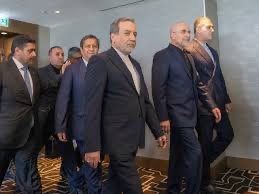
Iran Sees ‘Progress’ in U.S. Talks, But Lebanon Conflict Casts Shadow Over Fragile Diplomacy
After a shaky start that raised fears of another diplomatic breakdown, the first day of talks between Iran and the United States concluded on a cautiously positive note. Iranian officials described the negotiations as showing “progress,” while mediators Pakistan and Qatar confirmed that discussions would continue throughout the week.
The talks are being closely watched by governments, energy markets, and international observers, as they could influence not only U.S.-Iran relations but also the broader security landscape of the Middle East. However, the ongoing fighting in Lebanon continues to threaten the fragile diplomatic momentum.
Diplomacy Back on Track After Early Uncertainty
The negotiations began amid uncertainty after renewed clashes in Lebanon disrupted earlier plans for direct engagement between Washington and Tehran. The escalation raised concerns that regional tensions could once again derail efforts to reduce hostilities and stabilize critical trade and energy routes.
Despite these challenges, mediators from Pakistan and Qatar managed to bring both sides back to the negotiating table. Their joint statement indicated that discussions would continue for the remainder of the week, suggesting that neither side is prepared to abandon diplomacy despite ongoing regional instability.
Iranian representatives described the opening session as constructive, signaling that channels of communication remain open even after years of mistrust and confrontation. For the United States, the talks offer an opportunity to address long-standing concerns over regional security, maritime stability, and the future of diplomatic engagement with Tehran.
Analysts note that even maintaining dialogue is a significant achievement given the complex relationship between the two countries. Decades of sanctions, political disputes, and military tensions have repeatedly undermined attempts at lasting reconciliation.
The continuation of talks therefore represents a rare moment where diplomacy appears to be competing successfully with confrontation.
Lebanon Remains the Biggest Obstacle
While negotiators may be making progress in Switzerland, events on the ground in Lebanon continue to cast a long shadow over the process.
The recent fighting involving Israel and Hezbollah demonstrated how quickly regional conflicts can influence broader diplomatic efforts. Although neither Israel nor Hezbollah is directly involved in the U.S.-Iran talks, their actions have the potential to shape the political environment surrounding the negotiations.
This highlights one of the central challenges facing Middle East diplomacy. Agreements between governments often remain vulnerable to developments involving non-state actors, regional allies, and competing security interests.
For Iran, developments in Lebanon carry strategic importance because of its longstanding relationship with Hezbollah. For the United States, any escalation that threatens regional stability could complicate efforts to secure broader diplomatic objectives.
The talks are also being watched closely by global energy markets. Previous tensions in the region have affected shipping routes and raised concerns about disruptions to oil supplies. Any progress toward reducing tensions could contribute to greater economic stability, while renewed conflict could have the opposite effect.
As negotiations continue this week, expectations remain cautious. Both Washington and Tehran have reasons to pursue dialogue, but both also face domestic and regional pressures that limit their room for compromise.
The first day of talks has offered a glimpse of possibility, but the path ahead remains uncertain. The real test will be whether negotiators can transform initial progress into concrete agreements while preventing events in Lebanon and elsewhere from undermining the fragile diplomatic process.
For now, diplomacy has survived another crisis. Whether it can deliver lasting results remains the question that will define the week ahead.

NewsHasghag operates a 24/7 news bureau that tracks the real-time, social media-driven stories from India and around the world, keeping you ahead of the day’s key talking points. Our digital-first approach transforms storytelling through the seamless integration of data, interactive charts, video, and audio into every narrative