






Pellets at Parliament’s Doorstep: How a Student March Turned Into a Rights Battle
NEW DELHI, Jantar Mantar— On the opening day of Parliament’s Monsoon Session, what began as a student-led march against exam paper leaks escalated into a fierce clash in the heart of the national capital. Today, four days after the Cockroach Janta Party’s (CJP) “Sansad Chalo” demonstration on July 20, central Delhi finds itself at the center of a grave controversy: Did security forces deploy metal pellet guns against civilians on the streets of New Delhi?
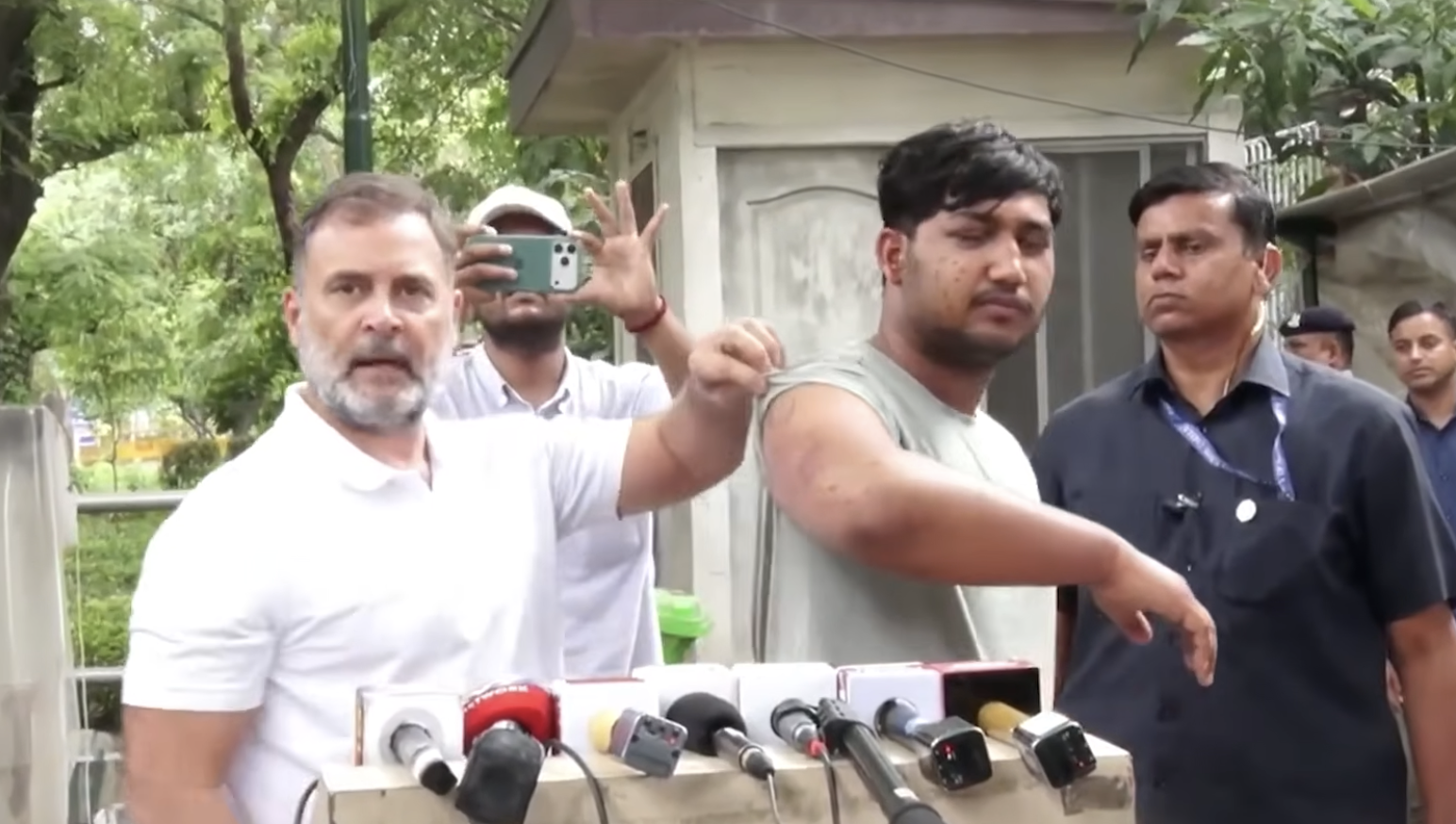
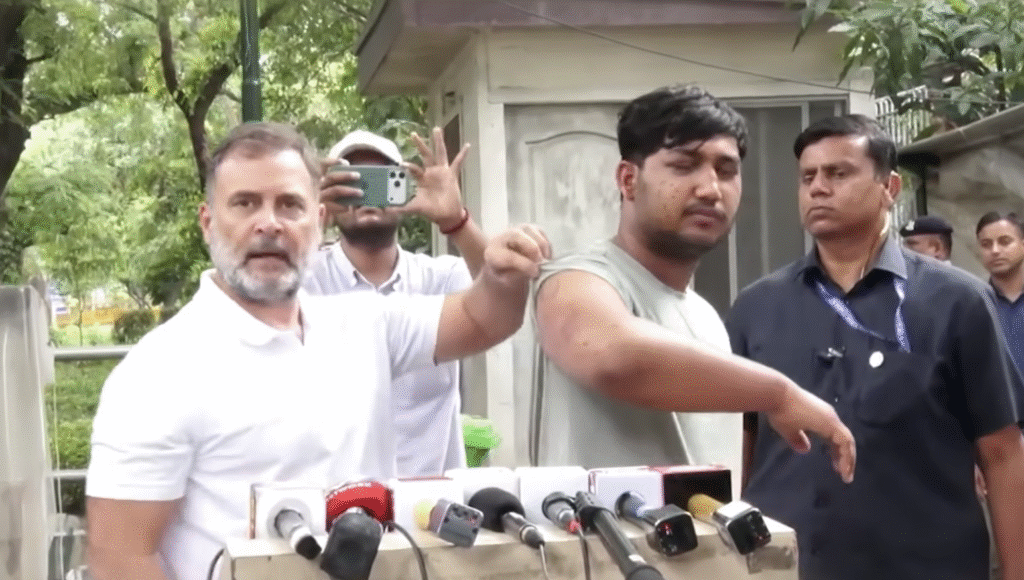
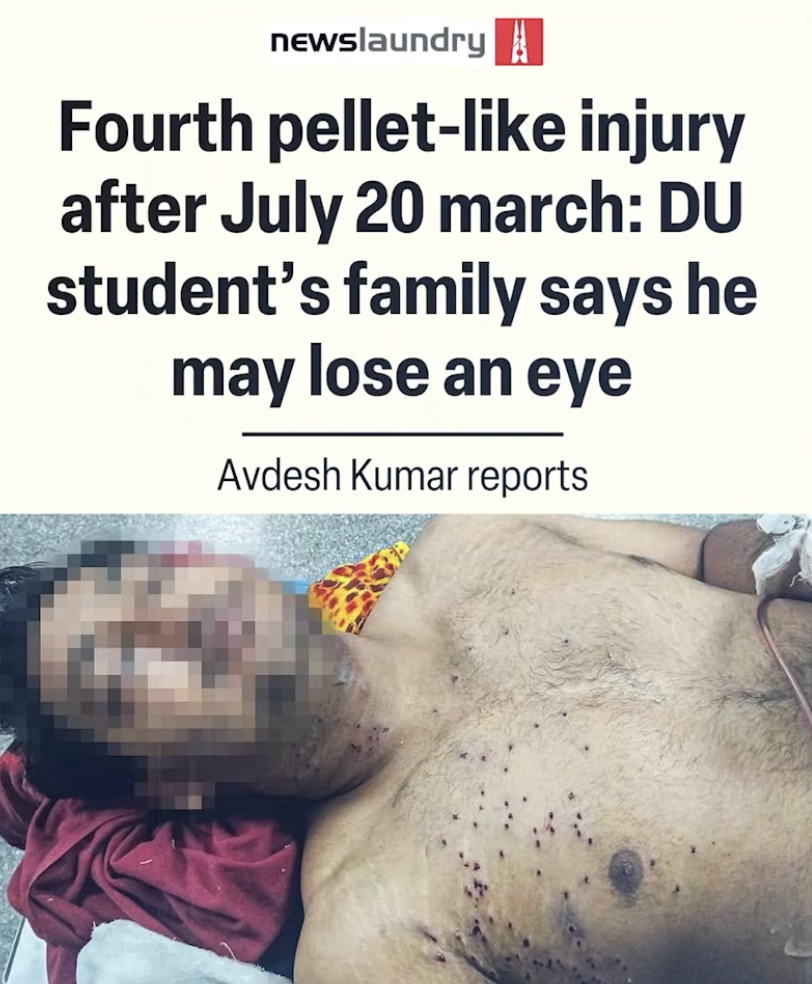
At the AIIMS Trauma Centre, 19-year-old Delhi University student Sahil Lochab lies in a hospital bed with a perforated cornea, facing a high risk of permanent vision loss in his right eye. Medical records confirm that metallic fragments pierced his eye, chest, and shoulder. At Lady Hardinge Medical College, 25-year-old MBA graduate Sheikh Irshad Mansoori underwent emergency surgery to extract multiple metallic pellets lodged near a major facial nerve and his neck. Mansoori recounted standing near Connaught Place with raised hands when a high-velocity blast struck his face.
These clinical findings have sparked an intense dispute between victims, independent journalists, law enforcement, and central security agencies. In the immediate aftermath, the Delhi Police issued stern denials across official channels, stating unequivocally that its personnel neither possess nor deployed pellet guns during crowd control operations. Senior police officers insisted that force was restricted to standard baton charges and tear gas canisters to prevent marchers from breaching security perimeters around Parliament.
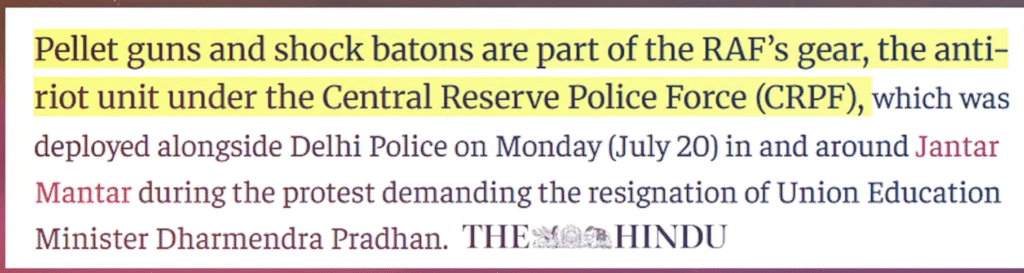
However, the deployment picture is more complex. Alongside local police, units of the Rapid Action Force (RAF)—the specialized anti-riot wing of the Central Reserve Police Force (CRPF)—were stationed near Jantar Mantar and Tolstoy Marg. Unlike state police, the RAF retains 12-bore pump-action shotguns firing metal and rubber pellets as part of its authorized tactical inventory. By Friday evening, senior officials confirmed that the RAF launched an internal verification to examine whether personnel used excessive force or discharged pellet cartridges during the crackdown.
Under standard operating procedures established by the Bureau of Police Research and Development (BPR&D), kinetic impact weapons like pellet guns are categorized as strict measures of last resort. Guidelines require forces to maintain a minimum firing distance of 500 feet, utilize mandatory barrel deflectors to limit scatter, and strictly aim below the waist to minimize life-threatening injuries. Firing into upper torsos or facial areas violates standard operating procedures.
From a legal perspective, the state’s authority to enforce public order remains bounded by constitutional guarantees. Article 19(1)(b) protects the fundamental right of citizens to assemble peacefully, while Article 21 guarantees the fundamental right to life and physical integrity. Legal scholars point out that while law enforcement may use necessary force to quell rioting or protect public infrastructure, the principle of proportionality is mandatory. Disproportionate force against non-violent or retreating demonstrators constitutes an illegal act subject to judicial review, departmental prosecution, and constitutional remedies.
With the Delhi High Court ordering the preservation of all CCTV and surveillance footage from the area, the investigation now shifts to determining accountability. For injured students like Sahil Lochab, however, the legal battle offers little immediate solace. As political debates rage inside Parliament over education reforms and police conduct, the sight of young protesters recovering in trauma wards has turned a local march into a defining test for civil liberties and crowd control standards in modern India.

NewsHasghag operates a 24/7 news bureau that tracks the real-time, social media-driven stories from India and around the world, keeping you ahead of the day’s key talking points. Our digital-first approach transforms storytelling through the seamless integration of data, interactive charts, video, and audio into every narrative