



Why Hindus Keep Needing a New Baba: From Asaram to Neem Karoli
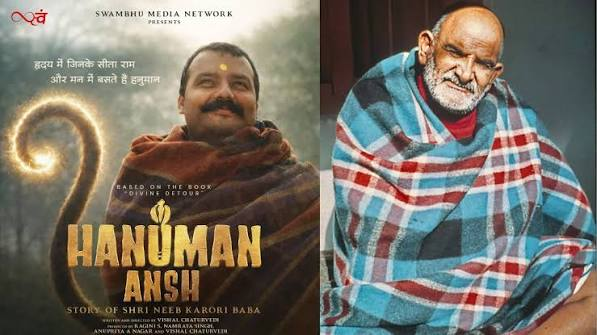
The runaway success of Hanuman Ansh has once again put a saint in the spotlight. Born in the early 1900s in Uttar Pradesh, Neem Karoli Baba—also known as Maharaj‑ji—was a Hindu spiritual leader and ardent devotee of Lord Hanuman. The film’s box‑office surge, from a Rs 10‑lakh opening to well over Rs 100 crore, is being read by many as proof of an enduring hunger for godmen and gurus among Hindus. But the deeper question is sociological: why do we, as a community, seem to need a baba one after another—from Asaram Bapu and Ram Rahim to Narayan Sarkar Hari of hathras stampede case and now Neem Karoli Baba?
Faith, fear and the promise of certainty
At one level, the appeal of babas is simple: they offer certainty in an uncertain world. For large sections of Hindu society—facing economic precarity, caste anxieties, rapid urbanisation and the erosion of traditional community structures—a charismatic baba becomes a one‑stop solution: healer, counsellor, miracle‑worker and identity marker. The promise is seductive: come with your illness, your child’s future, your marital problems, your business losses, and leave with a mantra, a tilak, a “solution” and the feeling of being seen.
This is not unique to Hindus, but in the Indian context it acquires a particular intensity because of how religion is lived: not just as doctrine, but as a dense network of rituals, local shrines, fasting, vows and, crucially, living saints who are believed to embody divine power. When existing institutions—family, caste panchayats, local temples, even the state—fail to deliver security or justice, the baba steps in as a parallel authority.
The cycle of scandal and renewal
The pattern over the last few decades is painfully familiar. A baba rises, gathers a massive following, builds an empire of ashrams, trusts, media channels and political clout. Then comes the scandal: sexual abuse, financial fraud, violent clashes with the state, or death in custody. Asaram Bapu, Ram Rahim Insan, and figures like “नारायण साकार हरि” fit this arc. Each time, there is outrage, arrests, and a public narrative of “false godmen”. Yet, within a few years, a new baba emerges, often with a cleaner image, a simpler aesthetic, and a renewed promise of purity.
This cycle persists because the underlying needs are not addressed. Banning ashrams or prosecuting individuals does little to reduce the social and psychological vacuum that babas fill. In fact, each scandal can paradoxically reinforce the demand: disillusionment with one baba does not translate into scepticism towards the institution of the baba itself; it simply shifts devotion to the next “authentic” saint.
Hanuman Ansh and the sanitised baba
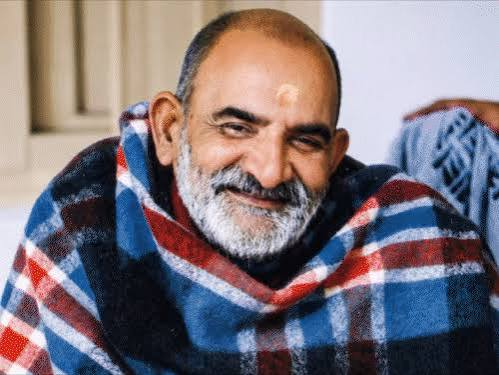
Hanuman Ansh arrives at a moment when the cultural mood is strongly in favour of devotional content, but also wary of the baggage associated with contemporary godmen. The film’s USP, as trade analysts note, is its simplicity and its focus on faith, humanity and everyday kindness rather than overt miracle‑mongering. Neem Karoli Baba is presented less as a flamboyant miracle‑worker and more as a humble ascetic whose life is itself the miracle.
This is crucial. After decades of sensational babas, the market now prefers a “safe” saint: one with no major scandals attached, a global halo (thanks to Western devotees like Ram Dass, and stories linking him to figures like Steve Jobs and Mark Zuckerberg), and a theology centred on Hanuman—already a massively popular, “pure” deity in the contemporary Hindu imagination. The baba is thus sanitised, de‑politicised (at least on screen), and made palatable for family audiences and the diaspora.
Caste, class and the politics of devotion
It is also important to ask whose baba we are celebrating. Many of the most followed babas draw their core support from specific caste and class clusters, even as they claim universal appeal. Their ashrams become sites where lower‑income devotees seek miracles and acceptance, while middle and upper‑class followers pursue “spirituality” and networking. The baba thus functions as a social bridge, but also as a mechanism that reproduces hierarchies: access to the inner circle, special darshans, and decision‑making often mirror existing inequalities.
When a film like Hanuman Ansh becomes a phenomenon, it also reinforces certain narratives about what counts as “authentic” Hindu spirituality: ascetic, Hindi‑belt, upper‑caste coded, and comfortably aligned with majoritarian sentiment. Other traditions—Sufi, bhakti radicals, anti‑caste saints—do not receive the same cinematic push or cultural amplification.
Do we need babas, or do we need institutions?
The real question is not whether Neem Karoli Baba was a genuine saint; many testify that his teachings on love, service and devotion transformed their lives. The question is why Hindu society repeatedly outsources its moral, emotional and even material security to individual charismatic figures instead of building robust, accountable institutions—religious, social and civic—that can sustain community without depending on a single personality.
As long as anxiety, alienation and the search for meaning are met primarily through personality‑cults, the cycle will continue: one baba falls, another rises, and films like Hanuman Ansh will keep finding a ready, emotionally charged audience. The devotion may be sincere, but the pattern reveals a deeper institutional failure—one that no amount of box‑office success can fix.

Prabha Gupta is a veteran journalist and civic thinker dedicated to the constitutional ideals of dignity and institutional ethics. With over thirty years of experience in public communication, her work serves as a bridge between India’s civil society and its democratic institutions. She is a prominent voice on the evolution of Indian citizenship, advocating for a national discourse rooted in integrity and the empowerment of the common citizen