


What Happens If Sheikh Hasina Returns to Bangladesh? Arrest, Political Turmoil and a Test for Tarique Rahman’s Government
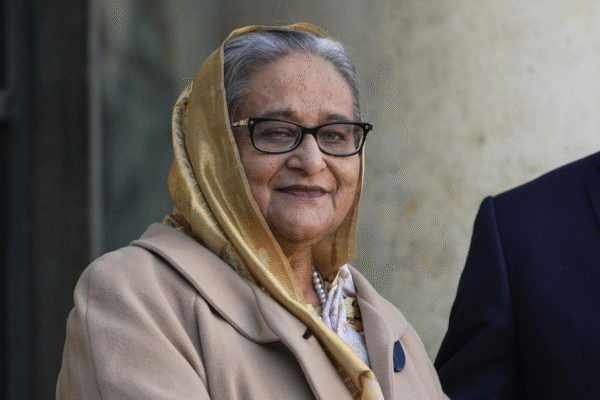
Sheikh Hasina’s return to Bangladesh could trigger an immediate political and legal confrontation, with the possibility of arrest, renewed street protests and further deterioration of an already polarised political environment. The former prime minister, who has been living in India since her government was toppled in August 2024, faces a death sentence imposed in absentia by Bangladesh’s International Crimes Tribunal. Her proposed return in December 2026 could therefore become one of the most consequential political developments in South Asia this year.
Hasina has declared that she is prepared to face arrest, imprisonment and even death rather than remain in exile. In an interview with the Associated Press, she reiterated that she wanted to return to her homeland despite the risks. Her lawyers have also approached Bangladesh’s diplomatic mission in New Delhi seeking a new passport and national identity card, a development that suggests her stated intention is being translated into practical steps. However, the Bangladeshi government has rejected her passport request and continues to seek her extradition from India.
Immediate arrest is the most likely outcome
If Hasina manages to enter Bangladesh, immediate arrest is the most likely scenario. The government has made its position clear that she must face the legal consequences of the tribunal’s verdict. Bangladesh’s prosecution has also indicated that she would be taken into custody upon arrival.
The International Crimes Tribunal sentenced Hasina to death in November 2025 for crimes against humanity linked to the violent suppression of the student-led uprising in July and August 2024. The United Nations estimated that nearly 1,400 people were killed during the crackdown. Hasina has denied ordering the killings and rejected the tribunal’s legitimacy, describing the proceedings as politically motivated.
Her return would therefore open another chapter in a highly contentious legal battle. Her lawyers could seek judicial remedies and challenge the proceedings, although the availability and scope of an appeal would depend on the courts and applicable legal provisions. The credibility of the judicial process would attract considerable international attention, particularly because the death sentence was delivered in her absence.
Could her return trigger political unrest?
The political consequences could be considerably more complicated than the legal proceedings.
Hasina remains an influential figure among Awami League supporters, despite her removal from power. The party, which dominated Bangladeshi politics for years, has been barred from political activities and excluded from the February 2026 general election. Many of its leaders are either in prison, in hiding or living abroad.
Her return could energise supporters who view her as a victim of political persecution. Demonstrations demanding her release could emerge, while opponents of her former government could organise counter-protests demanding that the death sentence be implemented.
The possibility of confrontation between rival political groups cannot be ruled out. Bangladesh has a history of political violence, and the presence of Hasina on its soil could intensify existing divisions.
A major challenge for Tarique Rahman
For Prime Minister Tarique Rahman, Hasina’s return would represent a serious political test. His BNP government has come to power promising stability, democratic reforms and an end to authoritarian practices.
How his administration handles the former prime minister will influence its domestic and international credibility. If the government rushes towards implementing the death sentence without ensuring transparent judicial safeguards, it could face criticism from international human rights organisations. Conversely, allowing Hasina a fair opportunity to challenge the verdict would demonstrate respect for due process.
There is also the larger question of whether the Awami League should remain excluded from democratic politics. Holding individual leaders accountable for alleged crimes is different from denying an entire political constituency the right to political representation.
India could face a diplomatic dilemma
Hasina’s return would also have implications for India-Bangladesh relations. New Delhi has provided her refuge since August 2024, while Dhaka has repeatedly sought her extradition under the bilateral treaty.
India has maintained that the extradition request is being examined through established legal procedures. If Hasina chooses to return voluntarily, the extradition question could become irrelevant, but the diplomatic repercussions would remain significant.
A defining moment for Bangladesh
Ultimately, Hasina’s return could either deepen Bangladesh’s political instability or create an opportunity to establish the supremacy of law over political vendetta.
The victims of the 2024 crackdown deserve justice, and allegations of serious human rights violations cannot be ignored. Equally, justice must be delivered through independent courts, credible evidence and internationally recognised legal safeguards.
Bangladesh is at a crossroads. The real test of its democratic transition will be whether the country can hold even its most powerful former leader accountable without abandoning the principles of fairness, political pluralism and constitutional democracy.
Hasina’s return, if it happens, will not simply be the homecoming of an ousted prime minister. It will test whether Bangladesh has genuinely moved beyond the politics of revenge that has repeatedly destabilised its institutions.

Prabha Gupta is a veteran journalist and civic thinker dedicated to the constitutional ideals of dignity and institutional ethics. With over thirty years of experience in public communication, her work serves as a bridge between India’s civil society and its democratic institutions. She is a prominent voice on the evolution of Indian citizenship, advocating for a national discourse rooted in integrity and the empowerment of the common citizen