




Why India has built strong strategic ties with Israel ?
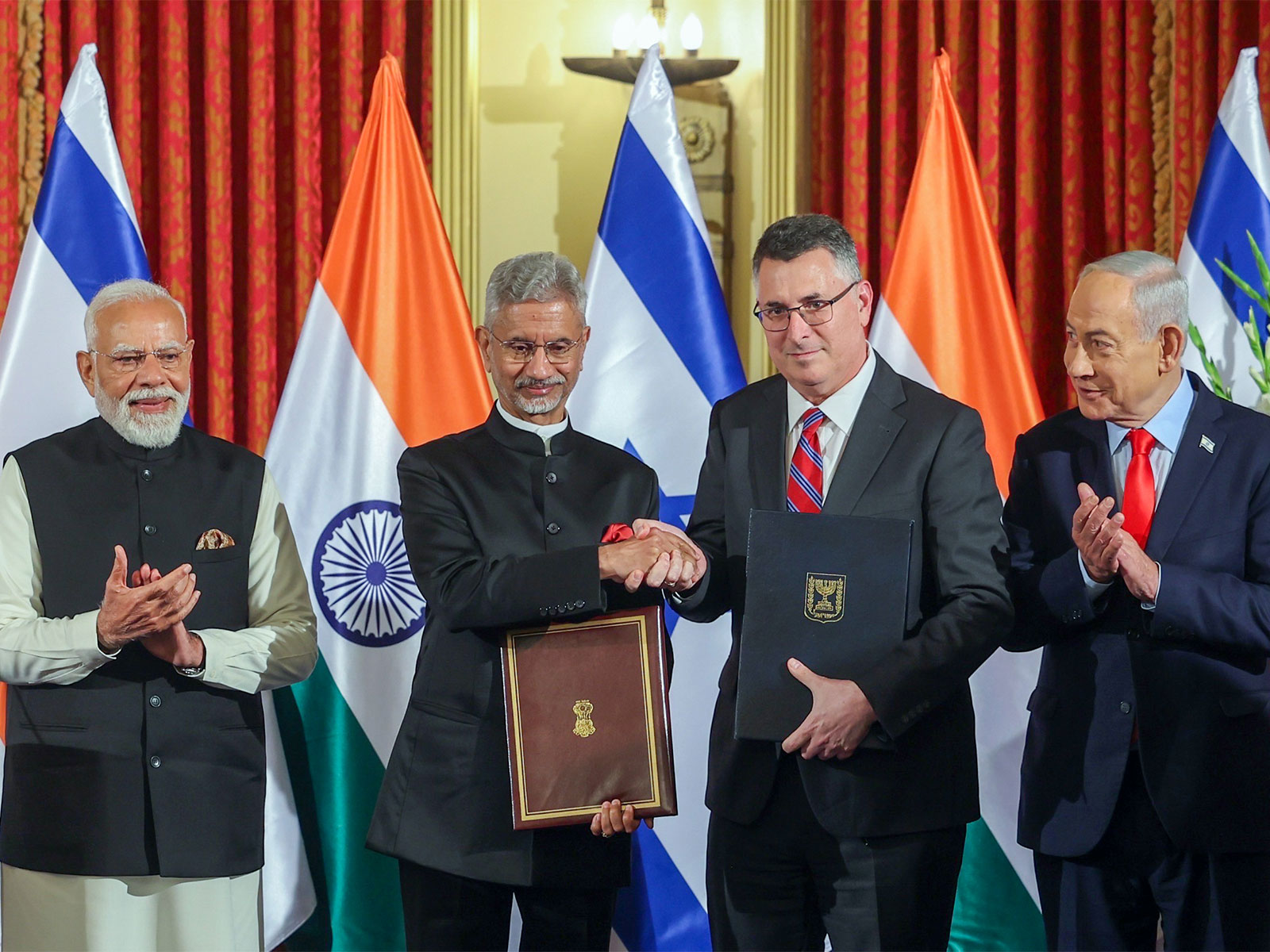
India’s relationship with Israel has evolved into one of its most significant strategic partnerships, particularly in the field of defence. Over the past two decades, Israel has emerged as a crucial supplier of drones, missile systems, surveillance technologies, and intelligence cooperation to India. These are not symbolic exchanges; they address real and immediate security concerns, especially given India’s complex regional environment.
Yet, alongside this robust defence partnership, India has officially maintained its long-standing support for a two-state solution and the legitimate rights of Palestinians. At multilateral forums, including the United Nations, India has historically reiterated its backing for peaceful coexistence between Israel and Palestine. This dual approach — strategic cooperation with Israel while advocating Palestinian statehood — reflects a careful balancing act rather than ideological inconsistency.
Strategic Needs and Diplomatic Language
India’s official statements during Middle Eastern crises typically emphasize de-escalation, civilian protection, and dialogue. The language is measured:
• Tensions must be reduced
• Civilians must be protected
• Dialogue and diplomacy must prevail
To some observers, this appears less like moral clarity and more like diplomatic calibration. India avoids explicitly choosing sides, preferring instead to position itself as a responsible stakeholder advocating stability.
The reasons are structural. Israel supplies critical defence technologies that enhance India’s deterrence capabilities. Given persistent border tensions and evolving warfare technologies, this cooperation serves tangible national security interests.
The China–Pakistan Axis
India’s strategic calculations cannot be separated from the deepening alignment between China and Pakistan. The China-Pakistan Economic Corridor (CPEC), expanding military cooperation, and diplomatic coordination — including veto politics at the UN Security Council present a direct challenge to India’s security landscape.
The United States increasingly views India as a partner in balancing China’s rise. However, Washington has historically maintained complex ties with Pakistan as well, particularly due to Afghanistan and broader regional considerations. This triangular dynamic forces India to maintain diversified partnerships rather than exclusive alignments.
Moral Leadership Versus Strategic Realism
India’s global identity has long been rooted in moral vocabulary. Under Jawaharlal Nehru, the doctrine of non-alignment sought to maintain distance from Cold War blocs. Mahatma Gandhi articulated a philosophy of non-violence that shaped India’s diplomatic ethos. Article 51 of the Indian Constitution explicitly promotes international peace and security.
However, the contemporary world is not defined by the binary alignments of the Cold War. Today’s environment is marked by “multi-alignment.” India imports oil from Russia, deepens defence cooperation with the United States, engages Iran through projects such as Chabahar Port, and strengthens technological ties with Israel.
This is not ideological drift but strategic pragmatism. India appears to prioritize national interest over moral posturing.
Is India Avoiding a Stand?
Critics argue that India’s reluctance to issue sharp moral condemnations during crises reflects strategic silence rather than principled diplomacy. Supporters counter that overt positioning could jeopardize economic, defence, or diaspora interests.
Indeed, nearly eight million Indian nationals reside and work in West Asia. Any regional instability directly affects their safety and India’s economic remittances. Diplomatic caution, therefore, is not merely geopolitical — it is socio-economic.
In international relations, public statements are often only part of the picture. Quiet back-channel diplomacy frequently plays a more decisive role than headline declarations.
Final Analysis: World Teacher or Strategic Power?
The deeper question resonates emotionally: If India aspires to be a “Vishwaguru” — a moral voice in global affairs — why not adopt clearer ethical positions during crises?
It is a legitimate inquiry.
Yet India today seems to view itself less as a moral lecturer and more as a rising strategic power navigating a volatile multipolar world. Whether this approach represents mature realism or a retreat from moral leadership will ultimately be judged by history.
For now, India’s policy toward Israel and the broader Middle East reflects calibrated equilibrium: defence pragmatism paired with diplomatic restraint.

Prabha Gupta is a veteran journalist and civic thinker dedicated to the constitutional ideals of dignity and institutional ethics. With over thirty years of experience in public communication, her work serves as a bridge between India’s civil society and its democratic institutions. She is a prominent voice on the evolution of Indian citizenship, advocating for a national discourse rooted in integrity and the empowerment of the common citizen