


Delhi Building Collapse: How Did a Six-Storey Building Become a Death Trap?
The collapse of a building being used as student accommodation in Satya Niketan has raised questions about structural safety, building permissions and the regulation of paying guest and hostel properties in Delhi.
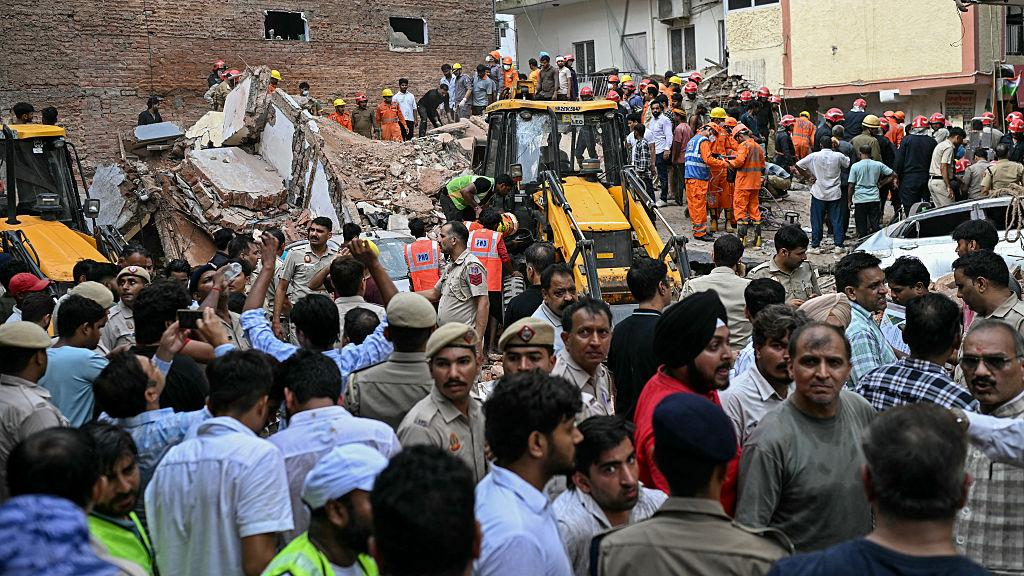
Seven people were killed after a building in Delhi’s Satya Niketan area collapsed on Sunday. The building was being used as paying guest accommodation for students, making the incident particularly significant because the property had been functioning as residential accommodation for a large number of young people.
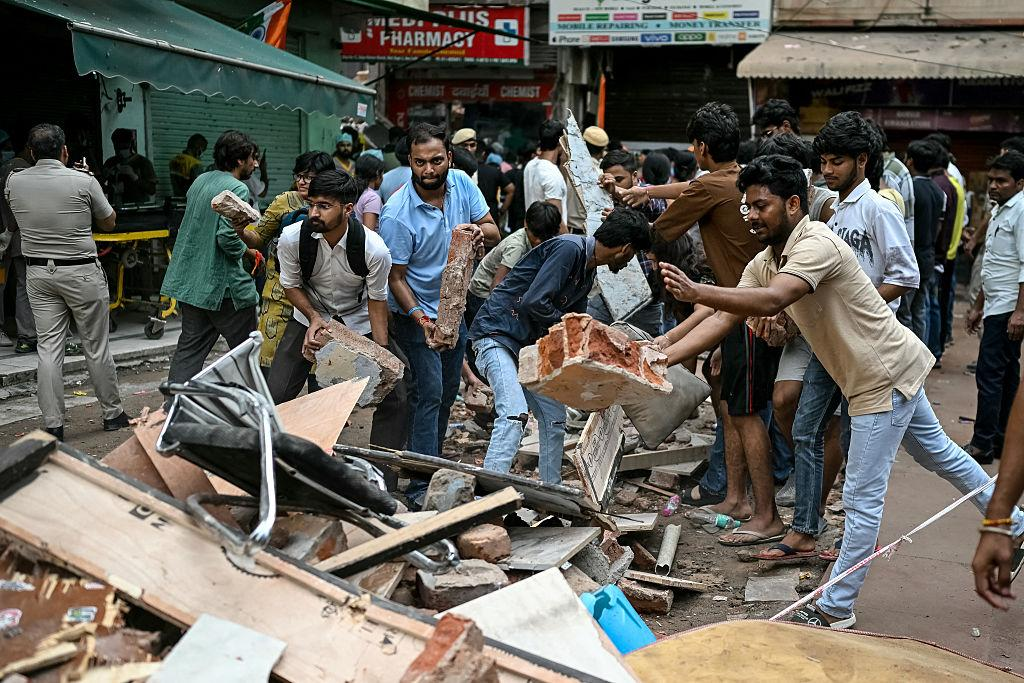
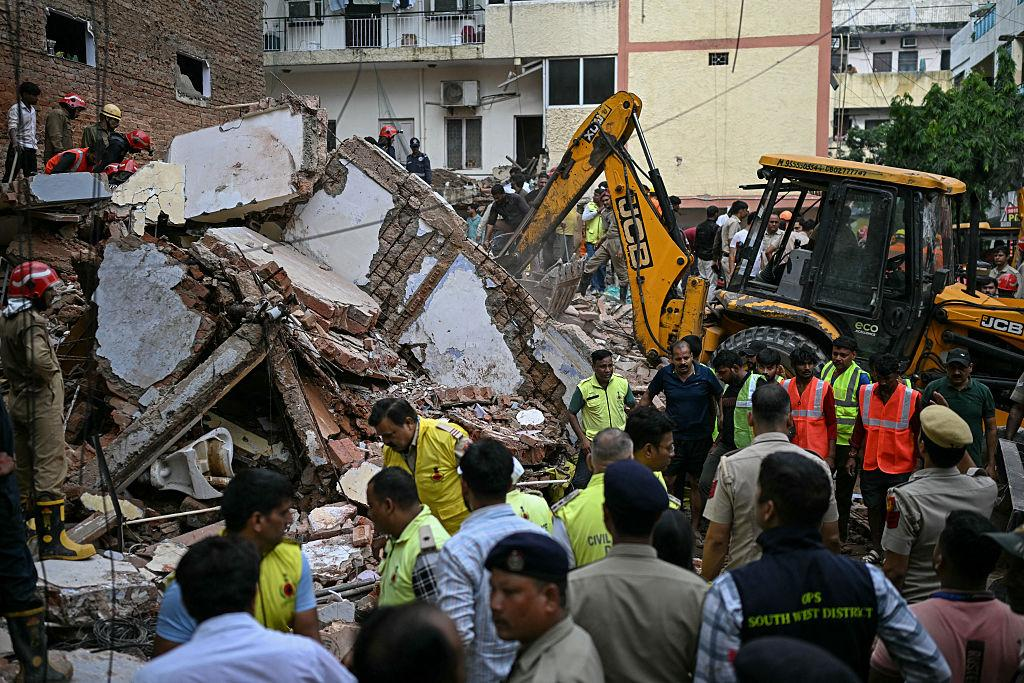
Rescue teams searched the debris following the collapse, while authorities began examining the condition of the building, construction activity taking place there and whether the property complied with applicable safety and building regulations.
According to reports, the building was several decades old and renovation work was underway when it collapsed. Investigators are examining whether alterations to the structure, including work in the basement, contributed to the collapse. These details will need to be established through a technical investigation rather than assumptions based only on the condition of the building after the incident.
Why Satya Niketan Matters
Satya Niketan is a well-known student accommodation area because of its proximity to Delhi University’s South Campus. Houses and other residential properties in the area have increasingly been converted into paying guest accommodation and hostels to meet demand from students.
This has created a significant housing market around educational institutions. Properties that were originally designed for ordinary residential use can end up accommodating considerably more people when rooms are divided, additional facilities are added or the building is modified.
The safety question therefore extends beyond one property.
A building designed several decades ago may have different structural characteristics from a property being used today as a high-occupancy hostel or PG. Any major alteration can also affect the building’s structural performance and must therefore be assessed appropriately.
What Happened Before the Collapse?
One of the key issues for investigators will be determining what work was being carried out before the collapse and whether it affected the structure.
Reports have referred to renovation activity and work in the basement. It is important, however, to distinguish between reported circumstances and established findings. The exact cause of the collapse should be determined through structural assessment, examination of construction records and other evidence collected during the investigation.
Questions may also arise regarding the building’s sanctioned plan, permitted use, occupancy, previous inspections and any structural modifications carried out over the years.
These records can help establish whether the property was being used in accordance with the permissions issued for it.
Action Against Officials and Property Owner
Following the incident, authorities suspended five officials of the Municipal Corporation of Delhi, while police registered an FIR against the property owner, according to reports.
The Delhi government has also ordered action concerning buildings above four floors in the area.
Such measures form part of the immediate administrative response. The more important question for the investigation will be whether there were identifiable violations before the collapse and, if so, whether those violations were detected or reported.
If a building had structural or regulatory deficiencies, records of inspections, complaints, permissions and previous action could help establish when authorities became aware of the problem and what steps were taken.
The Regulation of PGs and Hostels
The incident has also drawn attention to the regulation of private PGs and hostels in Delhi.
Unlike university accommodation, privately operated PGs can involve several different regulatory requirements. Building permissions, structural safety, fire safety, occupancy and the permitted use of a property may involve different authorities and regulations.
For students and their families, however, these distinctions are not always clear.
They generally expect the accommodation they rent to meet basic safety requirements.
This raises a practical issue: whether information about permissions, occupancy limits and safety certifications should be easier for students to verify before they rent a room.
What Should the Investigation Establish?
A proper investigation should answer several specific questions.
Was the building structurally sound before the renovation work began? What alterations had been carried out? Was the building being used according to its approved purpose? How many people were permitted to occupy it? Were required inspections conducted? Had any complaints or warnings previously been recorded? And were any construction or safety violations identified before the collapse?
These questions are more important than speculation about the cause of the disaster.
A technical investigation can establish whether structural failure, unauthorised construction, alteration work, deterioration, overloading or a combination of factors contributed to the collapse.
Beyond One Building
The Satya Niketan incident also provides an opportunity to examine other older buildings being used as high-occupancy PGs and hostels.
A safety audit would be useful if it is based on technical assessment rather than simply checking documents. Older buildings that have undergone substantial modifications may require particular attention.
The objective should be straightforward: identify unsafe structures before they become emergencies.
For students, the issue is equally practical. Accommodation near colleges and universities should provide not only affordability and convenience but also basic structural and fire safety.
The investigation into the Satya Niketan collapse will establish responsibility for this particular incident. But its findings could also indicate whether there are broader gaps in the way private student accommodation is monitored in Delhi.
The immediate priority is accountability for the seven deaths. The longer-term priority is ensuring that buildings used to house students are assessed for safety before, rather than after, a structural failure occurs.

NewsHasghag operates a 24/7 news bureau that tracks the real-time, social media-driven stories from India and around the world, keeping you ahead of the day’s key talking points. Our digital-first approach transforms storytelling through the seamless integration of data, interactive charts, video, and audio into every narrative