

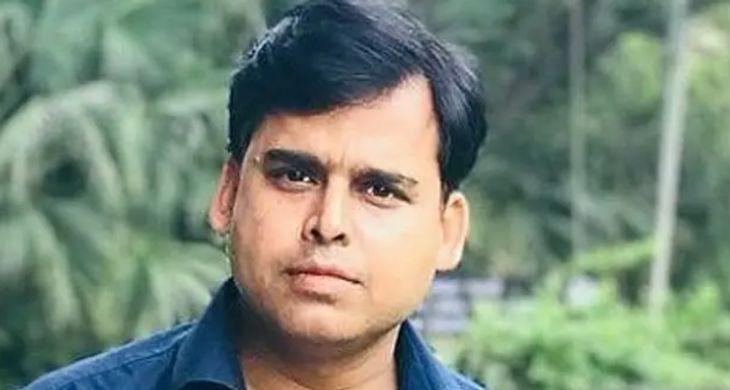
New Delhi: A journalist who helped bring allegations of irregularities in donations at the Ayodhya Ram Temple into the public domain is now asking India’s highest court to protect him from an FIR registered in an entirely different matter. Journalist Abhishek Upadhyay has moved the Supreme Court challenging a Ghaziabad FIR arising from an alleged road-rage incident. The Court has agreed to hear his plea on August 25. Upadhyay says the case is based on false and concocted allegations and is intended to harass him because of his investigative reporting. The police version and the allegations in the FIR, however, must be independently tested.
The timing has made the case significant for another reason. Upadhyay is not an unknown complainant suddenly caught in a criminal case. He is the journalist whose reporting helped turn allegations surrounding the handling of Ram Temple donations into a matter of national attention. What began as a series of questions about donations, offerings and financial management eventually led to an official investigation, arrests and intervention by the Supreme Court. The same journalist is now before that Court seeking relief against an FIR he says is an attempt to intimidate him.
That does not automatically prove a connection between the two events. But it raises a legitimate journalistic question: when an investigative reporter becomes the subject of a criminal case after publishing politically sensitive stories, should the circumstances surrounding that case receive heightened scrutiny?
Where the Ram Temple investigation began
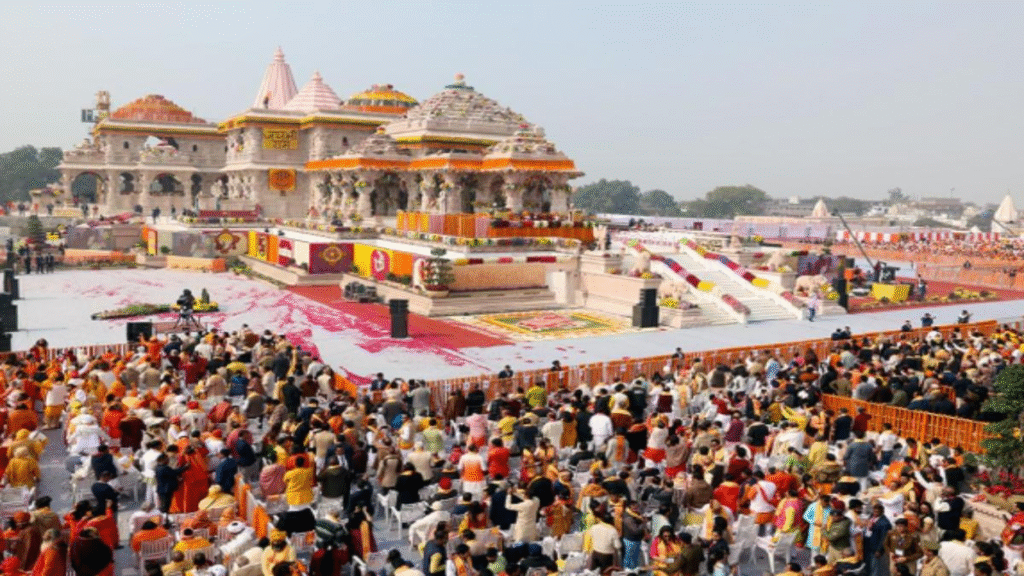
Upadhyay’s reporting centred on allegations of irregularities in the handling of donations and offerings associated with the Ram Temple in Ayodhya. In interviews about his investigation, he has said that he pursued information from people connected with the temple’s administrative and financial operations and examined claims about the handling of donations. One important source cited in reporting around the case was Mahipal Singh, a former accounts officer associated with the temple trust, whose allegations became part of the wider controversy. Upadhyay subsequently presented documents, testimony and other material through his YouTube platform Top Secret.
The allegations were serious, but allegations are not convictions. That distinction is essential. Investigative journalism often begins where official information ends: with a document, a whistleblower, an unexplained transaction or a witness willing to speak. But the journalist’s responsibility does not end with publishing the allegation. The next question is whether independent institutions can verify it.
In this case, the story moved in precisely that direction.
When journalism became an official investigation
The allegations eventually resulted in formal police action. An FIR was registered in June following recommendations arising from an investigation into alleged embezzlement of Ram Temple donations, and eight people named in the case were arrested.
The investigation subsequently became more complicated. The Supreme Court intervened and asked the Special Investigation Team to take the probe to its logical conclusion and submit a status report. The Court’s intervention also led to changes in the investigative process, including the inclusion of forensic financial expertise in the SIT.
That development is important because it separates two things that are often confused in public debate: a journalist’s allegation and an institution’s investigation. Upadhyay reported the allegations. It was then for the police, SIT and courts to determine what could actually be established.
Recent reporting on the SIT’s final findings has also added another layer, with the report reportedly giving a clean chit to key figures including Champat Rai and Anil Mishra. The investigation into other alleged irregularities and the legal consequences remain matters for the relevant authorities.
In other words, the final story is not simply “a journalist exposed theft.” It is a much more complicated chain: allegation → reporting → official investigation → arrests → judicial scrutiny → competing findings.
Then came the FIR
On August 18, according to the FIR and reports based on the complaint, an alleged road-rage incident occurred near Shipra Mall in Ghaziabad. A motorcycle was allegedly involved in a collision with a Baleno car, and the complainant alleged that the driver abused and threatened him. Upadhyay was named in the case.
Upadhyay disputes that account. According to his petition, he says a motorcyclist approached his car while he was returning from his daughter’s school, that there was no physical confrontation and that he left the location. He has also raised questions about the motorcycle details mentioned in the complaint and sought preservation of CCTV footage from the area.
Those competing accounts now require evidence.
And that is precisely why the CCTV issue could become important. If cameras captured the incident, the footage could potentially establish whether there was a collision, what happened immediately afterwards and whether the accounts of the parties are consistent with the visual evidence.
Why the Supreme Court hearing matters
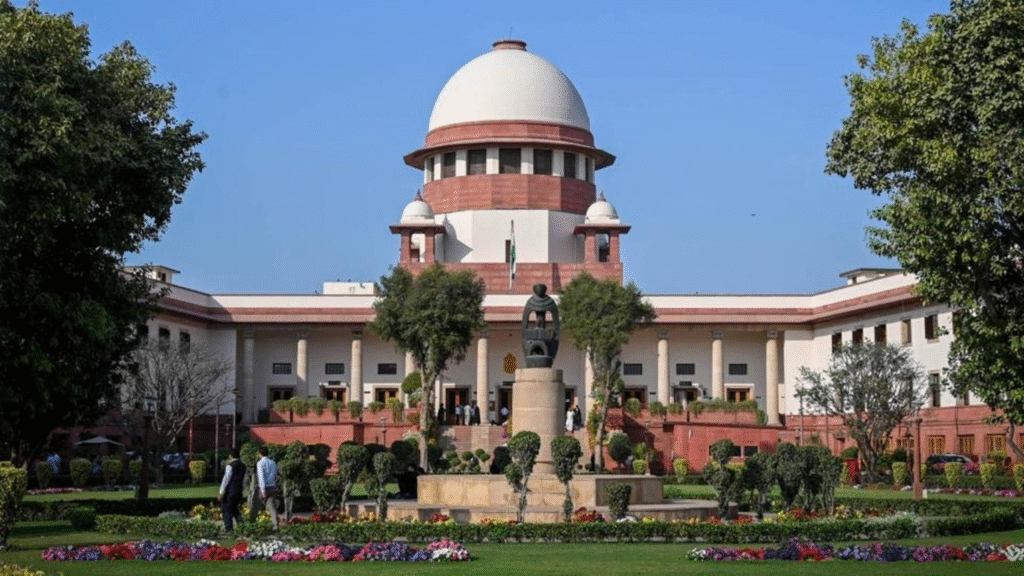
Upadhyay is asking the Supreme Court to quash the FIR and protect him from arrest or other coercive action. He has also sought an independent investigation, alleging that the case is connected to his investigative journalism.
The Court’s decision to hear the matter does not mean that it has accepted his allegations. That distinction is crucial. A hearing is not a finding of innocence, just as an FIR is not proof of guilt.
But the case raises a larger question about journalism in India.
Investigative reporters frequently work around powerful institutions, politically sensitive subjects and people with considerable influence. Their reporting can trigger investigations, political controversy and legal disputes. At the same time, journalists are not immune from ordinary law. If a journalist commits an offence unrelated to his work, that allegation must be investigated like any other.
The challenge is ensuring that criminal law is neither used as a shield against legitimate investigation nor turned into a weapon against legitimate journalism.
The bigger question: what happens when the reporter becomes the story?
This is where the Abhishek Upadhyay case becomes particularly interesting for readers.
His original reporting is now only one part of a much larger story. The allegations he reported triggered official action. The official investigation itself has produced findings that are still being debated. The Supreme Court has demanded that the investigation reach a logical conclusion. And now the journalist who brought the original allegations into public view is himself challenging an FIR before the same court.
There is an uncomfortable irony in that sequence.
A journalist’s job is to ask questions when institutions do not provide satisfactory answers. But journalism cannot substitute for investigation, and allegations cannot substitute for proof. Equally, the existence of an FIR should not automatically be treated as proof that a journalist acted unlawfully.
The only reliable way forward is evidence.
If the road-rage allegations are genuine, the investigation should establish that. If CCTV or other evidence contradicts the complaint, that too should become part of the record. If there is no connection between the FIR and Upadhyay’s reporting, that should be demonstrable. And if the Court finds reason to examine whether the criminal process has been misused, that deserves equal scrutiny.
For NewsHashtag, that is the real story—not whether Abhishek Upadhyay is a hero or a victim.
It is whether a journalist can investigate powerful institutions without fear, while remaining subject to the same law and accountability as everyone else.
The Supreme Court hearing on August 25 may not answer every question. But it will bring an unusual story into sharper focus: a reporter who investigated allegations surrounding one of India’s most politically and religiously significant institutions has now become the subject of a legal battle of his own.
And perhaps the most important question is not what the journalist reported.
It is what the evidence ultimately proves.

Prerna Varshney is a journalist and social commentator with over five years of experience in health, gender, and policy reporting. Her work reflects a deep commitment to truth and empathy, simplifying complex issues for everyday readers.