

A defamation battle in Pune has reopened a much bigger argument over Savarkar’s legacy, Gandhi’s political rhetoric and who gets to define history
PUNE: Can a political speech cross the line into defamation when it revisits the life of one of India’s most controversial historical figures?
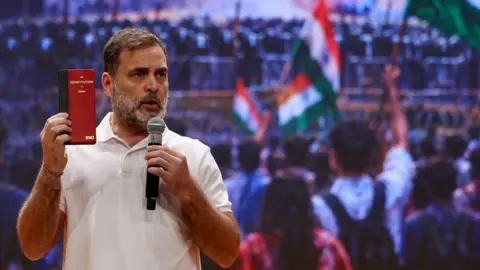
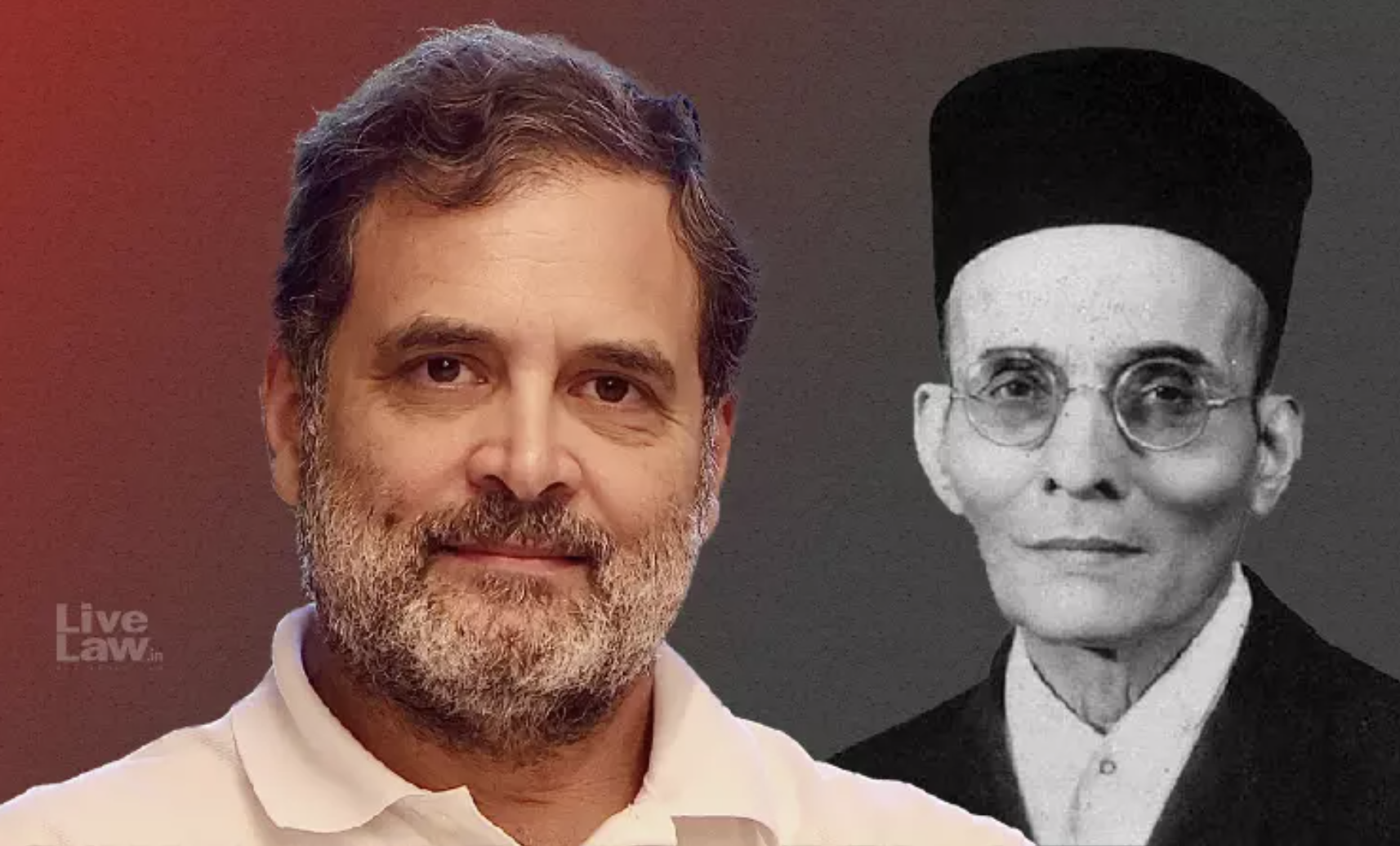
That question is now at the centre of a courtroom battle involving Congress leader Rahul Gandhi and Vinayak Damodar Savarkar’s grand-nephew Satyaki Savarkar.
Appearing before a Special MP/MLA Court in Pune, Satyaki Savarkar alleged that Gandhi had unfairly portrayed the Hindutva ideologue as an extreme Muslim-hater and thereby damaged his reputation. His testimony is part of a criminal defamation case arising from Gandhi’s remarks during a March 2023 speech in London.
Satyaki’s argument is straightforward: Savarkar did not hate Muslims, and the particular story cited by Gandhi was based on a book Savarkar did not write and an incident that, according to him, never happened.
But behind that legal argument lies a much larger political and historical dispute.
Savarkar occupies an unusual place in India’s public memory. To his admirers, he was a revolutionary nationalist, prolific writer and an important figure in the freedom movement. To his critics, his political philosophy—particularly his conception of Hindutva—raises difficult questions about nationalism, religious identity and the place of minorities in India.
That sharply divided legacy makes every statement about Savarkar politically charged.
According to the report of the court proceedings, Satyaki told the court that Gandhi’s remarks created an image of Savarkar as an “extreme hater” of Muslims and even as someone associated with mob violence. He maintained that Savarkar’s writings contained ideas concerning the progress of Muslims, challenging Gandhi’s portrayal.
The case therefore is not merely about what Gandhi said in London. It is increasingly becoming a contest over historical evidence versus political interpretation.
During cross-examination, the proceedings also touched upon the RSS and Savarkar’s continuing influence in contemporary politics. Satyaki acknowledged that RSS chief Mohan Bhagwat and Union Home Minister Amit Shah had unveiled a Savarkar statue in Andaman in December 2025. Asked whether the RSS follows Savarkar’s ideology, however, he said he did not know. He also stated that his family had not been informed about the statue’s unveiling.
The court allowed another potentially significant piece of material to enter the proceedings: a transcript and video interview of Gopal Godse, Satyaki’s maternal grandfather and brother of Nathuram Godse. Gandhi’s lawyer sought to place the material on record for its references to the RSS, Hindu Mahasabha and Nathuram Godse’s association with the RSS.
For Gandhi’s side, such material could be relevant to challenging the broader narrative surrounding Savarkar and the political milieu in which he operated. For Savarkar’s family, however, the central issue remains whether Gandhi crossed a legal line by attributing to Savarkar a story and attitude that they say were false.
And that is where the courtroom dispute acquires a wider significance.
In today’s India, historical figures are rarely confined to history books. Their names appear in election speeches, parliamentary debates, statues, films and social-media battles. Savarkar, perhaps more than most, has become a symbol claimed by competing political narratives.
The court must ultimately decide the legal questions before it. But the political argument will almost certainly continue beyond the courtroom.
Was Gandhi exercising legitimate political criticism—or making a defamatory claim about a historical figure?
Can a family member seek legal protection for the reputation of someone who died decades ago?
And perhaps most importantly, how much of India’s history should be settled by political rhetoric, and how much by documents, evidence and scholarship?
The answers may take time. Satyaki Savarkar’s cross-examination is scheduled to continue on September 3.
Until the court delivers its findings, however, the allegations remain allegations—not judicially established facts.
What is already clear is that the Savarkar-Gandhi controversy has once again turned history into a live political battlefield, where the struggle is not merely over what happened in the past, but over who gets to tell India what that past means today.

NewsHasghag operates a 24/7 news bureau that tracks the real-time, social media-driven stories from India and around the world, keeping you ahead of the day’s key talking points. Our digital-first approach transforms storytelling through the seamless integration of data, interactive charts, video, and audio into every narrative