



RSS at 100 — Part 7: How Did the RSS Expand Its Influence Beyond the Shakha?
From the shakha to politics, education, student organisations, labour unions and social service—how did the RSS build a wider institutional network?
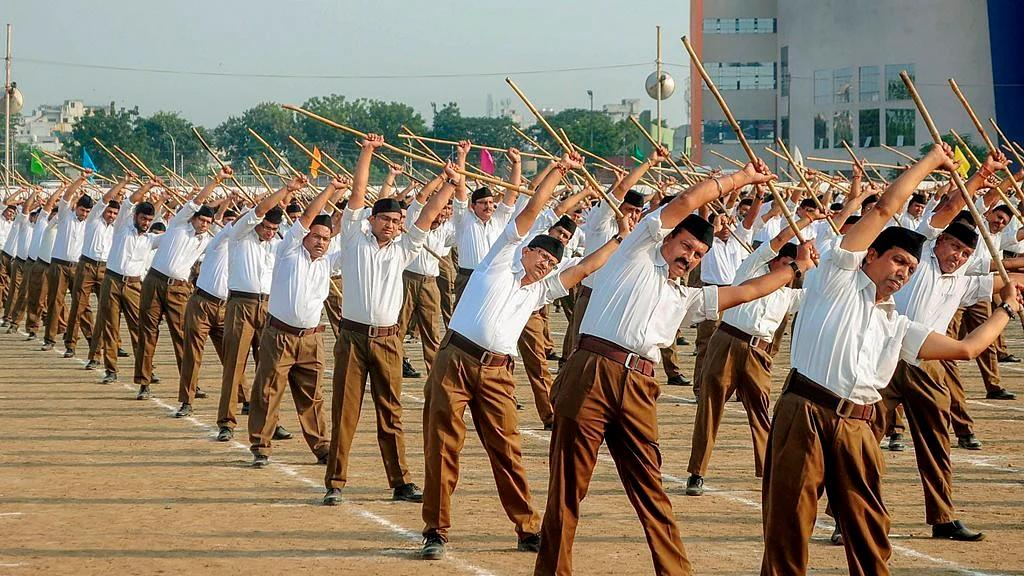
When Keshav Baliram Hedgewar founded the Rashtriya Swayamsevak Sangh (RSS) in Nagpur in 1925, its basic organisational unit was the shakha. The idea was simple: bring people together regularly, develop discipline and physical fitness, cultivate a sense of national identity and create a committed cadre of volunteers, known as swayamsevaks. But the RSS’s story did not end at the shakha.
As the organisation expanded, RSS volunteers began entering different areas of public life. From the 1940s and particularly during the 1950s onward, organisations with ideological, organisational or personnel links to the Sangh emerged in fields such as politics, education, student affairs, labour, religious and cultural activities and social service. This gradual expansion created what came to be known as the Sangh Parivar—a broad network of organisations that share varying degrees of historical and ideological association with the RSS.
The development raises an important question: How did an organisation that began with daily shakhas in Nagpur develop a presence across so many different spheres of Indian public life?
The Shakha Was the Starting Point
The RSS’s organisational strength has traditionally rested on the shakha. It is at the shakha that volunteers meet, participate in physical activities, listen to talks, discuss social and national issues and develop organisational relationships. But the purpose was not simply to create people who would attend a daily meeting. The RSS sought to create volunteers who would carry its broader ideas into society.
This distinction is important. The shakha remained the organisational centre, while individual volunteers could subsequently work in different fields. That approach eventually enabled the Sangh to develop institutions outside the RSS’s formal organisational structure.
The First Major Expansion: Politics
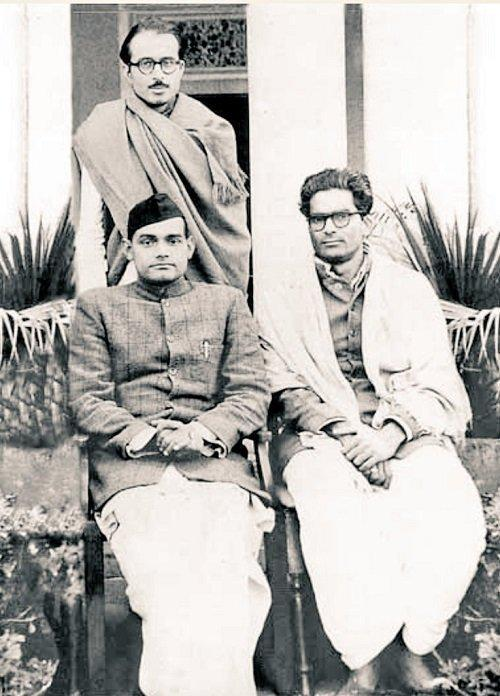
One of the earliest and most consequential extensions of the Sangh into public life was politics. In 1951, Syama Prasad Mukherjee founded the Bharatiya Jana Sangh (BJS). Several RSS leaders and volunteers became associated with the new political organisation. The Jana Sangh eventually became an important force in Indian politics, particularly in northern India.
After the Janata Party experiment of the 1970s, the Bharatiya Janata Party (BJP) was founded in 1980. The relationship between the RSS and the BJP has remained one of the most closely examined aspects of the Sangh’s history.
The RSS does not contest elections or function as a political party. Yet many BJP leaders have had an RSS background, and RSS volunteers have frequently moved into political work. This has produced a relationship that is neither identical nor entirely separate.
The BJP has its own constitution, leadership and electoral machinery. The RSS has its own organisational structure and does not contest elections. But their personnel networks and ideological relationship have made the connection politically significant.
The Student Movement
The next important area was the student community. The Akhil Bharatiya Vidyarthi Parishad (ABVP) emerged in 1948 and subsequently developed into one of India’s largest student organisations. Its presence on university campuses gave the broader Sangh movement an avenue to engage directly with young people.
This was significant because universities were becoming important centres of political debate. The student movement brought questions of nationalism, socialism, communism, democracy, secularism, caste and social change into direct competition. For the Sangh, the campus therefore became another place where ideas could be organised and contested.
The ABVP’s history also illustrates an important feature of the wider Sangh network: an organisation can operate independently while maintaining a historical and ideological relationship with the RSS.
Labour: Entering the Working Class
The labour movement was another important field of expansion. The Bharatiya Mazdoor Sangh (BMS) was founded in 1955 by Dattopant Thengadi, an RSS pracharak. Its emergence was significant because India’s organised labour movement was already dominated by trade unions associated with communist parties and the Congress tradition.
The BMS sought to offer a different approach to labour organisation—one based on the idea of cooperation between labour and management rather than class conflict. Its growth gave the wider Sangh movement an organisational presence among workers.
It also demonstrated that the Sangh’s expansion was not restricted to political campaigning or cultural activities. It was entering institutions that directly affected economic and industrial life.
Education: A Long-Term Investment
Education became another major field. The Sangh’s involvement in education developed through different organisations and initiatives, eventually including the Vidya Bharati network. The underlying emphasis was on education combined with Indian cultural values and national consciousness.
Supporters regard this as an attempt to develop an education system rooted in India’s civilisational traditions. Critics, however, have raised questions about the interpretation of history, religion and nationalism in institutions associated with the Sangh.
The educational question is therefore larger than the number of schools. It concerns a fundamental debate: Who should define the story of India’s civilisation and history—and what values should shape the education of the next generation?
Religion and Cultural Mobilisation
Another significant development was the emergence of organisations working in the religious and cultural sphere. The Vishva Hindu Parishad (VHP) was founded in 1964. Its stated objective was to bring Hindu religious leaders and communities together and to work for the preservation and promotion of Hindu culture.
The VHP subsequently became an important organisation in several major religious and political controversies, particularly during the Ram Janmabhoomi movement. Its history demonstrates how the wider Sangh network expanded into questions of religion, identity and cultural nationalism—issues that would eventually become central to Indian political debate.
Social Service: The Seva Network
The Sangh’s expansion also took another route: social service. RSS volunteers and organisations associated with the wider Sangh network have undertaken activities involving education, healthcare, rural development, disaster relief and assistance to disadvantaged communities.
The concept of seva, or service, became an important part of the Sangh’s public outreach. Supporters argue that such work reflects the RSS’s commitment to social responsibility and grassroots service. Critics, meanwhile, have questioned whether social service can also contribute to ideological mobilisation and expand the Sangh’s social influence.
The distinction is worth examining carefully. Providing genuine assistance and building organisational influence are not necessarily mutually exclusive.
Why Build Separate Organisations?
This is perhaps the most interesting feature of the RSS model. Why did the RSS not simply expand itself into every field?
One reason was organisational specialisation. A student organisation requires a different structure from a trade union. A political party operates differently from a school network. A social-service organisation has different objectives from a cultural organisation.
Creating separate institutions allowed people with a common ideological background to work in different fields while maintaining distinct organisational identities. This produced a much wider network than the RSS could have created as a single organisation.
The Swayamsevak as the Connecting Link
The most important connecting element has often been the individual RSS volunteer. A person could begin at a shakha. That person could later become a teacher, student leader, trade-union organiser, social worker or politician.
The institutions were different. The individual experience of RSS training provided a common organisational and ideological background. This is one reason why the history of the RSS cannot be understood merely by studying the organisation’s formal membership.
Its influence also has to be examined through the careers of people who passed through its organisational system and later entered wider public life.
The Emergency: When the Network Was Tested
The importance of this organisational structure became particularly visible during the Emergency declared by Prime Minister Indira Gandhi in June 1975. The RSS was banned, and many of its leaders and workers were arrested.
Yet the organisation survived the crackdown. The Emergency became an important turning point in the relationship between the RSS and Indian democracy.
For its supporters, the resistance demonstrated the organisation’s commitment to democratic freedoms. For its critics, the period raises questions about the methods and political alliances through which the RSS operated.
Either way, the experience demonstrated the value of an organisation that had spent decades building personal and institutional networks.
Influence Without a Single Command Structure
It is tempting to describe the Sangh Parivar as though the RSS directly controls every organisation associated with it. That would, however, oversimplify a complicated relationship.
The RSS, BJP, ABVP, BMS, VHP, Vidya Bharati and other organisations have their own structures and leaderships. They are not simply different departments of one organisation.
What connects them is a combination of shared history, ideological affinity, organisational relationships and personnel links. The degree of connection can also vary from one organisation to another.
That distinction is essential for understanding how the Sangh’s influence operates.
From Nagpur to a National Network
The transformation is striking. In 1925, the RSS was founded in Nagpur as a volunteer organisation. Its early years were devoted primarily to building the shakha structure and developing a disciplined cadre.
Later, RSS volunteers entered different areas of public life. The Jana Sangh created a political platform. The ABVP entered student politics. The BMS entered organised labour. The VHP entered religious and cultural mobilisation. Educational and service organisations created further avenues of grassroots engagement.
Together, these developments created a network whose reach was much greater than that of the RSS alone.
The Real Measure of RSS Influence
This brings us to a more meaningful way of measuring the RSS’s hundred-year journey. The question is not simply: How many shakhas does the RSS have?
It is also: How many institutions, movements and public figures have been shaped by people trained within, associated with, or influenced by the Sangh’s organisational ecosystem?
That is where the real significance of the RSS’s expansion lies. The organisation’s influence is not confined to the people who attend a shakha. It can also be seen in the institutions built around the wider Sangh movement and in the people who carried its ideas into different areas of public life.
Whether one views this as nation-building, ideological mobilisation or the creation of a powerful social network depends largely on one’s political and ideological perspective. But the organisational transformation itself is a matter of historical record.
An organisation that began with a handful of volunteers in Nagpur eventually became part of a much larger network extending into politics, education, student life, labour, religion and social service.
And this expansion cannot be separated from another defining feature of the RSS’s history: its repeated confrontations with the Indian state.
In Part 8: Why Was the RSS Banned?
The RSS has faced government bans at several crucial moments in independent India’s history. The first came in 1948, following the assassination of Mahatma Gandhi. Another came during the Emergency in 1975. And the organisation was again banned in 1992, following the demolition of the Babri Masjid.
What led to these bans? What evidence was cited by governments? How did the RSS respond? And how did each ban affect the organisation’s subsequent evolution?
Part 8 will examine the bans, the controversies surrounding them, and how the RSS survived each political crisis.

Prabha Gupta is a veteran journalist and civic thinker dedicated to the constitutional ideals of dignity and institutional ethics. With over thirty years of experience in public communication, her work serves as a bridge between India’s civil society and its democratic institutions. She is a prominent voice on the evolution of Indian citizenship, advocating for a national discourse rooted in integrity and the empowerment of the common citizen