



Nana Patekar at 75: The Voice, Anger and Authenticity That Defined an Era
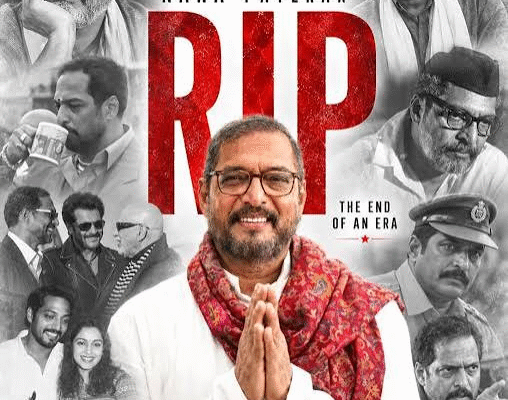
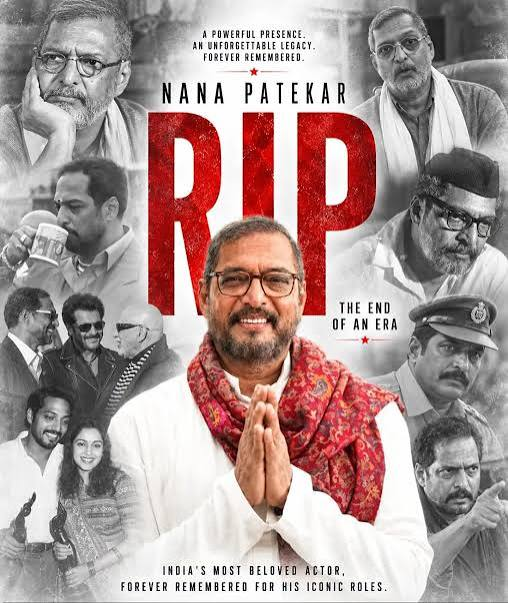
Indian cinema has lost one of its most distinctive voices. Veteran actor Nana Patekar died at the age of 75 in Goa on Thursday, October 8, after suffering a cardiac arrest. He was found unresponsive at his residence in Dona Paula and was taken to Manipal Hospital, where doctors attempted resuscitation for around 45 minutes. He was declared dead at approximately 5:20 am. His son, Malhar Patekar, confirmed the death.
Patekar’s death is more than the passing of another celebrated Bollywood personality. It marks the loss of an actor who occupied an unusual space in Indian cinema—neither dependent on conventional glamour nor confined to the boundaries of parallel cinema. His strength was intensity. His face, voice, pauses and explosive delivery could make even an ordinary line feel like a confrontation.
From theatre to cinema: an actor who refused to be ordinary
Born Vishwanath Patekar in Maharashtra in 1951, Nana Patekar began his journey through theatre before entering Hindi cinema. His film career started with Gaman in 1978, and he gradually built a reputation for playing complex, troubled and morally ambiguous characters. Parinda, Prahaar, Krantiveer, Agni Sakshi, Khamoshi: The Musical and Natsamrat demonstrated the breadth of his acting.
What separated Patekar from many contemporaries was his ability to make vulnerability and aggression coexist. He could appear threatening without being conventionally heroic and emotional without becoming sentimental. His performances often carried an underlying sense of social anger—a quality that resonated strongly in an India undergoing rapid economic and cultural change.
His National Film Awards and the Padma Shri recognised that contribution. But awards alone do not explain Patekar’s enduring popularity. His appeal came from something less measurable: authenticity.
Even when he entered mainstream commercial cinema, he did not completely surrender the rawness associated with theatre and serious cinema. His portrayal of Uday Shetty in Welcome introduced his distinctive persona to a younger and more commercially oriented audience, demonstrating that an actor known for intense dramatic roles could also dominate comedy.
Beyond the screen: the complicated legacy of a public figure
Patekar’s public identity was not limited to acting. He was also associated with social work, particularly through the Naam Foundation, which worked on issues involving farmers and water conservation. His public image was therefore shaped by two seemingly different personalities: the uncompromising actor and the socially engaged individual.
His life, however, was not without controversy. Like many major public figures, Patekar’s career also encountered allegations and public disputes. Those controversies remain part of the broader record of his public life, but they do not erase the artistic influence he exerted over several generations of Indian audiences.
That complexity is perhaps essential to understanding his legacy. Patekar was never an actor who fitted comfortably into a single category. He could be abrasive, humorous, political, emotional, understated or explosive. His performances often appeared to come from instinct rather than calculation.
His death also raises a broader question about the changing nature of Indian cinema. Today’s industry is increasingly driven by franchises, digital platforms, celebrity branding and carefully managed public images. Patekar emerged from an era when performance itself could create a star.
His voice became recognisable before his face appeared on screen. His dialogue delivery could turn anger into a dramatic instrument. His characters frequently carried the frustrations of ordinary people, soldiers, policemen, farmers and outsiders.
That is why his absence will be felt beyond individual films.
Maharashtra has announced that Patekar will receive a state funeral, with his last rites scheduled at his Pune farmhouse.
Nana Patekar’s career ultimately demonstrates that stardom does not always require glamour. Sometimes it comes from refusing to look or sound like everyone else.
At 75, he leaves behind nearly five decades of theatre and cinema, three National Film Awards, a Padma Shri and a body of work that crossed the boundary between mainstream entertainment and serious acting.
The industry will remember the awards. Audiences will remember the films. But what may endure longest is the unmistakable voice—the rough, forceful, emotionally charged voice of an actor who made intensity itself a form of identity.

NewsHasghag operates a 24/7 news bureau that tracks the real-time, social media-driven stories from India and around the world, keeping you ahead of the day’s key talking points. Our digital-first approach transforms storytelling through the seamless integration of data, interactive charts, video, and audio into every narrative